




It took making “The Python Hunt” for Xander Robin to realize there was no place like home, resettling back in Florida after an extended sojourn up north. But with his second feature, and his first documentary, it takes nowhere near as long for an audience to reach that conclusion with its wild characters and a tropical environment so richly evoked that it sticks to your skin, a sensation that Robin knew he could only get if he not only shot the film there, but carried out the post-production there as well.
“Sometimes you have to you have to feel the place,” says Robin, who rented an office for himself and editor Max Allman to cut the film near the swamp and worked on the score in Miami. “It’s something you feel in your in your guts. Film to me isn’t always a brainy medium. It’s like a body medium, so you have to feel it in your body to put it in the film.”
That feeling extends to an audience in “The Python Hunt,” going right for the gut as one of the most entertaining nonfiction films in recent memory when Robin trains his lens on a local event that could play out nowhere else but Florida, which has a state-sanctioned tournament to rid the Everglades of lethally venomous snakes. After Hurricane Andrew unleashed a large amount of pythons into the local waters in 1992, not only posing an obvious threat to humans with direct contact, but mucking up the delicate ecosystem that was home to various indigenous species, the Python Challenge was launched as an unconventional if potentially misconceived solution, letting loose other kinds of predators when locals were emboldened to carry machetes to kill the snakes and out-of-towners could be lured with the promise of prize money and fun.
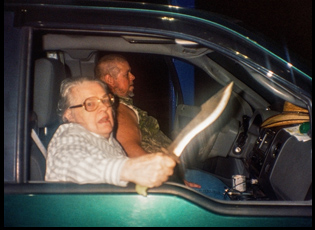
There are skeptics of the annual event including seasoned python hunters such as James “Jimbo” McCarthy, who finds the regulations against it too restrictive and attempts to stage a rival competition, and those who question its efficacy in general, but there are many that gleefully tackle the challenge, from Richard, a Bay Area science teacher who looks to blow off some steam across the country while studying the biology, to Anne, a demanding elderly widow from Tucson who hires a local guide named Toby to bring her a python that she can violently dispatch to release some of her anger. The competition gives Robin two environments full of fascinating creatures to keep track of, both above ground and just below it, and the director channels the irresistible vibes of the Everglades that can’t be found anywhere else. Following its premiere last year at SXSW en route to a celebrated festival run around the world, “The Python Hunt” is now snaking its way into theaters across the U.S. where it shouldn’t be missed and Robin graciously took the time to talk about how he endured a schedule full of night shoots, recognizing that truth may be stranger than fiction with a little help from “Some Kind of Heaven” and “Ren Faire” maestro Lance Oppenheim and finding soul in humans and reptiles alike.
 How did this come about?
I grew up in South Florida, but I lived in New York for a while and then I made this short called “Lance Lizardi” that restarted my fascination with reptiles, which I had from childhood. When I moved back down to Florida, all the reptiles around me suddenly were massive. There were iguanas everywhere, all these huge, different reptiles that didn’t exist when I grew up, which were just the little brown anoles that we would find in the house and we would always find safe ways to remove them — and when I say remove, I just mean have them go back outside because “remove” is a state term for kill in the Python challenge. But I was trying to make a scripted movie about this world of the exotic pet trade, specifically the exotic reptile trade and I wrote a script and I was living in Florida and it became clear it wasn’t about to happen.
Then my friend Lance [Oppenheim] who was always trying to help me with different projects, [asked me] “What about the python challenge?” And I had heard about the bounty program [where] the state was paying the professional python hunters, but I wasn’t aware of the contest. They had moved it around, they stopped it, they had started it, and they had just restarted it over the summer for 10 days, almost gamifying it. This was in July and [I thought], “Well, maybe I’ll just join this competition and see if there’s a story here.” So I go and look for reptiles and I was excited for that aspect of it. In the first seven nights, I went with different hunters, and sometimes I went by myself, but I also went with a friend Harley Shaw, who ended up becoming our casting director and [went on to work on] this awesome show called “Neighbors.” We didn’t see a single python out there, but we did meet a lot of really, really interesting people. It was 95% amateur hunters, people trying to be Crocodile Dundee and they were in over their head.
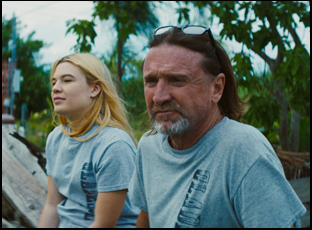
I met this guy named Jimbo, a former professional hunter, and [even when I was younger] I’d heard there was someone named Jimbo who lived out in the Everglades and had an interesting reputation, so when I met him, he was basically saying everything I was seeing, like, “There’s all these people coming in and they don’t know what they’re doing. Also the Python [Challenge] thing is not all it’s cracked up to be [as an issue]. There’s probably some other things that are causing some problems in the Everglades. That was interesting to hear, plus all the amateurs we were meeting, like I met Richard [who is in the film] that first year, [and I thought] “Oh maybe there is a story that could be a really interesting movie beyond just the tournament.”
 That definitely proves true. What was it like figuring out a structure for this where you could move between the tournament and outside of it?
I really wanted to explore Jimbo’s story and I wasn’t sure exactly how. Then this python festival emerged as [a way that] gave them more of a purpose beyond just playing pranks on people. We knew we wanted to have him go on this journey and meet some interesting people that he was already talking about, like if he wanted to talk to some guy he met at the bar and go to these [city council] meetings. But the python festival I think helped really give him like a place in the the film and his story was the hardest to figure out structurally because it lives outside of the challenge. We wanted to figure out how best to present this information to a viewer who needs to almost buy into what the state is saying in the beginning of the film and then slowly complicate that and challenge assumptions.
Going out there that first year before before you actually filmed it, did you get an idea of how you might track this story? It’s so sprawling.
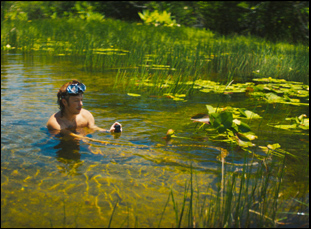
Yeah, it was great to do it the first summer because it helped me understand the terrain and how spread out everything really is — the hubs and the way the dirt roads of the Everglades work. I’d been out there a bit but I really got to spend a lot of time out there and what I liked about the whole setup is that it’s such a naturally cinematic scenario, like a Christopher Guest movie almost. I knew we would need different units for the challenge, especially if it’s a documentary where we can’t predict what is going to happen and especially with [something like] snake hunting. So we would try to find the most interesting people possible, but sometimes the most interesting people weren’t the best python hunters. That’s why Toby was such a perfect character to find because he catches a snake and is also super fascinating and and brought a crew with him.
We shot this with three single camera units for the 11 days of the challenge. That was 10 plus the lead up and a little bit afterwards. And sometimes we would converge [as camera crews] and we would do like a multicam situation, but that really helped us like cover as much ground as possible. We’re always looking for people that might be different at the end of the 10 days from the beginning, which is hard to ask for in real life because people don’t always change that much. But that’s why Toby and Anne [became a main storyline] — once that story was actually unfolding in front of our eyes, like Ms. Anne is trapped there with this man who posits himself as this hunter and wants to prove that he is who he says he is and she just wants to kill the snake, but also is angry that this [hunt] is not what it was cracked up to be on the news, which is what I was experiencing that first year. She was experiencing everything I knew was the reality of the situation.
 When you honed in on Toby as someone you wanted to follow, did you actually know who would hire him for that particular tournament?
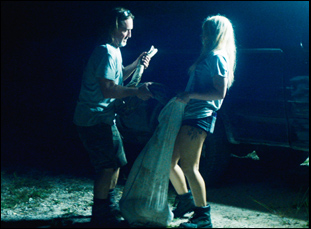
Toby basically mentioned eight people that were coming with them. Sheila was included, who we described as a pirate woman from Key West. And he said [he’d bring] an old woman, but I didn’t know what she would look like or how she’d behave. And a few others — the “Texacan” frat boys and a few other people didn’t end up coming or they came a little bit later [in the shoot]. But I didn’t understand the dynamic [between Toby and Anne initially] and that he basically picked up Ms. Anne and she actually paid for the room. It was an interesting situation because she also had been on a lot of tours before when she was with her husband that were actually all expenses paid and meals were included. This didn’t make the cut, but she would always ask Toby like, “I would like my meal now.” And he’d just say, “I’m not a waiter. I don’t know what to what to say to you. I’ve got a couple bananas here, I guess.” That’s when she had the Vienna sausages, so it was one of those beautiful unplanned discoveries.
The nighttime cinematography is really something to behold. How did you go about finding the right feeling visually?
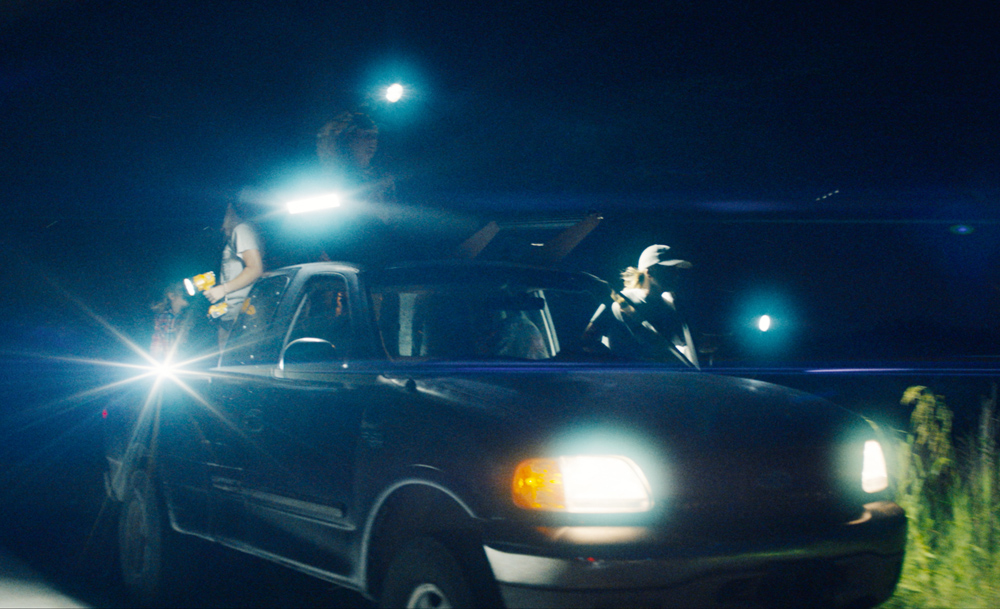
It was so helpful that all the hunters have many of these rigged lights. They go hunting at night because that’s when the snakes move, not because it’s necessarily easier to see them and the snakes’ eyes don’t reflect, so they are really, really hard to find at night and [the hunters] need as much light as possible, which helped our situation because there is no ambient light out in the Everglades other than the moonlight. They use these really expensive flashlights and have all this lighting for night because they need to see the snakes. Luckily the cameras we were using had a pretty good low light sensitivity and we were using lenses that opened up pretty wide, so we did what we could. Sometimes we would have to have a flashlight on in the background, but it really was the lighting that the subjects had. We were as creative as we could be, but also we didn’t want to bring in any lights ourselves.
It couldn’t have come out any better, The score also is quite evocative. What was it like to put music on this?
Yeah, that’s Nick León. He’s a really amazing musician from South Florida and I had wanted to work with him in the past. He was really interested in working on a movie score and it was one of those [situations] where it felt really important to have someone who understands the South Florida feeling, especially because we were going for this Michael Mann/“Miami Vice” feeling and it needed to be sincere. Nick ended up doing a perfect job, and I think there’s something beautiful about it [being] his first full score, just as something that I think you put a little extra love into. I could tell sometimes with a composer like parts with a really amazing chord progression that they could use for their solo work and they give it to us for the film. I’ve was very generous in the music he made for us and I’m really glad people have been responding to it.
 I’m excited to hear you’ve returned to Florida full-time and I must imagine it’s got to be interesting to share a movie like this where obviously the state’s eccentricities are on full display, but it presents everyone with a real dignity even though they’re caught up in this crazy competition. What’s it been like to travel with the film?
Yeah, I think dignity is the word I would use. I feel like we want to make the subjects feel very dignified in it and also to make a movie that they would want to watch. Sometimes I think people think the subjects want to watch something that is stripped of all the humor and it’s not true. They want to watch something that’s super funny too. Ms. Anne was cracking jokes the entire time and Richard is maybe the most open-minded person that I’ve ever met, so he has such an amazing attitude about this too. It’s been amazing actually sharing with him and a lot of the cast have come multiple times to see it. Toby and Jimbo have gone out to a lot of our screenings in Florida. When we played it at South by Southwest, Richard was there with his partner, Toby, Sheila, Jimbo and his daughter, and Ms. Anne saw it in Orlando. I think they enjoy the the experience. there’s so many different people in this hunting landscape and a lot of reality shows and a lot of people are being filmed for different things, but I think this has been interesting and different for for them to see this approach that we’re doing.
“The Python Hunt” opens on May 8th in New York at the Angelika Film enter before expanding on May 15th to Austin at the AFS Cinema, Dallas at the Angelika Film Center, Santa Barbara at the SBIFF Film Center and Ridgewood, New York at the Low Cinema and a wider release on May 22nd. A full list of theaters and dates is here.