



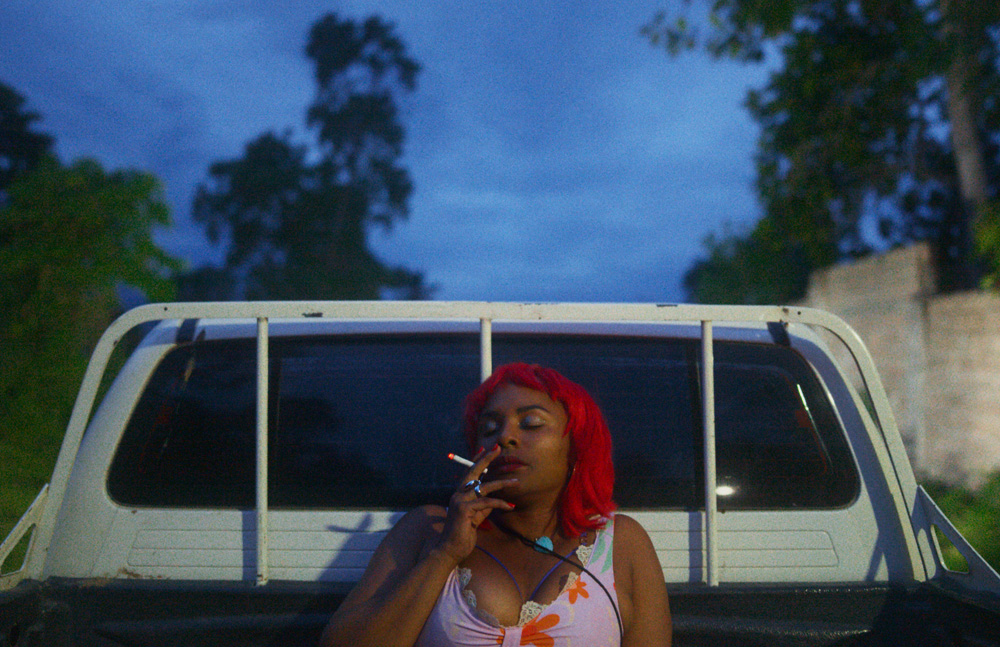

When electricity is at a premium in the corner of Haiti where “Marie Madeleine” is set, the darkness has a way of making the light really pop. The nights often have a warmth from the need to burn candles and the streets of Jacmel already full of vibrant colors get to really shine as everything else falls into the shadows. It’s a lovely reflection from writer/director Gessica Généus on the country she was born in, following up her 2021 narrative debut feature “Freda” about a family looking to get back to solid footing after the 2010 earthquake, and she beautifully illuminates the fissures happening above ground in her latest when a church prepares to move in across the street from a brothel, two very different ends of the spectrum where people go in search of escaping extreme poverty that are understandably yet somewhat still paradoxically at odds with one another when everyone is simply looking for answers.
Although the title “Marie Madeleine” immediately brings to mind history’s most famous fallen woman, Généus’ heroine is the kind that will often go forgotten and if asked, she’s quick to clarify that she wasn’t named after Mary Magdalene, but rather her grandmother who had been lured to the island under false pretenses and abandoned as so many others had, not only struggling to maintain a life for herself by any means necessary, but trying to dig herself out of a hole that future generations would have trouble climbing out of themselves. Marie can be reminded of this past every day when it’s been etched on the wall of the room she keeps at the brothel, or of her status in general when in the frantic opening moments of the film she is taken to a local clinic after being found passed out on the streets and a nurse dismisses her as a “whore,” overwhelmed by all the other patients she has to take care of. Joseph (Béonard Monteau), the man who brought her in, is seemingly the only one to care about her fate unaware of what her work is, yet he quickly realizes he shouldn’t be talking to her when he’s the son of Pastor Jacques (Edouard Baptiste), the evangelical priest that’s just set up his practice in an empty lot across the way and already has plans to pressure Natacha (Gäelle Bien-Aimé), the madam, into leaving.
Even if being devout or fearing the wrath of his father didn’t prevent Joseph from approaching Marie, his shyness would, yet he can’t keep up the silent treatment forever when he is so naturally kind and a friendship starts to form with Marie, leading one to wonder who’s going to convert who when Joseph can’t help but proselytize, yet he also isn’t immune to the world Marie starts to show him with artists and late night drum circles around a campfire where the beat can become irresistibly seductive and she sees sex work as the price to maintain her independence. Although the filmmaker isn’t exactly unbiased as to which is the more appealing path to glory, Généus finds much to appreciate in both, visiting large religious gatherings where parishioners can be seen losing themselves in communal prayer just as people do in the dance halls where she also brings a camera in and one of the film’s most breathtaking scenes involves Mélody (Melissa Mildort), a fellow devotee of Joseph’s and likely bride-to-be, singing a hymn before the day’s work that would make one believe that’s there’s a higher power. Yet Joseph’s absence at night doesn’t go unnoticed by Jacques as he spends more time with Marie, setting up an inevitable reckoning.
The film has its share of rough edges when Généus has a tendency to let scenes run a little longer than what would seem to be their natural expiration point and the narrative can come across quite bluntly – in a literal sense, an early extended shot of Marie pretty obviously standing in front of a green screen filled with overhead drone shots of Jacmel to simulate flying as she enjoys some weed is a definite “are you in or you out?” moment for an audience. But the vibes are good throughout and in having Marie show Joseph around the community, the director extends a similarly warm invitation to see how much natural beauty there is to enjoy locally free of the labels that have been dictated by generations that have long since passed. Besides she and Monteau acquitting themselves well in the lead roles, Baptiste is perfectly cast as the face of great intimidation when he has the kind of unforgettable, chiseled features that parlay his presence into every scene he’s not in and while there may not be much subtlety in the performances, Généus does well to find additional channels to communicate character from the counterintuitive approach to her own of appearing more comfortable in her own skin as Marie exposes less of it to Joseph finding expression for his own feelings in reading the poetry of Yanick Jean. In “Marie Madeleine,” it’s easy to be moved by the spirit when it exists in so many different places.
“Marie Madeleine” will screen again at Cannes on May 15th at Le Cineum Imax at 4 pm and the Agnes Varda at 5:15 pm.