



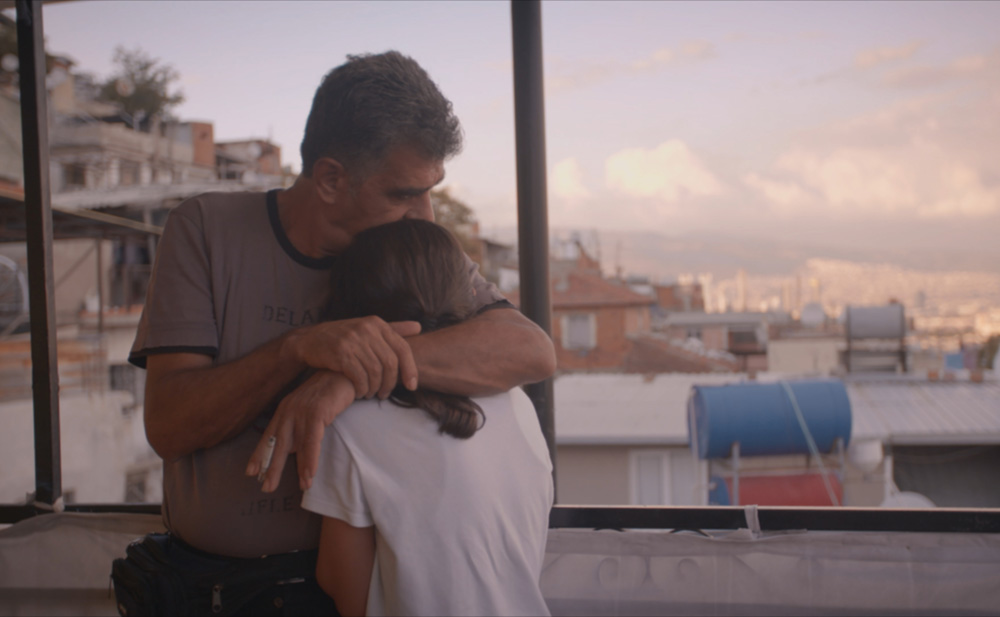

“War is not the hardest thing a person can go through,” Israa says at the start of “One in a Million,” sounding way beyond her age at 11 years old as she reflects on having to flee Syria by way to Turkey to find safe harbor in Germany as her home country is under siege in 2015. “It’s what comes after.”
The words were taken to heart by Jack MacInnes and Itab Azzam, who first found Israa selling cigarettes in the street with her father Tarek to get by, having a family at home who certainly needed sustenance as they prepared to set sail for Berlin on the treacherous waters that so many other political asylum seekers have to endure to find some kind of stability. The filmmakers, who resided in Syria themselves until the civil war made life there truly untenable, not only followed Israa, Tarek, his wife Nisreen and their other children across the ocean to resettle, but upon hearing the high hopes that followed as Nisreen declares “Europe is Paradise,” decided to check in on the family for the decade after, delivering a far more complex portrait of refugee life than usually makes it to the screen.
The title “One in a Million” may sound as if it’s referencing the fact that Israa and her family beat the odds in finding a relatively soft landing in Germany as far as finding housing and the foundation for a new life, but in telling a single story from all those that have had to flee their homeland in recent years, it shows how difficult the experience is in other ways as Tarek struggles to regain a sense of purpose, having once run a shawarma stand in Aleppo and finding no use for the skills he developed over decades in a new country, while he grows increasingly resentful of his beloved daughter, who quickly warms to Western culture. Both Israa and Nisreen enjoy more freedom in a less patriarchal society than they left in Aleppo and find they are less inclined to abide Tarek’s warnings about how to behave, much as he is thrilled by the prospect of being liberated in a more general sense as he’s delighted by the anti-fascist protests in the streets he couldn’t imagine occurring back home.
Over the years Azzam and MacInnes watch Israa grow into her own person, but even as she becomes more aligned with the traditions that guide Tarek as she finds a partner for life herself, a gap widens between her and her father that surely never would’ve existed if they hadn’t been forced to cross an ocean together in the first place and the impact of being severed from their roots and assimilate into a new culture is brought to light in a unique way. The tremendous power of Azzam and MacInnes’ dedication to tracking Israa up to a return back to Syria once the Assad regime fell was acknowledged at the film’s premiere at Sundance where “One in a Million” was honored with a directing prize for World Cinema Documentary and with the film now beginning its theatrical run in the U.S., they graciously took the time to talk about how they knew they had a story they just had to keep a camera rolling for, relating to their subjects even as they started to drift apart and getting to see their homeland together for the first time in years after thinking it might never happen.
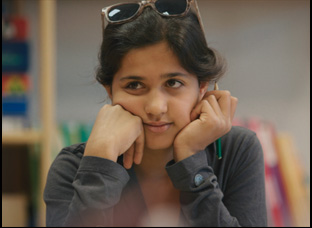 Even before meeting Israa and Tarek, did you have an interest in making a longitudinal film like this or did meeting them lead to doing something along these lines?
Itab Azzam: Jack and I were living in Syria and Damascus in 2010 and then we had to leave Syria at the end of 2011 after the uprising started. My parents stayed back in Syria and they were in regime-controlled areas, so we were desperate to make films about Syria but we couldn’t do anything political because we didn’t couldn’t risk putting my parents in danger. But we were always looking for stories and then at the height of what was called the refugee crisis in Europe, the BBC and BBS supported this idea of making a film about the refugee crossing to Europe [with the idea] we leave [and follow someone] when they arrive in safety. So we went to Izmir, which was the center for where refugees and smugglers make deals and agree to where they’re going to cross, and [to] Basmane Square where everyone gathered [since there are] restaurants and cafes and people selling life vests.
We spent two weeks there and tried the journey before with other families, but it really didn’t work out for us. We kept going back to Isma and one day Jack was doing something else and I was standing there with a camera in the middle of the square. Everyone was tired and miserable and this girl just appeared in front of me. She was all smiling, bubbly and positive and she started talking to me. I started talking to her and father and it was love at first sight. They were really open to the idea of the film. They really wanted to tell their own story, so we traveled with them through nine countries on every border and every crossing, every train, every bus. They had to go through the mud and freezing conditions and when we arrived in Germany, we had already bonded and that relationship kind of blossomed between us and it became really a family affair and then we decided to continue filming.
In the final product, the relationship between Israa and her father Tarek obviously is very central to it, but it’s a big family. Did you know the focus from the beginning?
Jack MacInnes: Not at all. When we started, our whole focus was on this journey because this was a time when a million Syrian refugees were traveling to Germany and they were taking these huge risks – that’s the reason for the title. So we were focused on this story of survival. But what we didn’t realize at the time was we were building a different story, which was a story of a relationship and at its heart a story of a relationship between a father and a daughter. At the beginning, they’re incredibly tight and it’s incredibly touching. Early on, Itab is talking to Israa when she’s in the square and Itab [asks], “You’re his assistant, aren’t you?” And she says, “No, I’m not his assistant. We love each other.” And it’s so beautiful and then they arrive in Germany full of hope – this is their dream – and Tarek says, “Thank you, Germany for what you’ve done. History will tell you this is a great thing.”
But we just started to notice as we started to follow them in Germany that inevitably they started to diverge. Israa was speaking German almost fluently within a few months and not only speaking German, but getting into Justin Bieber and German hip-hop, starting to want to wear a leather jacket and and do dance classes and swimming and playing football. Meanwhile Tarek wasn’t allowed to work and not really picking up the language. He’s stuck at home watching the news of his homeland getting burnt and he started to resent what was happening with his daughter, that she was being taken away from her culture and her heritage. And Tarek was quite a forward thinking guy, but the culture in Aleppo for girls, especially as they grow up, [they’re expected] to, wear the headscarf and be modest and certainly like listen to their father. And this wasn’t happening [once they were in Germany]. So this ended up becoming the central dynamic in this in the film where you know that relationship completely fractured and we found ourselves making a very different kind of film.
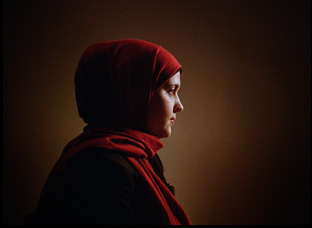 Jack, I understand you speak a little bit of German and Itab, you you speak Arabic. Did your relationships with the subject changed as they were acclimating to different cultures.
Itab Azzam: Yeah, definitely. Jack speaks a bit of Arabic, but his German is better. At the beginning, I was the main person building that bond with Israa, almost like a mother-child relationship, but as she started to speak German and she didn’t want her parents to understand what she was saying, she started to bond more with Jack because she can tell him things that her parents can’t understand. Then the interviews that you see in Germany is mainly Jack and she’s confiding in him. And then as years progressed, she started to become a different person and the relationship went back to me.
Jack MacInnes: This is a film about East and West and two different cultures and a character caught between them, and it wasn’t really what we intended, but to have two directors coming from either side and obviously we’re a couple, so we’ve been negotiating this in our own life, like how Syrian do we live our lives or how British [since] I’m from the UK. So suddenly we now had this dynamic in this film where we could talk to them from a Western perspective or talk to them from a Syrian perspective and that was quite a creative dynamic that we could get into in the film.
The sit-down interviews are an unusually powerful part of the film since they must come after the fact to a certain degree and you’re able to see the state of the relationship between Israa and both her parents by who appears with who. At what point did you decide to have those moments of reflection?
Jack MacInnes: Yeah, it was a really interesting decision. For those interviews, we were hiring studios that were expensive. We had a bit of money early on to film the journey and then it went into a period where we were just self-funding this film for three years, so we prioritized filming the material. Then later on, once BBC Storyville and PBS Frontline came on board, we looked at catching up again with these interviews. What became really interesting in the edit was looking back at them not so much as vehicles to tell the story, but as moments where now with hindsight, you could look at a little moment in that interview when Tarek and Israa just came in and sat together and started bantering, [with her saying to her father] “Oh, it’s boring speaking Arabic, go and have a cigarette, Dad,” and he says “She’s firing me” – those moments started to feel like little scenes, really telling moments. That’s how we ended up using it and they became this little marker of seeing [Israa] at different ages as a way of seeing how she developed.
For the first part of the film, I wondered what Nisreen’s part in all this was when she largely isn’t present in the film – the reason eventually becomes a part of the story, but from what I understand, she wasn’t that talkative when you first met her. What was it like to make sure she was a part of the film?
Itab Azzam: Yeah, we didn’t hear at all from her the first two weeks. She was just completely silent and then suddenly, she opens up while we’re crossing the Croatian border. It was a very difficult day. At that border, we were there for six, seven hours in freezing conditions, waiting for the border to open so we can cross to the other side and she suddenly looks at us and says in this mud and rain, “Ah, this is freedom for me.” In that moment, we realize that she’s got a story to tell and we really wanted to tell her story. She lived a really hard life in Syria and wasn’t allowed out of the house or to go to school and then she arrives in Germany and her eyes started to open. She starts to learn more about her rights as a woman and what she can actually actively do to change her life without her children being taken away from her. She made the really, really brave decision that many women couldn’t and I personally wanted more of her in the film, but in the edit it didn’t really work out.
At the end of each time you would film, was there a decision to make to keep continuing on?
Jack MacInnes: We were committed from early on to the fact that we’d follow her until she was 18 years old and then we ended up following her for a further three years. And that was a mixture of things that are totally as mundane as scheduling, like when can we get into the edit to deal with this? And then really important things, which was that we hit a point in this story where it just felt unresolved. Israa and Tarek ‘s relationship had totally broken down and this relationship that began the film was just on ice.
So at the end of 2024, we decided to go and see Tarek for the first time in a while and talk to him about filming some more and as we were on the train from London to Cologne, we saw the news that Aleppo has fallen, and then we woke up the next morning and the Assad had fled to Russia and the Syrian regime had fallen. It was the first time we’d been to Cologne without a camera because we were just going to talk to Tarek, but we suddenly had to find someone with a camera in Germany and we went to Tarek and we said, “Come on, let’s film you.” We filmed him celebrating the fall of the regime and it was this moment of incredible joy – for us, for Itab. This regime that had been oppressing Syrians for 45 years had now disappeared. But there was something about Tarek that he cut a sad figure in that in that celebration. This had been everything he’d always wanted. For years he’d been saying, “Get rid of these bastards.” But he can’t enjoy it because he’s lost his family. And that’s when we realized this was the final act of the story – the fall of the Assad regime had now opened up the possibility for him and Israa that this could all be over and they could go home. But also the question was still there of can these two people find any common cause?
And in the end, what happened was Israa went back to Syria, basically to scout out whether she and her now-husband would go and live there, but the effect of going back was for her to see what her father had gone through. She saw what he had lost. She’d only ever seen Aleppo as a child. She’d never seen the good side of Syria and she’d traveled through the country seeing Damascus, seeing the beauty of it and also seeing the destruction. At that moment she saw not just the way her father had oppressed her, but the way he had saved her and that became the catalyst for the two of them to start repairing their relationship. Once that unfolded, it felt almost like that was where our film was always headed. Obviously, there’s just so much luck involved that we happen to be there at that moment, so there’s something about this film that just feels now it was meant to be. We had lots of luck with this film.
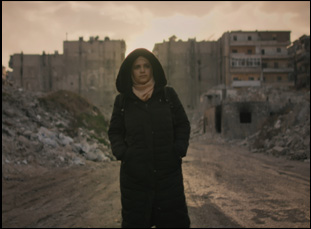 I think it’s where luck and skill meet. When it was actually a return home for you as well, was it a wild experience?
Jack MacInnes: It was totally wild. We made a decision to go ahead of Israa and do our own little trip for a few days because we wanted to make sure we weren’t going to have any problems with the new government, but also just to absorb that experience ourselves. We didn’t want our own emotional reaction to get in the way of what we were capturing with Israa and it was a totally surreal experience to be walking around the same streets. I could only compare it to suddenly traveling back to your high school and everyone was still there. It was a world we had almost given up hope of ever going back to and there it was, like there was the Ahmad Mosque and the streets of old Damascus and the cafes we used to go to, but with a new generation of people who we didn’t know. So there was a slight feeling of ghosts because a whole world of people that we had known had now gone, but Syria now has new roots growing up and a new generation, taking control of it again. So it was a hugely emotional experience.
What’s it been like getting this all off your shoulders and start seeing it with audiences?
Itab Azzam: It’s absolutely the happiest thing ever. We loved the family — they were like family to us — but the burden of carrying the story for 10 years and actually telling a story that’s so personal to these people, we always felt the stress of “Yes, we had a great relationship, but they might one day say, actually we don’t want to continue on this’ and there’s nothing you can do about that. So the moment we showed them the film and they actually liked it, it was the happiest moment for us because a huge burden just just lifted off our shoulders. Since then it’s been an incredible ride and they’ve been traveling with us with the film.
Jack MacInnes: The first screening at Sundance, it had been announced that we would be there [as the directors] to do the Q & A, so we came up, but then we announced that Israa would join us at the end of the screening and the whole place just went wild. And to see this little girl who we’d met getting beaten up by police, selling cigarettes — the most forgotten person on earth — to suddenly see her be the center of attention, get a standing ovation, and now going around the world and winning awards, that’s the biggest pleasure for us. I don’t know anyone more deserving of recognition than Israa.
Itab Azzam: Also the effect of the touring with the film on Israa is having a great effect on her. After Sundance, she [said], “I want to do something with my life” and she decided to go back to school and and now she’s training to become a civil servant in the German government. It’s just incredible to see that this film gave her purpose and showing it to people and how people reacted has been really positive for her.
“One in a Million” is now open in New York at IFC Center and opens on October 30th in Los Angeles at the Laemmle Royal.