




When Jenni Olson was asked for an encore in New York of her acclaimed 2020 screening series “Masc,” co-curated by Caden Mark Gardner, it was easy to come up with a title. A weekend-long selection of films expressing the trans experience naturally lent itself to being called Mini Masc, but after previously compiling a survey of films ranging from nonfiction such as “No Ordinary Man,” Chayse Joint’s biography of Billy Tipton, to a recent restoration of Silas Howard and Harry Dodge’s 2001 road romance “By Hook or By Crook” (a few of which are still available to stream on Criterion Channel where the series was originally birthed), Olson keyed in on films that captured a very specific formative moment in a young person’s life where they could recognize that who they were may not have aligned with the bodies they were born into.
Although it’s a smaller lineup, Mini Masc, which will hold court at the Metrograph from October 24th through 26th with second screenings of some films the following weekend, takes a more expansive view in its global scope and deeper cuts. Olson, the longtime filmmaker and revered film scholar, has unearthed four films made between 1975-1991 from across the world, with one carryover from the original series in “Vera,” Sérgio Toledo’s 1986 portrait of a poet in Brazil who finds their voice through a connection with a librarian. One can marvel that such queer history was committed to the screen in the first place when such stories as the drama based on the all-too-brief life of Anderson Bigode Herzer usually couldn’t command the resources necessary at that time to make a feature and asserts that they have always been there just waiting to be told, but so too that Olson and other archivists have refused to let it disappear from circulation.
“Vera” is joined by two other remarkable finds from archives abroad — Lautaro Murua’s 1975 Argentinian drama “La Raulito” about a street tough who finds life to be easier to navigate as a man than as a woman in Buenos Aires in the turbulent Dirty War era, and “Virgina,” Srđan Karanović’s 1991 coming-of-age tale set in 19th century Yugoslavia about a child raised as a boy by a family led to believe the female-born baby wouldn’t bear a male heir, which is set to start an entire U.S. theatrical run via Altered Innocence after its elements were thought to be lost forever during the civil war that erupted in the country shortly after its making. The series at the Metrograph is rounded out by “Something Special (Willy/Milly),” which Olson didn’t have to look hard to find, yet the personal print from her archive will surely offer others a rare glimpse theatrically at the 1986 comedy starring Pamela Adlon as a teen whose dream of being free of the pressures put on her as a girl by her mother (Patty Duke) is granted with a solar eclipse that lets her experience high school as a boy.
Ahead of the series, Olson generously took the time recently to talk about putting Mini Masc together, the archival digs required that occasionally rivaled the dramas contained on the celluloid itself and the power of seeing these films in community.
 How did this series come about?
The “Masc” series has been so amazing, how it had all these different iterations and Metrograph very sweetly asked me to curate something, so I [thought], “Let’s do this as an outgrowth of the Masc series,” and I realized that all of the films have this in common — they’re about young protagonists, although they are not children’s films by any means. So we came up with this concept of Mini Masc, similar to the ethos of the original Masc series, which was co-curated with Caden Mark Gardner for the Criterion Channel and we did screenings at BAM in New York, UCLA Film & Television Archive in L.A., and here at BAM PFA in Berkeley [with] the long subtitle being “trans men, butch lesbians, and gender-nonconforming heroes in cinema,” and how important that representation is in general, but especially in these times as trans people are under attack with political fear mongering. so important to see ourselves represented on screen.
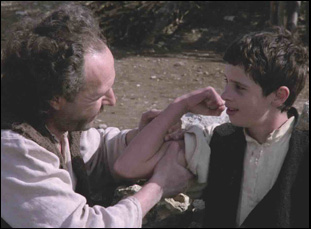
These particular films [in Mini Masc] are so exciting, starting with “Virgnia” in particular, which was one of the last films made in the former Yugoslavia. It came out in 1991 and played on the festival circuit, but was never released theatrically or on home home video, but I’ve been obsessed with it since I first saw it in 1991. And then about five years ago when we first started working on the Masc series for Criterion, I was trying to get it and I had an exchange with [Srđan Karanović] the director, a major Balkans director and he said that there were a lot of complexities where it was a French Yugoslav co-production and one of the French production companies went bankrupt, so the elements were lost and I just set out to find them. I did some research in the archival community and determined that they were at this lab in Paris and then reconnected the dots of the remaining producers and the director. The key aspect was Frank Jaffe from Altered Innocence, this amazing distributor here in the U.S. [said] that he was interested in doing a North American release of the film was what helped cohere the whole thing. But it was years of back and forth with all of these different producers, the lab and the Yugoslav Film Archive. It’s a beautiful restoration that was overseen by the director.
That isn’t the only film that’s particularly rare in this series. “La Raulito” seems like a real discovery as well. What was it like to find?
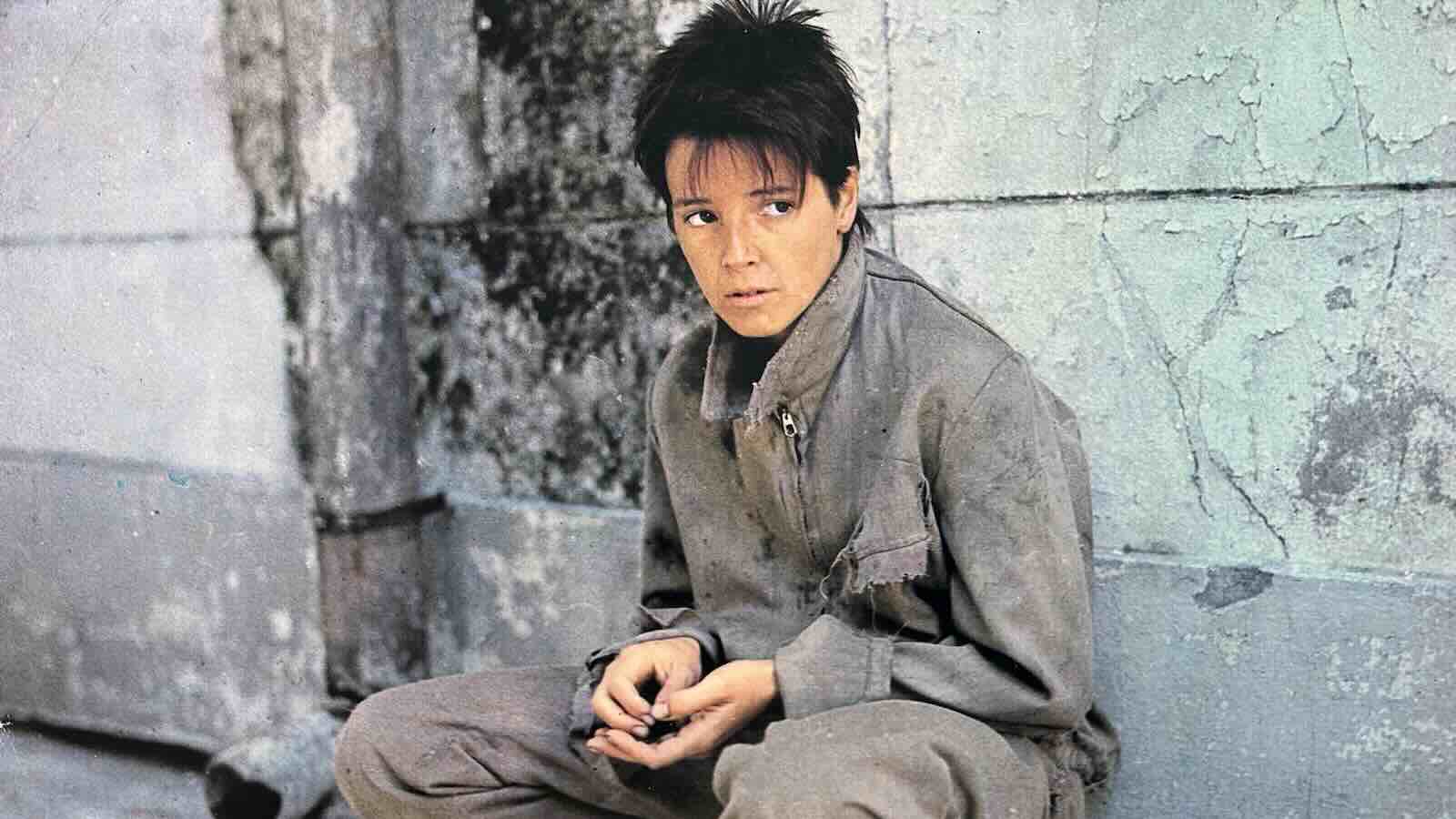
Similarly, and I say this in the program note I feel like I’ve devoted my life to trying to find new old Masc films — new old queer films in general, but “La Raulito,” I became aware of again in the original research for the Masc series. but couldn’t find it anywhere other than really bad pirate links online. Then just in these past six months, I started doing some more research and and found there was a 50th anniversary restoration that just happened and thankfully Adeline [Monzier] at the Metrograph was the one who did the research to find the restored print and the the distribution company. We’re going to have Julia Solomonoff for a conversation and it’s a really beautiful film [about] an orphan girl living as a boy on the streets of Buenos Aires that came out in 1975 and cinematically super interesting, [with] location shooting, so it has this really beautiful immediacy. And the actress [Marilina Ross] who plays La Raulito just gives this incredible, earnest, melodramatic performance. It’s based on a true story and a really amazing film, so I’m very excited about that.
 It’s interesting that all the films in this series are from before the 21st century while most of the original Masc series was after. What’s moving about it to me is that obviously people were making these films back then, so what’s it like seeing filmmakers finding ways even then to convey the trans experience?
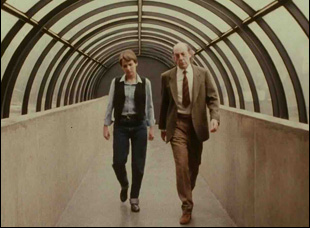
It’s interesting [because] when we always say “Trans people have always been here,” we have always been here, but what that representation looked like or what people’s understanding of themselves is in relation to what you see in culture. It’s like “Do I see myself? And then how does that change how I think of myself?” This is a dynamic process. “Vera” is a really important film because it is based on the story of a trans man in Brazil in the ’80s and it does actually seem like it’s the first film in international cinema that’s telling the story of a trans man in this direct, clear way, versus “La Raulito,” which is less clear in 1975. But in the case of many of these films, I wouldn’t necessarily categorize them and say, “This is a trans film or even this is a queer film,” so much as to say, this is a film that has gender non-conforming characters or representation or stories that we can look at now and relate to in different ways and enjoy, which is what we deserve. We deserve not to be under attack and we deserve to get to go to the movies and be together and to see ourselves.
The one film in the series we haven’t touched on, but must be quite meaningful to you when it’s a personal print is “Something Special.” How did that make the lineup?
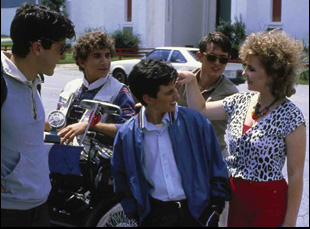
It’s such an amazing film and such a rich text, which is a funny thing to say because it is also this wacky, ABC afterschool special kind of premise — this idea of the girl who wants to be a boy and then she wakes up and is a boy. But Pamela Adlon’s performance is amazing. This was her first big film and I saw it when it came out on TV in 1986 and I bought a 35mm print of it that I’ve had all these years in my collection at the Hartford Film Archive. It’s such a fun film to see with an audience. And Patty Duke is her mom, so it’s funny because one of the things in the film is when they go to the doctor, and the doctor is like, “Well, you have to choose. You’ve been a girl and now you’re a boy, and you have to choose.” And the Willy/Milly character says, “Can’t I be both? It just feels like they, Willy/Milly, and it’s this prescient thing of like, “Yeah, you can be both.” The film is 40 years old. and it wasn’t made as this is a serious film about being trans at all, but it’s a really great film that queer audiences now can look at and get have all this fun with.
 The films are obviously something to look forward to – are you looking forward to the discussions after?
Yeah, two answers to that. One is that I am really excited that one of my favorite queer film critics Drew Burnett Gregory is going to do the conversation after “Something Special,” and that’ll be really exciting. And honestly, audiences coming together to watch these movies and be together is just so amazing. It feels like that’s why I do this and why I’ve been curating queer cinema since 1986 — to be together and see each other. It’s just the best. And I now am blessed and honored to work for GLAAD, the national LGBT Media Advocacy Organization, which was founded 41 years ago in New York City by many people but including my friend and mentor, the late Vito Russo, whose book “The Celluloid Closet” was the book that changed my life and saved my life. So it’s full circle [when it’s] all about the importance of seeing ourselves on screen and basically my entire life has been devoted to that.
“Mini Masc” will unfold at the Metrograph in New York between October 23th through the 25th with nightly screenings of “Virgina” at 6 pm, “Something Special” on October 24th at 3:30 pm, “La Raulito” on October 25th at 4:50 pm and “Vera” on October 25th at 7:20 pm.