



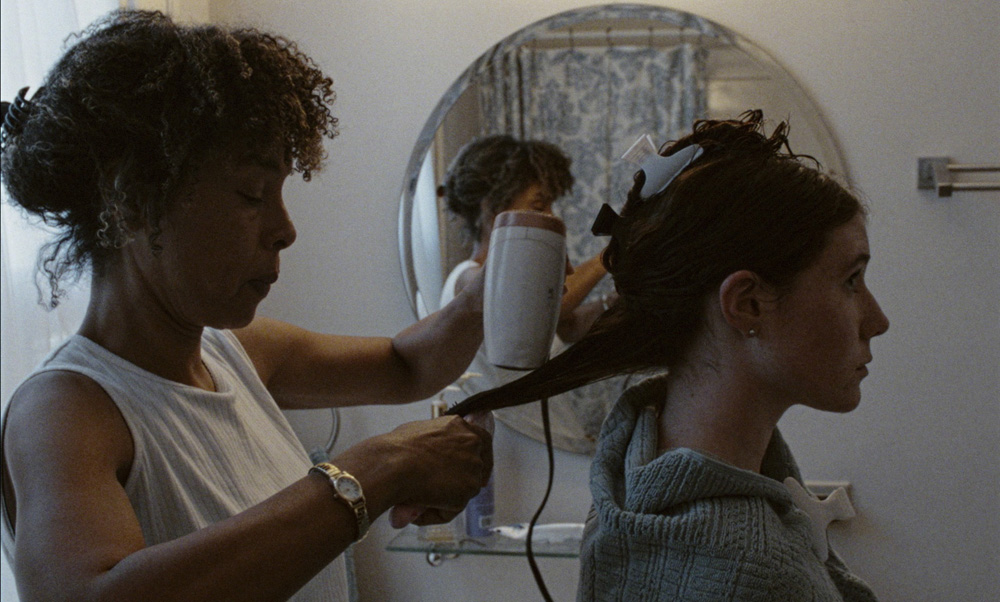

A lesson learned by Alex Thompson and Kelly O’Sullivan over the course of the films they’ve made together is that in order to feel real, sometimes you’ve got to bend the truth. So when it came time to decorate a local video store in their latest “Mouse” where the increasingly isolated teen Minnie (Katherine Mallen Kupferer) finds herself starting to strike up a rapport with its clerk Kat (Iman Vellani), the walls are lined with movie posters that are exactly the ones you’d expect to see in such a place circa 2002 when the film is set, only eagle-eyed viewer might notice that they bear the titles of films made significantly after that time (with the added advantage of circumventing any licensing issues).
“I just can’t stand fake movie posters in movies because all the clever art department tricks just take me out of it, so I was like, “What if we take real movies from 2002 and make them our movies? Just fudge them ever so slightly,” Thompson says with a grin, having turned “Saint Frances” into looking like the brooding thriller “The Mothman Prophecies” and making “Ghostlight” star Keith Kupferer the lead of “Remember the Titans.”
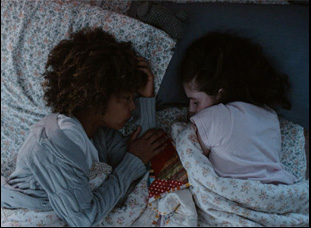
It becomes one bespoke detail of many in “Mouse” that gives it that magical quality of feeling like life, but just a little bit better, a particularly remarkable feat when it is centered around a tragedy that threatens to push Minnie even further into her shell as she navigates the fallout from losing her best friend Callie (Chloe Coleman). However, as in Thompson and O’Sullivan’s other exquisite, conscientious dramedies where characters tend to reach a dead end in their lives, whether it was O’Sullivan’s nanny in “Saint Frances” who finds her young new client to be a rejuvenating influence or Kupferer’s construction worker in “Ghostlight” whose soul is stirred outside of his comfort zone when he embeds with a theater company, there are more people out there who care than one might assume. In the case of “Mouse,” Minnie resists leaning on her mother Barbara (Tara Mallen), who can seem as if she’s too busy taking care of everything else to be concerned about her as a working single mom, but she starts to take comfort in a new relationship with Kat and a different kind of bond with Callie’s mother Helen (a ravishing Sophie Okonedo), who is having as much trouble as the teen is with adjusting to what life is without her daughter around.
When O’Sullivan began her career as an actor treading the boards, it isn’t a surprise that like “Ghostlight,” salvation might come from a drama class as Minnie forces herself to learn a number from “A Chorus Line” to pay tribute to Callie while finding her voice in other ways, but the astounding empathy Thompson and O’Sullivan have for all their characters dealing with what life throws at them never fails to take you aback as they observe a lovely friendship unfold between Helen and Minnie, who can find comfort with one another in spite of their vastly different age and experience. Truly one of the loveliest films of the year since it debuted at Berlinale earlier this year, “Mouse” is now beginning its theatrical run and Thompson and O’Sullivan graciously spoke about what it took to make the film on their own terms – a deeply personal endeavor when rooted in O’Sullivan’s own experience – while it was their largest-scale feature to date, how they find a rhythm for their films that feels so natural and why getting the right actor is always a goal they put above all others.
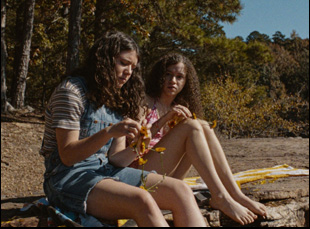 This is silly to ask, but famously you made “Ghostlight” ahead of this even though it was written while waiting to get the proper budget for this and since the needle drops from 2002 so perfectly set the tone in “Mouse,” was that a big part of holding out for this?
Kelly O’Sullivan: I don’t think we could have ever known how much we were going to spend on music on this movie.
Alex Thompson: No, it was really just for a long time the people that we were talking to — potential financiers, potential producers, basically rated this film at a $7-10 million minimum. That required a certain cast — who knows who that is? — and certain producers — who knows who they are? It’s a black box. So we went into “Ghost Light” and [thought], we just have to do this on steroids. So we went out and found the partners and everybody agreed that we could make what you watched for what we made it for, which was a lot less than $10 million.
Did the experience of “Ghost Light” actually help you figure anything out practically or even thematically when there are similarities?
Kelly O’Sullivan: Yeah, I wrote “Mouse” before “Ghostlight,” so “Ghostlight,” at least at the script level was a continuation of the things I was spinning on for “Mouse,” but practically it just proved to us that there is an audience for messiness and it doesn’t have to be star-driven and that casting the right people is of paramount importance. Not serving up a traditional Hollywood movie is okay because there are so many times that we got notes on “Ghostlight,” but more so on “Mouse” about how to make it more palatable or make it resolve in a more packaged way and what we learned from “Ghostlight” is if we stick true to our own instincts, there seems to be an audience for it.
Alex Thompson: Yeah, we didn’t get notes on “Ghostlight,” but we’d been through years of notes on “Mouse,” so making “Ghostlight,” it was really fun to be like, “Hey, should we just go to Arkansas,” which was this contested question of where do you shoot? Do you chase the tax credit in Chicago, Atlanta or New Orleans?” What if we just go to the place that we always wanted to shoot it and shoot the script we always wanted to do and put back in all the things that we took out. And we never would have met Katherine [Kupferer Mallen without “Ghostlight”]. And Luke Dyer hadn’t shot “Ghostlight.” He was the gaffer on “Rounding.”
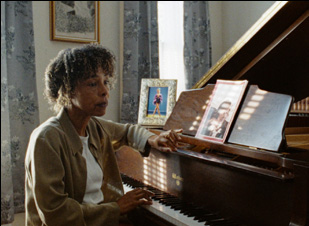 These may be separate questions, but the texture is really special and seems quite attuned to Little Rock specifically. What was it like to evoke the atmosphere there?
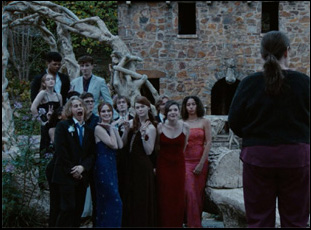
Kelly O’Sullivan: We looked at a lot of my high school photos as inspiration and we shot at the old mill for the homecoming sequence. That’s where I took all my homecoming pictures when I was in high school, so a lot of it was drawing on my actual memories and photos of that time. Then we were really using the beautiful natural landscape and showing the different houses that I remember. We knew the textural feel of Barbara’s house needed to feel cluttered and messy, like there’s dog hair floating in the air, and that Helen’s house should feel like a warm hug. So we were drawing from a lot of different inspirations, but we wanted it to feel very lived in and very recognizable for Arkansas.
Alex Thompson: Yeah, both of the houses have layers of life to them and it was interesting, like sometimes you talk about Barbara’s house being a house where there were a lot of pets. It’s wood paneling. It’s a little darker. But then Kelly’s house [as a reference] is actually way too nice for Barbara’s house. So we thought, “Okay, but the wood paneling is is good. Let’s keep that. Let’s keep the carpeting…” It was really fun to build out from real life and the archive of Kelly’s brain.
What was it like to invite Sophie Okonedo into this?
Alex Thompson: I’m a big believer — and Kelly knows this — if you can make an offer to a great actor and they say yes, then that’s just worth everything. So Sophie was literally the top of my list and I cannot tell you where that idea came from. I have such an admiration for the ’90s and the early aughts, actors who came up in a time when cinema and theater was probably at its peak, and personally I love when you see people brought on screen in a way that’s unexpected. You see Tarantino and Soderbergh do it all the time. So the idea of bringing Sophie in felt like “This becomes a movie with Sophie.” And we got to shoot this movie with more intention than we’ve gotten to shoot anything that came before. The story justified that, but it’s also the way we always want to be working. Sophie and the script and the dynamic between Katherine and Sophie made this a movie.
 What was it like to put the two of them together?
Kelly O’Sullivan: They were both so prepared and then so spontaneous in the moment. And I think the playfulness between the two of them was something that I was so excited about. Like when they’re dancing on the sidelines at the homecoming dance, doing those vocal warm-ups together, there’s a real youthful exuberance that gets turned on with both of them when they’re in concert together and then when they turn on each other, there’s a real sense of the gloves are off in a super exciting way.
Alex Thompson: My favorite Sophie/Katherine anecdote is the bedroom scene where Katherine is drunk in bed and Sophie is cleaning up the room [after she comes home from a party]. I remember the props department kept forgetting to reset the props, so Sophie would be resetting the props and having to think about that and then be consumed with the mechanics of “Okay, how do I get over here?” And eventually, I think it was Kelly’s idea, [she] told Katherine if she stumbles with her lines or with her blocking, just start laughing and don’t stop. So that reaction that [Sophie] gets — that flash of of rage and despair that leads into [the line] “Your life is so fragile, Minnie, it could be gone in an instant” — that’s because that was that take [where Katherine was told to laugh]. And that’s when I was really excited to have two cameras because you could get Katherine yucking it up on the bed in what is a really quite brave thing. Katherine didn’t start and then when Tony winner Sophia Okonedo starts to respond in character to stop laughing, she took Kelly’s note and just kept going. It just fueled this really brilliant moment that I don’t think any of us would have known how to just say, “This is what needs to happen.”
That’s beautiful to hear. You also always retain the naturalism in the rhythm of the films as well – how long scenes run and how they’re paced. Was that pretty fixed going into the edit or did you have to figure out some of it there?
Kelly O’Sullivan: It’s always a question. It’s in the script, but then it takes a thousand tiny choices, both in production and in the edit to get it to the pace that we want. We cut 20 minutes off of the film in order to have it have the momentum, but also let the silences last exactly how long and repeated watches and a thousand choices make it exactly what feels right to us.
Alex Thompson: Yeah, a lot of times we find that we’re focused on what we’re leaving the audience with in each scene. The word “button” is said a lot, like “This should be the button.” There’s this story that David O. Selznick tells about an exhibitor [around the time of] “Gone with the Wind” and he says, “How long should it be?” And the exhibitor says, “How long is it good?” We say that a lot in the edit, not for the whole film, but for every scene, basically like what we did with “Saint Francis,” which has proven to be an effort throughout, is take out everything that isn’t working at a 100% and see if if the film can withstand that. “Mouse” is such a great film to do that with because it is a linear story. There’s no magic — no secrets to be revealed. It’s a film you really can say, “Let’s see if the audience will make this leap forward with us” and luckily, we just had a lot of scenes that were singing already and really justified the space they took.
 While I understood what you just meant there, I’d argue there’s plenty of magic in this. What’s it been like sharing it with audiences so far?
Kelly O’ Sullivan: It’s so moving to me to see that this story resonates with people and that people are having such a a positive reaction to it. They’re responding to things that I hope they would — to the humor, which was always a question, and to the amazing performances and and the messiness of the characters in it. It feels like audiences are saying, “Oh, this feels true” and that was always the most important thing to me. I never wanted it to feel like grief tourism or a sanitized version of an exploration of grief. I wanted it to feel really complicated. That feels like that’s happening.
Alex Thompson: And on “Ghostlight,” before we had gotten into Sundance, I would get emotional just thinking I cannot wait for people to see Keith [Kupferer] in this film. I just want people to see Keith. And I feel that way about Sophie and Katherine and Tara and this script. Selfishly, I’ve been really happy that I’ve heard people talking about the filmmaking on this film. On “Ghostlight” and “Saint Francis,” that wasn’t really what people were focused on. But it’s made me really excited for Luke and Nate and all the the creatives who put in so much intention behind those films. I’m excited that there’s probably like a future where people go back and revisit those films, see all the intention that that is in “Mouse.” That’s been really gratifying for me because I like talking about that stuff too.
“Mouse” opens on November 6th in New York at IFC Center and Los Angeles at the Laemmle Royal before expanding on November 13th.