



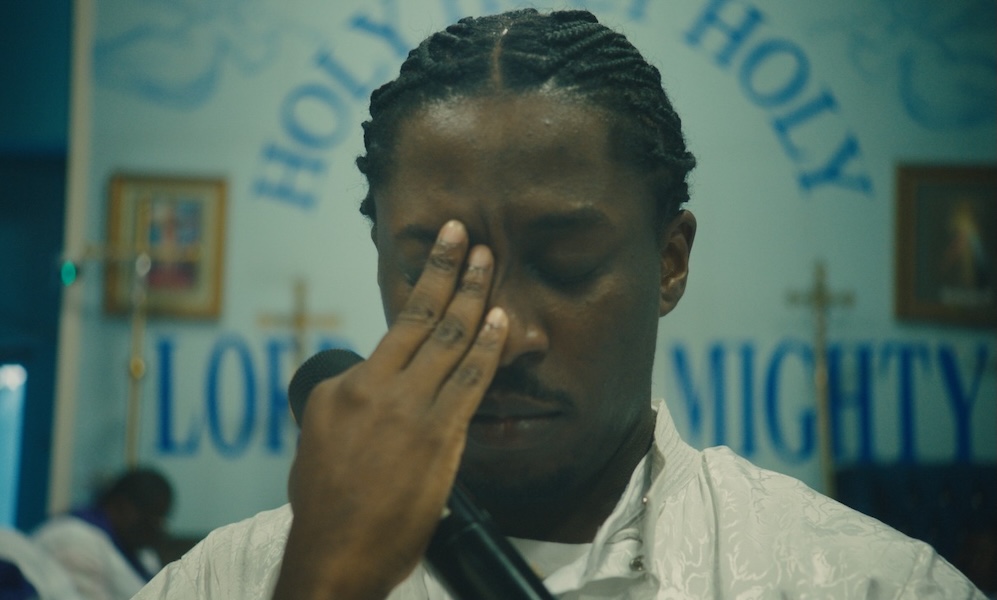

At one point in “The Sickling,” director Gabriel Badejo recalls recognizing there was a greater consciousness out there of sickle cell anemia, watching the 1973 Sidney Poitier drama “A Warm December” with his family in which the “In the Heat of the Night” star played a doctor who falls in love with a patient with the disease for which he knows there is no cure. The presumption of a death sentence registered less with Badejo than the fact that it was acknowledged in popular culture at all when living with the disease himself, it seemed so private and isolating, which is undoubtedly the primary motive behind telling the story of his own battle with the condition that he describes at one point as feeling as if glass was breaking inside the blood from abnormal hemoglobin in his system.
A relatively rare disease getting an equally rare spotlight makes “The Sickling” worthwhile, though strangely, Badejo’s first-hand account of his experience living with the disease is more generic the more personal it gets when while surely each person endures in their own unique way, the ups and downs of the director’s own battle with the malady takes on a similar narrative shape as many other accounts of living with a life-threatening prognosis. What does begin to separate it, however, is in illustrating how a search for a cure or, even at this point, proper treatment is made more complicated by the color of Badejo’s skin, which as a descendant of Nigerians that moved to Toronto when he was a child puts him at the back of the line when there is simply less interest on an administrative level in researching diseases that affect predominantly Black communities as sickle cell anemia than something like cystic fibrosis where there’s more impact on a broader swath of the population. With less attention paid to sickle cell anemia, how Badejo even goes about living with the disease is rooted in anecdotal tales from aunties whose own sons died of the disease at an early age when it was latent within his own family and as he grimly jokes, “I won the lottery” when symptoms started showing up and a diagnosis would seem to take shape more amongst friends of the family than doctors.
Badejo speaks with physicians for the film who see the inequality within the system, conversations that bring up an intriguing lack of trust between doctors and patients when those suffering from sickle cell anemia can be rebuffed in seeking medication when dismissed as part of vicious long-held stereotypes where Black people are seen as junkies. In this regard, Badejo’s personal testimony is undeniably chilling when he arrived at a hospital in crisis and initially only received saline for his pain, as if the thought of being treated might make him go away, though too often scenes detailing his health for better or worse can linger on well past the point is made, legging it out to 90 minutes and running the risk of overshadowing the very important concerns he raises over how his case was handled. Still, as Badejo finds a promising way forward with experimental treatment after thinking his life might end before 40, “The Sickling” also forges ahead toward something moving when he can start fulfilling so many dreams he never thought he’d live long enough to realize, including a trip to Nigeria and making a feature, ultimately making the time count for both himself and for audiences.
“The Sickling” is available to watch on the DOC NYC virtual platform through November 29th.