

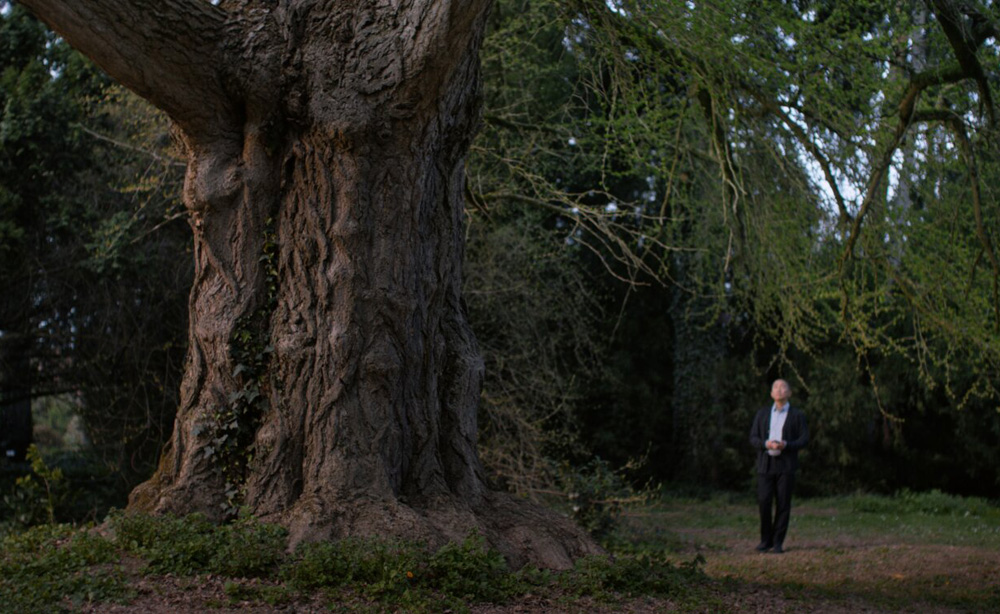

Years before she would make “Silent Friend,” Ildikó Enyedi knew where she would film it, returning to a botanical garden in Marburg, Germany at the center of the university town where her husband went to college during the 1970s. She would never describe this as a location, but rather the place where her stars resided, with a glorious gingko tree proudly showing its age with its gnarly trunk that had grown alongside the community, which had roots from medieval times, standing out amongst the various flora that would come to be included as supporting players. (Enyedi acknowledges each and every plant’s individual presence in the end credits as she does with her human cast.)
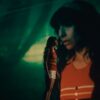
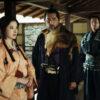
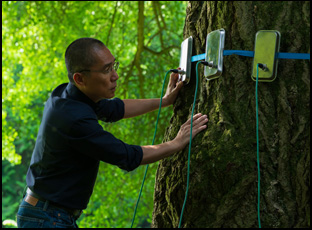
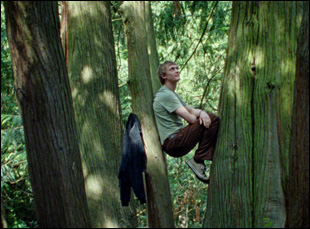
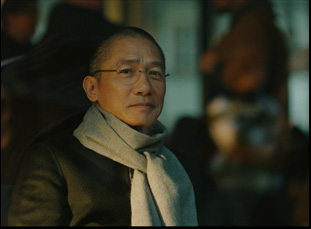
When Tony Leung Chiu-wai and Léa Seydoux are around, it still may take a little bit to realize that they actually get second billing in the “On Body and Soul” director’s exquisite new drama, unfolding over three generations with human characters that have no bond to one another beyond the land they stand on and a shared sense of isolation, but buffered by the greenery around them, the film shows how they always have company in nature. Time clearly changes some things when “Silent Friend” introduces Leung’s professor Tony stepping onto a campus in the present where a sleek modern library that has been built directly in front of the original brick building that the university was housed in, but some emotions are eternal as he ends up mostly alone after being brought in from abroad to give lectures on consciousness and the COVID lockdown prevents his return home, leaving his in-person connection limited to the tree amidst the Zoom calls he fields. It turns out he isn’t the only one who has found a kinship with the giant oak over the decades when Enyedi cuts back to a century earlier when Grete (Luna Wedler), a young botanist is made to feel she’s an outsider in a male-dominated profession as she pursues her studies at the school, and to the 1960s where Hannes (Enzo Brumm), a somewhat aimless arts student is attracted to a classmate (Marlene Burow) and unexpectedly forges more of a connection to her biology project that posits plants may have the ability to communicate in meaningful ways to humans.
With “Silent Friend,” Enyedi had sought to tell the story of outsiders who either found their way inside a system or to rebel against it and ends up transcending the ecosystem she operates inside herself with a truly one-of-a-kind cinematic experience when the serenity that the humans in the film can take from their time in the garden extends off the screen when a sense of wonder and possibility is restored to the world around us. After offering such reverie last fall with its premieres at the Venice and Toronto Film Festivals, the film is now arriving in U.S. theaters and Enyedi kindly spoke about the impetus for the film, telling a story of reconnection after the pandemic from an idea she had long beforehand and working with an unpredictable cast of leafy performers.
 How did you decide to tell a story in three different time periods and specifically these eras?
If you want somehow to perceive the difference between this painfully short human life and the life span of a tree — the consequence, the rhythm, the perception of time — then the only way if you don’t want to make a several hundred years long film to is to just make little glimpses from its long life. It was important for me not to have a connection between the human heroes because this film is not about them. It’s about their attempt to connect in very different ways with nature and with this tree and by the very strong changing the human landscape. You could feel how much a tree lives through and how different the priorities of a tree has compared to a human who is very much embedded in this net of everyday excitement — what is happening in politics, with [their] career, etc. Somehow in these three moments on the sensual/perceptional level, it shows how [there are] different ways of existing for humans and in not such a long time [frame]. It’s a bit more than 120 years.
It was also important to show three generations of students, [beginning with the] all male [class] at the start of the century, very neatly dressed with [clean] shaven faces and haircuts in a very neatly arranged garden. It was also important to have this very small [central] location where we put really little fences around the grass, just to underline unconsciously this formality of the time. Immediately after in the ’70s, you see the wide growing grass full of white flowers and insects and the [following] generation of students is sitting in the grass with hairs growing wildly. This separation then in 2020 [when] there is a huge library, which was built five years ago just beside this garden I’ve known for 35 years. At the beginning of the film when Tony [Leung, playing] the professor, arrives and is watching through the glass this new generation of students, they are coming from everywhere, from all parts of the world. So it’s not just the plants but the human crop that is also very essentially changing.
You’ve been talking about this film since 2018 and it hits all the harder having lived through the pandemic and this idea of connection. Did the idea change at all or just intensify as we all went through it?
The experience of the lockdown just intensified the contemporary storyline that was In the original script because that was also an isolated professor, but this way he could be far, far from home in these huge spaces of an empty campus which were built to receive lots of people, so somehow the isolation was much stronger.
 The individual plants get their own screen credit, which is something I’ve never seen before, and you had this botanical garden at your disposal. Did you find everything there or was there a pretty extensive casting process for the plants?
I’m happy you mentioned these credits because I was so happy in Venice when the film premiered, they got an applause. It was a very heartwarming feeling. Of course, it’s a film, so you have to put together different elements. This garden in Marburg [Germany] is not in an ideal place for a gingko [tree, which is the main star of the film]. It has an old one, but it’s near a wall and of course, it’s growing, so we had to find three different ginkos. The 2020 one, the oldest, was the hardest to find and when we found it, we had to find two younger ones with the same attributes. It is not probably perceivable, but all the three of them have one nearly horizontal big branch. It’s quite low for Hannes to climb on [in the second timeline] and we found it in different parts of the world. There exists a list of important trees, not only ginkgos but oak trees and so on in Europe, so we did a lot of research but even even with that we had to travel to a lot of places to find out gingko.
You find so many cinematic opportunities in expressing the science, such as the lantern example at the beginning where you’re able to convey differences in consciousness with the students passing around a light in a dark lecture hall. Was finding research that you could build on in that way an exciting part of this?
Of course, in a film, you don’t want to force anything on the spectator and as an author I try to pull myself back a lot. Sometimes humor can help to understand a lot, like a shortcut and some sensory experiences. The theme of this lecture [about consciousness from Tony Leung’s professor] comes from the research of Alison Gopnik, an early cognitive development scientist who has wonderful books, “The Scientist in the Crib,” and “The Philosophical Baby.” So it was real fun when I discovered this spotlight consciousness and the lantern consciousness because as a teenager I was reading Alan Watts, a British scholar who was perhaps the first to try to create a bridge between Eastern philosophy and Buddhism, [though] not only Buddhism, and Western philosophy, and he was speaking about spotlight and lantern light consciousness, so it was amazing to see a very thorough and focused scientist like Alison Gopnik working at Berkeley today use the same expressions as Alan Watts and behind the film, there is a bit of a Buddhist approach. That was very refreshing, but then I thought, “Oh my God, I have to do everything to make this understandable and perceivable for the audience.” [laughs]
 Given the way that nature plays into the film, was there anything that came as a surprise to you that you could embrace during the shoot?
I met some really crazy plants. When you are slowing down in a botanical garden, you discover sidekicks who are perhaps in a corner, perhaps they are not big trees and then you learn a bit about them and you find them really amazing creatures. In the film, there is one close up of a Chilean rhubarb and we spent half of our Sunday with this [plant]. There were many so-called intimate and unexpected meetings with plants during this film.
“Silent Friend” is now open in New York at the Angelika and Film at Lincoln Center and opens on May 15th in Los Angeles at the Laemmle Royal, San Francisco at the Roxie Theatre, San Rafael at the San Rafael Film Center, Silver Spring, Maryland at the AFI Silver Theatre, Huntington, New York at the Cinema Arts Centre, Pleasantville, New York at the Jacob Burns Film Center, Toronto at the TIFF Bell Lightbox and Fairfax, Virginia at the Angelika Film Center and Cafe Mosaic. A full list of theaters and dates is here.