


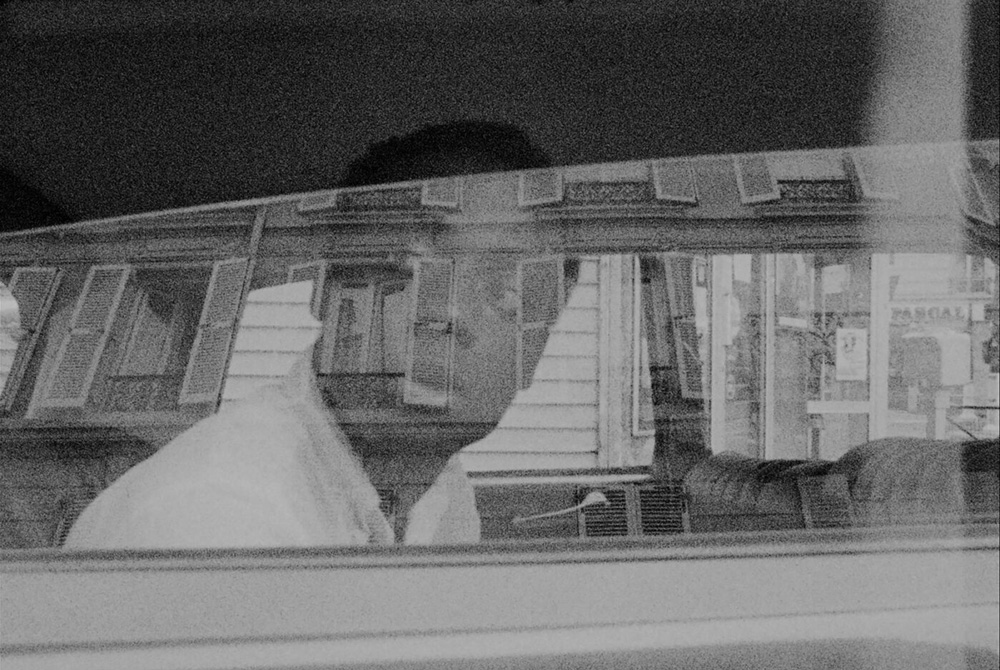

It didn’t concern Yashaddai Owens that a some stray evidence of filming in the 21st century might make it into late 1940s France in “Jimmy,” an exuberant portrait of James Baldwin in his formative years after moving abroad to find his footing as a writer and thinker, when ultimately not only is the film apt to make one lose all sense of time as Baldwin did in dipping out of the culture that felt so confining to grow up inside in America as a Black man, but that it’s not as if things have changed all that much.
“Things that existed then are as much applicable now, whether it’s racial injustice or classism and modernity is a reference of what was before,” says Owens, who does more than enough to set the mood of being in the past with the unusual use of a black-and-white Bolex in his resplendent debut feature. “What I was trying to focus on was my foreground — what you’re placing your attention towards and what do you care about? It didn’t upset me if you see a Lime scooter in the back.”
Owens admits to catching a bit of a lucky break when filming just before the Olympics of 2024 as Paris was being cleaned up to to host the Games with much of the city’s original architecture unadorned with advertising and the locals had largely fled town, leaving him a real playground for a period piece as he follows Baldwin around the streets, seemingly experiencing freedom for the first time. Played by Benny O. Arthur, the future author is a man of few words as he settles into a small flat and explores the city as any student abroad for the first time would, making a pit stop in Istanbul first. But the film observes Baldwin developing a vocabulary and ideas as he has the space to take in his surroundings and engages in spontaneous romantic rendezvouses, quietly replacing the fear he had from his youth when all he could see discrimination with a sense of daring from the exhilaration of discovery that there might be a world beyond the one he could imagine.
For those aware that each step Baldwin takes on his European excursion is one towards writing “Go Tell It On the Mountain,” the film is especially galvanizing, but comes across as a cool breeze for just about anyone to look at the world anew and with a stamp of approval from “If Beale Street Could Talk” director Barry Jenkins who came on as its executive producer after premieres at Telluride and the New York Film Festival, “Jimmy” is ready to gleam as one of the gems of this summer as it makes its way to theaters. Recently, Owens spoke about the unexpected path it took to get there from and the inspiration the filmmaker drew from Baldwin in literally retracing the journey that he took, as well as making the film feel as big as possible while largely operating as a one-man crew.
 This feels like the James Baldwin movie I’ve always wanted to see, with this freedom he felt to really develop his thoughts. How do you actually get interested in this period?
I think about it now as capturing someone in a liminal space since my mom had passed quite recently and I had a lot of deaths in my life around that time, so I felt that I was in the liminal space and I’ve realized the best thing about it is that you can use as an opportunity to pull something special out from the depths within you. That happens when you’re nomadic, when you’re trying to find yourself in a place that’s outside of your own. I was just talking with a friend about Baldwin and we just thought there’s no films that really speak about speak about him, perhaps because of his sexuality, and about this part about how do you find your place? What does it look like to find pieces of yourself in a place foreign to you? In the liminal space, the place in between when you’re in limbo. I was really inspired by that, and the answers [about why I was making this] I think always come a little later, similar to a lot of his sermons, I call them, when he would speak. They’re all kind of prophetic.
Had you been to these places he was before yourself or were you really experiencing them with his words ringing in your ears as a guide?
I’m glad you see it as a guide because I tried not to preface the film. I used to just go in front of the audience, those who would be generous enough to give us their time, and I would really invite them to invite pleasure because it isn’t the usual film that people are used to expecting in the theater, and I invite them to see Jimmy as a guide rather than anything else – to walk through him in the first ten minutes of Istanbul in this dreamscape and then follow him throughout these footsteps [in Paris]. I was the same age as Baldwin when I went to make this film. We started shooting a lot of things that became quite metaphorical. We began shooting August 3rd, the day of his birthday, and it was really important to me to hit a lot of these areas that were symbolic to him in the ’40s that I had tried to emphasize in 2022 when we shot it, and try to put myself in his footsteps of this geographically with language, but also with anything that we could try to manufacture in the current age.
From what I understand, the Istanbul section was that was added later in both the shoot and maybe the general idea. How did you decide you needed to have that as an introduction?
You don’t know until you just go. After we finished shooting the Paris section, I went to Istanbul by myself. I was talking with my producer who would send me beautiful postcards every day via e-mail, just giving me hope and courage and inspiring me to keep looking even though the shoot was over. We were still in this journey together, still in this dreamscape and it would be uncanny not to mention Istanbul. [Baldwin] didn’t leave. He didn’t seek Paris. He just needed to seek refuge away from America and it wasn’t as if Paris was the saving grace that treated him any better, so to speak. It was just [staying] in America would lead to his own demise. And Istanbul was to Paris what Paris was from America. It saved his life. He lived there for about 12 years of his life. It’s where he was able to debut his plays about queer people and go on tour around Istanbul and he was encouraged and embraced within the communities there to be able to express creatively. So Istanbul was a place that saved his life as well.
Being able to go there myself, feeling the spirit of not just of Jimmy but of the people there and seeing how one can be invited so quickly was really inspiring. But it did come later [as an idea] in the edit and it’s all brought together through the soundscape that our engineer created, pulling audio from native speakers and the soundscape [with] the birds and of course with the musical score weaving all those things together. It really creates and sets the tone that you are now here. This is a a holy place. I mean to capture your attention and take my hand and let’s let’s walk together.
 You shoot on a Bolex, which doesn’t capture sound and would dictate the whole process as well as create a certain feeling. Did you immediately know that was what you wanted to film on?
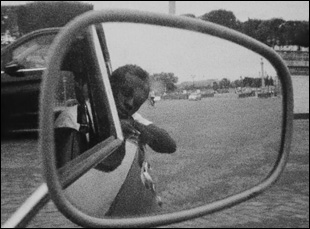
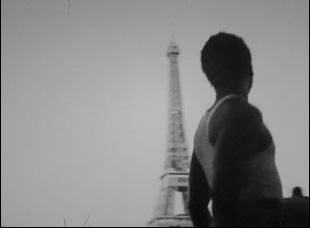
Yeah, my first time ever traveling abroad, I took an 8 mm camera with me and my first place to visit was Paris. I was attracted by cinema verité, inspired by Jean Rouch, a French filmmaker, and also a lot of filmmakers from the Soviet Union, this handheld aspect being really limber and allowing the spirit to be translated through the camera, not really being bound to a tripod. It allows the viewer to feel as if you’re actually there as well, moving through it rather than just being an observer or a voyeur. That’s why I love using the Bolex and any handheld camera. I’m a modern man with analog tastes. It was that or nothing. I didn’t even think of another solution and we ran out of film a lot and the stock that we needed in Paris, so it was a hassle traveling with those things. But even if everything had came out blank, I always knew that the spirit that guided us through would still just restore something in me as well from my own losses throughout that time.
A sequence like the car ride through Paris when Baldwin first gets there after having settled is really exhilarating with how many angles you have on it and I imagine you were filming this yourself. Did you go in with much of a plan in terms of filming coverage?
We planned a lot. That was our last day of shooting, and [the scene] is in the original script when I was writing everything out at the Schwartzman Library in the New York Public Library, the huge one on 42nd Street, so that was always a part of my shot list. Everything that we shot, I had originated sitting in those seats every day for about a month straight, just writing vigorously from when they open at 9 am all the way to they close at 6, sometimes 5 on Wednesdays. [And the scene] was about landing when you arrive. Obviously, his reality is very different. He didn’t arrive to Paris in this really luxurious car, wearing a nice watch, but when you love someone, you imagine living freely and I’m not really into manufacturing images of just people in poor conditions anymore, especially Black Americans, and this film isn’t a biopic. It’s my own imagination for the life I would have wanted for him.
So the ride [through Paris] is like you’re in the raft. You’re leaving this one place and you’re in the raft, wading through the water and you arrive here at this hotel, you’re looking through the city, imagining a life that you could create for yourself and it’s something that you could have never imagined because you come from the crude reality of America where imagination is not only discouraged, but you’re oppressed for thinking big. Your own people can tell you not to think big, but to think realistically because if you think too big, you’ll find yourself in the gutters. You’ll find yourself killed or murdered. It was an early thought to think freely at around the ’40s. It wasn’t encouraged. It was only encouraged through music and through storytellers, but again, those things were just stories. You were never encouraged to think that that could be your actual reality.
I showed this [scene] to my friend Sunrise and she gave me great advice. She was like, “Hey, this is this is a bit too long and I understand the luxuriousness of it all, driving to the car, looking out the window at all these things, but maybe maybe cut it down a little bit.” And it was really thoughtful. Her husband’s an actor and she’s been working with within this realm for such a long time, so it was really sound advice. And I cut it down, but to still remain in this dream, like, “We’ve arrived here from where we’re from. What does that look like? Is it pure bliss? Is it regret? Because you left your family, now you’re this white tiger and you left all these things behind.” I know what that’s like for my own self — I’m sure a lot of us do. That’s the beautiful thing about beginning to express these things artistically is that you get to say the things that most people are thinking or feeling themselves. You leave a place, it’s for yourself, but maybe intrinsically you’re doing these things for your last name, for the people after your ancestors, people before you. Who’s to say they wouldn’t have wanted this, something that they could have never imagined? Being a Black American is, at times, quite surreal. That’s why this film I think is very fitting, despite what some might call technical mess-ups, but it’s not about that. There are no perfect lines in nature. You can’t find a single perfect line in nature, but it’s perfect because it’s true. And that’s something within the nature of my shooting that I lean into. As long as it’s communicated, as long as you can feel it, that’s most important to me.
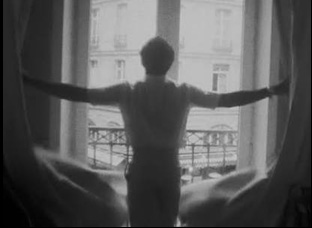 Because you shoot on a Bolex and there is no sound attached to the image as you’re recording, what was it like to build up the sound later with your composer Paco Andreo?
Paco is phenomenal. It’s the true essence of collaboration. When you trust someone, you just let them do their thing. I’m in New York while he’s in Paris, and my producer Ava Kaufman and I wrote timestamps of when we imagined music to come in and to fade out, the feelings that we were thinking about for this scene or sequence and when we wanted to breathe from diegetic sounds and let sound design come in from here. I didn’t hear any of the sound until I got to Paris to be with them. I didn’t know what anything was going to sound like. I didn’t hear any samples, but when you trust someone, you allow them to flex their muscles. For some people, that’s really scary. That doesn’t scare me though. Again, I’m not looking for perfection, but I know why I wanted Paco to be a part of this, so I don’t want to step on anyone’s toes and you get too much in someone’s business, hovering over them, you’re micromanaging, and it just becomes less fun and exciting.
Once we got inside of the studio room, it was breathtaking. The studio was maybe the size of where you are now [somewhere small and intimate] and you have all these musicians just opening these floodgates of the sound vibrating through you, opening up your pores. You have chills and it is just pure euphoria. It’s like getting film developed for the first time and seeing how the light develops on the negative. You don’t know what’s going to happen when you’re there and you’re like, “This is it.”
That’s the way I felt watching this. What’s it been like putting the film out into the world so far?
It’s been surreal. I didn’t have any expectations when I made this. It saved my life almost because again I was in this liminal space. My mother had passed and I didn’t know what to do. I started experimenting so much with things. I started cutting my hair. I just felt quite free in that it couldn’t get any worse than how my current situation was then, so why not try? Why not make a Kickstarter for $40,000? Because I thought that’s what I needed. Why not go every day wearing the same outfit, a gray sweatsuit, through two-and-a-half months to creep to your goal? Why not make [these] little baseball cards with the same poster and have a QR code and invite people to encourage people and invite people to donate? Things either happen for you because you sacrifice everything to create to make it happen or it just wasn’t your time. And I think it was a mixture of both. I didn’t do anything but promote my film every single day, unashamed. Vulnerability was never ever been an issue for me and putting myself out there to to get my dreams out in a really independent way felt like a necessity. How else was it going to happen if I’m not putting myself out and sharing this every single day?
And then once it’s finished, inviting people who I really respect in different cities to look at the film. I got advice from Boots Riley. He’s a rock star, and he [said] the same way you promoted the film, why not share the film like that too? Go to different cities — go to LA, go to Paris, go to New York, go to Atlanta, Chicago — and invite your peers because we were thinking about film festivals. So it got around and then I got invited to these festivals, Telluride and New York, and my world of cinema is my family making home movies my entire life, from Hi-8 from Brownsville, New York to Decatur, Georgia, and editing them myself in Da Vinci. It’s always been analog for me. My references come from watching bootleg Chinese movies that my great grandmother would get off the back of the bus in New York, watching “Kung Fu Hustle” and “Iron Monkey.” It wasn’t from watching David Lynch. That pushed me forward and it’s been surreal not asking for this, being invited to the these worlds that I’ve never was in [before].
I was always surrounded by the right people who introduced me to other right people and it felt like a culmination of how we started this film and the intentions that we had. You flow on this wave of intent and of generosity and when your intentions are true, I think people really, really feel that. But even with these film festivals or the attention that it’s gotten, like the New York Film Festival, [I thought] maybe the first screening was a fluke that it was sold out, but then the second one sold out and the third one and the fourth one and then they added another one. And some people walked out, and that’s okay. I had to learn to desensitize myself to those things because it used to hurt a little bit, but I’ve been honored to see how inspired people are by James Baldwin and appreciate this perspective, people hear of James Baldwin and only hear him.
“Jimmy” opens on July 31st in New York at the IFC Center.