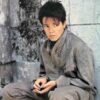
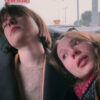
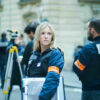


“I literally can’t keep going up and down each down,” a beleaguered elevator operator (Albert Birney) amusingly shrugs in “The Arrow at Rest at Every Instant of its Flight,” as a pair of former flames (Gus Birney and Daniel Zolghadri) seem to be in a similar spot separate from the fact that they’re literally suspended in the air. It’s one of three stories in Theodore Schaefer’s delightful second feature that sees a variety of characters in limbo – financially, romantically and spiritually – with Birney taking the lead in each one in very different roles, all contending with restlessness in New York.
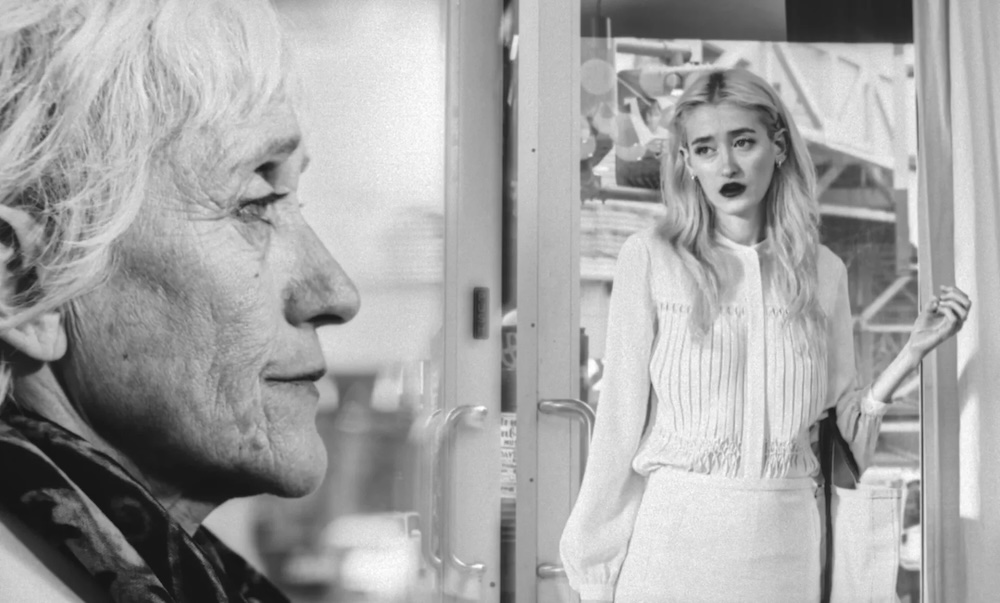
At first, any difficulty staying still occurs because of a rousing jazz score supplied by Scott Lane that conveys the hustle and bustle of the city that never sleeps, yet Schaefer and editor Zach Clark may land on an image of a ferris wheel at Coney Island to suggest all the fun that can be had and ultimately curl around the corner to find Violet (Birney) behind a counter at the penny arcade with a co-worker (Jack Haven) plotting a path out of their dead-end jobs. It’s a timeless concern romantically relayed in black-and-white, but Violet’s considerations about how to gain more economic mobility seem distinctly attached to the present moment when she dismisses any robbery of a small business when the prospect of a laundromat heist comes up and instead pivots to a door-to-door scheme collecting donations for a vague climate change initiative when no one knows enough about it to raise any questions, somehow both socially conscious and cutthroat all at once.
Schaefer and co-writer Patrick Lawler cunningly note these contradictions of wanting to be a better person if only the world would let them throughout the stories that follow, also visiting with Sinopia, a lit professor seemingly stuck in a loveless relationship with her boyfriend Richard (Zoghadri) where both have resorted to an affair with the same man (John Early, acquitting himself nicely in a more serious role than usual), unbeknownst to each other, and Jade, a pickpocket who becomes concerned with her latest mark (Roberta Colindrez, lending her considerable gravitas to the most dramatic segment) when she finds what she thinks is a suicide note tucked inside the wallet she pilfers. It turns out the unwieldy title carries the weight quite gracefully as a nice indicator of what’s in store when the film itself has to keep things in the air without tipping over and Schaefer threads the needle between sharp satirical irony and sincere soul searching, quickly overcoming any pretension that might be suspected. After his similarly auspicious feature debut “Giving Birth to a Butterfly,” which also was a bit of a shape-shifter while being committed to one narrative, the director keeps things lively as much to reflect the film’s setting as much as for the sake of the audience, portraying New York as a place where a wallet can reveal a rich experience even without much currency in it and a well-prepared cup of tea can not only open up the sinuses but the mind as well.
After entrusting her with her first lead in “Butterfly,” Schaefer sees Birney really take off in the variety of characters she has to play, running the gamut from desperation as Violet to the detached cool of Jade and in a lovely touch, the film is tied together with her mother Constance Schulman roaming in and out of the narrative as “the woman with the suitcase,” perhaps sounding crazy as she asks strangers on the street, “Have you seen me?” when she thinks a doppelgänger is on the loose. Indeed, Birney is a spitting image of her mom, so it could be read in moving fashion as living out all the different characters that the woman has developed inside of her over time, but when there’s a feeling for just about anyone to connect to in “The Arrow at Rest at Every Instant of its Flight,” the resemblance isn’t limited to her own bloodline.
“The Arrow at Rest at Every Instant of its Flight” will screen again at the Edinburgh Film Festival on August 15th at Filmhouse Screen 2.