



When Dominik Moll first broke through internationally with “With a Friend Like Harry” at the turn of the 21st century, it was easy to dub him as a potential heir to Hitchcock or Chabrol as he uncorked a crackling murder mystery, but as has always been the case in his films, what came next is where things got really interesting. The gift of a new film roughly every five years has found the director and longtime co-writing partner Gilles Marchand continuing to revisit crime as a central element, but with time, the two have moved away from plotting out the perfect whodunit to what no one can escape when a moral wrong occurs that proves impossible to make right again.
“There is obviously an evolution,” says Moll. “For instance, if you take “With a Friend Like Harry,” which was shot 25 years ago and it could still be the same story today whereas the the last two films are more set in their time and in a specific society. Maybe it’s because I’m more concerned with all the problems we are facing and they’re taking more and more space in one’s brain and you feel a responsibility to work with it as well, even if you are still in the logic of fiction, but to question things that are happening today and part of our society.”
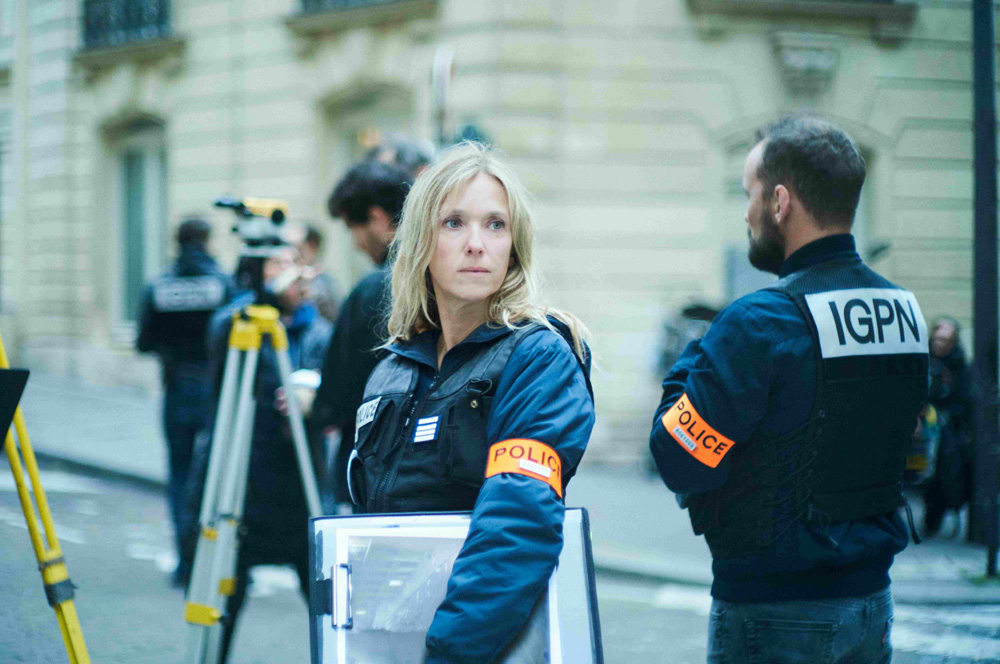
After taking the perspective of potential perpetrators and the cops in making sense of a crime from different angles in previous films, Moll shifts his lens to an internal affairs division in the riveting “Case 137,” embedding with the division inside the Paris police known as IGPN where Stephanie Bertrand (Léa Drucker) is tasked with looking into a complaint filed by the mother of Guillaume, a 20-year-old brutally beaten by police during the Yellow Vest protests in the city during 2018, seeking economic equality in the wake of similar protests in the U.S. with Occupy Wall Street. Stephanie’s job is to be impartial in all respects, but that hardly makes her friends with colleagues inside the department when she occasionally has to interrogate them about their conduct and not exactly ingratiating herself to those who felt they’ve been the victim of police brutality when she still is a cop herself and has to remain tight-lipped on any open investigations, and with the case of Guillaume, her professionalism can’t be questioned, but her ties to the case, coming from the same rural community as his family does, surely gives some shape to how she thinks about what happened to him.
While Stephanie leaves no stone unturned as she tries to make out the attack on Guillaume from surveillance footage and surreptitiously filmed cell phone videos, Moll could also be expected to do his due diligence by embedding with the real-life IGPN, which has naturally kept a low profile over the years, to construct a case that touches on every facet of what the work actually is and the impact it has on the lives of all those caught up in a search for justice, and the director makes what could look like mere pencil pushing into enthralling cinema as the case moves forward against all the headwinds that Stephanie faces and the momentum can be felt in simply following her footsteps with a camera. After premiering last year at Cannes, “Case 137” is now making its way to America to begin its theatrical run and Moll graciously took the time to talk about what led to his interest in this particular line of police work, the irony of filming some of the film’s most elaborate action set-pieces on the smallest devices and the opportunity to work with Drucker in a much larger capacity after she previously had a small role in his 2016 film “News from Planet Mars.”
 From what I understand, this particular department is a difficult one to break into. How did you even think something like this was possible?
I didn’t know if it was possible. I know I was curious about this because police officers investigating other police officers is fascinating and I imagined that it was complicated for them to do their job because they are being criticized by their colleagues who consider them as traitors and by certain media who consider them as biased and not doing their job properly. So there was this curiosity. And I asked if it was possible for me to spend some time there in the offices of internal affairs. Honestly, I thought they’d say “no,”!but I was lucky because there was a new chief of that department who was very open-minded and she had just been appointed there. She’s no longer there, but the timing was right because she wanted internal affairs to be less opaque. So she allowed me to spend some time there and I don’t know if I could have made the film if I hadn’t been able to do that because it allowed me to watch them work and see how this whole thing was uh functioning and the problems they were facing. I was lucky to get that green light.
You’ve said the case was based on a number of different real-life incidents. What was it like creating a story that touched on all the things you were interested in observing?
We did put it together from different elements from different cases and the most important thing for us was to find a way to bring in the question of being biased. Of course with a police officer investigating other police officers there is the question of that, but we also wanted it on the other side and then to create a connection, even if it’s a very small one between Stephanie, the investigator [played by Lea Drucker] and the victims. We found that idea that they came from the same town – that this was also in a way creating a bias and then we used elements from different affairs – one about a family of first-time demonstrators that came to Paris because they do a little tourism as well and suddenly they’re in the middle of a nightmare and [we were interested in] what does that do to you, especially if the the status of victim is being denied to you because people or politicians or media will say, “Well, you shouldn’t have been there.” But there’s the freedom of demonstrating and many people are scared to go on the streets and demonstrate because they know the police are heavily armed. Right now, there are demonstrations and protests from high school students – they are 15-, 16-, 17-year-old kids and again the only answer the government has is to send heavily armed police and there have been several severely wounded, which is really absurd and depressing.
 What was it like to create the protest scenes in the film? What was wild to me is that they are the largest-scale scenes in the film, but captured on the smallest of lenses when it’s mostly shot on iPhones?
It is a bit strange to shoot with iPhones when you have a scene with 200 extras and putting cop cars on fire. But the idea was really that everything should be seen from the point of view of Stephanie, the main investigator and the access that she has to what happened are those videos. There’s also CCTV cameras, but mostly stuff also shot with smartphones, so what we see is what she sees and we didn’t want to cheat and it was important to stick to that because it also gives a particular kind of image. Even the fact that it’s a vertical image, which I have always found absurd – why can’t you shoot horizontally with a smartphone? – we have to stick to that because you identify them immediately as smartphone images.
Obviously it was unavoidable for this story, but knowing some filmmakers actually make period pieces to avoid all the dramatic implications of the smartphone era, is it something you enjoy as a creative challenge? You seem to really embrace it.
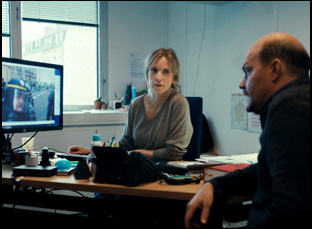
You have to because it’s true that in the film there are a lot of computer screens, but those are the elements that those investigators work with. They spend days watching videos trying to find the important moments where which will tell them what what really happened. There’s something very cinematographic about it to scrutinize images – to zoom in, a bit like Antonioni’s “Blow Up,” where he blows up the photographs but the more you blow up after a while you only see grain. And it’s not always easy to film computer screens and to have to sync up the stuff that’s is being shown on it [for a reaction from the actors], but for this film it was really important.
One of the most riveting scenes in this film actually is people at their computers, as you see the initial report being typed up and passed off from one person to another, interrupted by a picture of the victim Guillaume, so you don’t forget the real effect the incident had on him. What was it like thinking that up as a visual idea?
It came about because I’m really fascinated by this particular language and wording that’s used by police when they type their reports or their requests. Nobody talks like that in real life but it’s also a way to take out feelings and emotions to have this very technical language. So I felt it was very important to bring that in and to let the audience hear that particular wording and also it allowed us in those scenes where they type the reports and then you see medical images of the wounds, to play with the sound with the images and to put them together, that’s what filmmaking is.It was already written that way in the screenplay and we shot that way so we could do it during the the editing process.
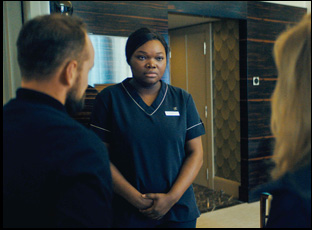 One of the great elements in the film is the feeling of movement in general – when the case gets stalled, the shots are static in offices and you can really feel the momentum when Stephanie is onto something by the movement of the camera. What was it like to develop that visually?
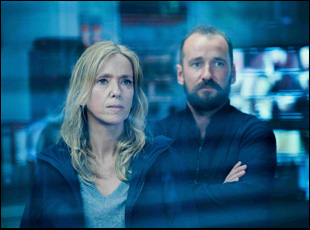
It was one of the important things in the film and in the way Stephanie evolves – you have to feel that she gets drawn in more and more into the case. So where we are in movement and where she is in movement and gets out of the office, things that she’s absolutely not supposed to do like following a witness in the subway in order to talk to her outside of any official [capacity] or even [when she runs into] the mother of the victim and her daughter in the supermarket – all those movements are to show that she’s being drawn in and that she she takes things more at heart then she should as an impartial police officer. It’s her becoming actually less and less impartial and if she had stayed strictly in her office all day, this probably would not have happened.
What was it like reuniting with Lea Drucker?
It’s a treat to work with her because we get along very well because we are both very serious at work, but we try not to take ourselves too seriously, so it was a constant dialogue and searching together. It was really a journey that we that we did together And she knew that she could rely on the way I looked at her and the directions I I gave her. Working with actors and crew members, it’s all about trust and dialogue and that was really the case. She’s obviously very talented but also very very smart and then she gets what the stakes are of a scene and how to play it, so it was great.
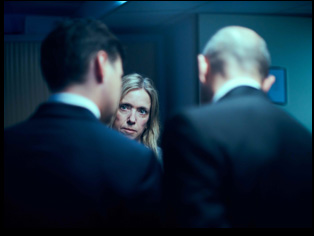 What’s it been like getting this out in the world so far?
The release in France went really well, but when you make a film, you want it to be seen [as widely as possible] and some people could have said, “Well, this Yellow Vest movement is so French, will it interest other people?” But every country has protests and demonstrations and police violence and these are topics that I think are important everywhere and when you feel that audiences abroad are being interested by a film, it’s always very rewarding.
“Case 137” opens on October 16th in New York at the Quad Cinema, October 30th in Los Angeles at the Laemmle Glendale, November 11th in Nantucket at the Nantucket Dreamland, December 12th in San Francisco at the Roxie Theater and February 7th in Bethesda at the Landmark Bethesda Row.