



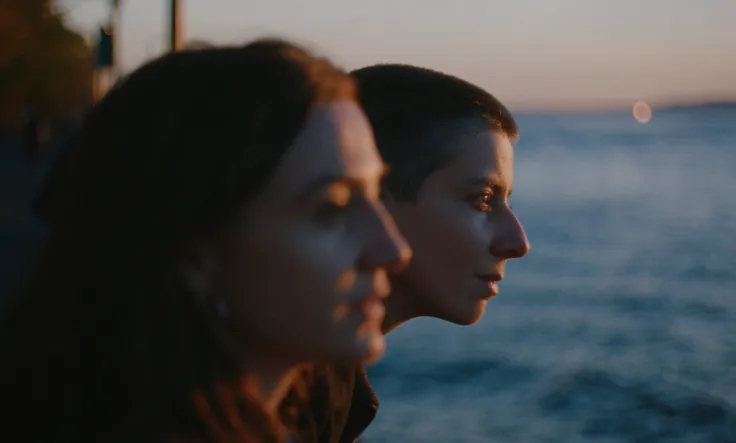

Filmmaking was not something that Cato Kusters thought was an actual profession when she was growing up.
“I think 16 was when I first realized — that was the first time I talked to a director. I’ve always been so caught up in the illusion of film that it never occurred to me that this was a man-made thing,” says Kusters, who had been considering a number of potential professional pursuits – imagining herself as a writer, a psychologist, a photographer and a designer – before realizing in a conversation with someone from the industry that all could be fulfilled to some degree if she decided to step behind the camera. “[One of those] always felt too restrictive, so [the idea of a career] always changed. but then the first time for me talking to this person, it all came together.”
Not only would the idea make sense as a whole for something that Kusters would want to pursue, but she arrived at filmmaking with the full package to make meaningful work to go by her effervescent debut feature “Julian.” An adaptation of Fleur Pierets’ memoir recounting her swooning romance with Julian Boom, the tale was readymade for the screen when the couple sought to tie their love for one another with their passion for change and marry in every nation they could where it was legal for an LGBTQ couple. While raising the funds for such an undertaking was one challenge, so was Julian’s health when she was diagnosed with brain cancer and “Project 22,” as the pair had dubbed their globetrotting adventures, had to be put on hold. The book became a sensation in Pierets’ native Belgium and beyond when despite reaching a tragic end, the love story became an inspiration and with the rights optioned by Lukas Dhont (“Close”) and his brother Michiel, it was set to become a major film.
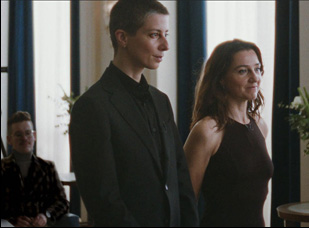
Although Kusters had only recently finished film school, she clearly wasn’t fazed by the pressure of taking on such a beloved story and brings both a confidence and energy to the proceedings that seems just right to portray a pair that felt all-powerful in each other’s arms, drawing on performances from Nina Meurisse and Laurence Roothooft as Fleur and Julian respectively where all sense of time and place blurs when all they care is that they’re with one another. To accentuate the sensation of falling in love, the film adopts a shimmering visual style that blends the immediacy of the couple living for the moment in its crisp intimacy with grainy camcorder footage that playfully documents the moments they think they won’t want to forget, ultimately catching a different quality altogether in the tenderness that exists between them. Since premiering last year at the Toronto Film Festival, “Julian” has been able to extend what Fleur and Julian had always hoped in spreading a feeling of acceptance around the world and has established Kusters as a force to be reckoned with as a filmmaker when delivering such a moving debut. As the film makes its way into U.S. theaters, Kusters graciously took the time to talk about the happenstance that led to being at the helm of the drama, a responsibility to the true story and real life people involved and laying the groundwork for the actors to make the roles their own.
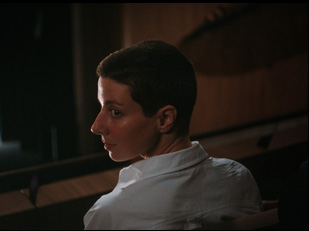 How did this come about? I’ve heard you may have known about it before having any thoughts of being involved professionally.
It’s a very long and happy chain of events. I was listening to this radio program in Belgium [where it’s] in-depth interviews and Fleur had just released her book and she was there to talk about Julian and that was the most insane story I’d ever heard up until that point. The way that she spoke about it was just completely overwhelming, so I had to stop driving because I was sobbing. I was just so moved by both the story but also her strength and the way in which she used her voice. She was so calmly saying these things that were so huge, like “[Julian] was the absolute love of my life and when she died, she took all light away with her.” The way she said it, she was such a strong figure immediately. And then I started reading the book and we met each other through a mutual friend by accident — on the day that I finished reading her book. I turned the last page and like three hours later ,she was sitting opposite me, which was unbelievable. It was crazy because you feel like you just got to see the inside of someone’s soul and brain and then they don’t know you at all.
It was very hard for me to keep in mind that this would be super intense for her and also to live through that with so many people because “Julian” is a book that really moved a lot of people, especially in Belgium, and [pushed] them into doing pretty drastic things with their lives, like coming out of the closet at 50 or embarking on a world journey with their partner themselves or ending a relationship like it did for me because “Julian” really made me realize that if this kind of love exists, then what am I doing here? So [Fleur and I] met and we really hit it off, but it was just as someone completely in awe of the story and while reading, I never thought I should “exploit” this and make a film out of it.
But then I got to know Michiel [Dhont] as well, the producer who had already bought the rights to Fleur’s book, and I graduated around that time. My short film was circulating and won some prizes, and then Fleur and Michiel got to see the film and since we all also knew and liked each other, they approached me because they were looking for someone to make this film. And I was always like, “Wow, I really hope they find someone amazing,” but I [started to think], I actually could be that person because I’m so hyper aware of the importance of this story and and how carefully it needs to be read, turning something like that into a film, which can be a very intense process. So we started talking and it just pretty quickly seemed that we had a very common vision of what this film needed to be and we started working on it.
You obviously were the right person. What’s that situation like to walk into as someone just coming out of film school, feeling comfortable pitching ideas when obviously it’s Fleur’s story and the Dhonts, as producers, are quite formidable in their own right?
I think I knew all of this before starting and then I just shushed it for me to be able to do it. The thing is you know the imperative of the story is always stronger, so if you feel like there’s a direction that needs to be taken, then that’s where you’re going to go, even if going there [involves] needing to convince people that you really look up to. Michiel’s brother Lukas Dhont has made incredible films, and Angelo [Tijssens], who I was writing with, wrote both [of Lukas’] films, so they’re all people that I look up to immensely and you have to ignore that when you’re pitching them ideas and it’s crazy because you pitch them and it’s exactly what you think it should be, but you’re suppressing the fact that it’s stresses you out immensely. I think only after the film was finished, I was able to breathe out and be like, “What was that? That was so insane.” But I think if you know what you want to do, then that’s just what you’re going to do because you care about the the film first, more than about yourself. The fact that you’re insecure and your imposter syndrome as a young woman is huge, you have to ignore that takes energy that you only later become aware of how much energy it took. I suffered for the film at times. But then you have all these people [around] and they just have such amazing ideas.
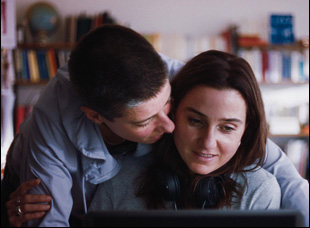 One of the really great elements that I suspect came from you was the fact that it could easily feel gimmicky when Project 22 is such a great premise for a story, but you really make it about the characters. Was that foundational?
The film is different from the book, and it’s an absolutely gorgeous book, but what became very apparent to me through the book is that because activism can seem like such a hollow [subject] for a film. You just want to tell a universal story, then you have to first get to the heart of this Project 22, which was these two people and their love story, and since we started working from the book, which [covers] seven years of their life together, Project 22 is a big but unfortunately final chapter of that relationship. And there’s so many major events here — four wedding ceremonies, the moment that Fleur goes on stage, and the moment [Julian] dies – and we literally try to tell each of these moments from the backstage, like we don’t really see the wedding ceremony, but we see the moment where Julian is rehearsing her lines because we all canonically know these scenes [already] from real life, from movies, from literature.
As an audience, we know what to expect from those moments, but where you really get to know someone is in the little spaces right before and right after these huge events, so we always favored those over the major events in order for us to get more into the intimacy of the characters and be very close to them. Because Fleur is so extremely personal in her book, you can almost see these people’s pores, that’s why your heart bleeds with this project, knowing that they cannot get married wherever they want to, and then you care because you love them and because they love each other. That was always going to be the the engine for this story.
How did you find your lead actors?
We never limited ourselves in casting to physical resemblance or language, so we cast just knowing that something about these actors needed to be exactly like Fleur or Julian. Something. And we didn’t know what it was going to be, but we needed to be spontaneously reminded of these real life people because you cannot tell a story about such a specific project without having this very specific dynamic mimicked in the film with the actors. So we did open castings and saw hundreds of people. Laurence came very early on and she knew the book really well. She had written a handwritten letter to Angelo, my co-writer who she knew a little bit, years before to say “I’m hearing there’s talks of making this into a film, and I absolutely love this character of Julian and I feel so much for her. She’s androgynous and tall and there’s such a warmth to her. I feel like I could really like find that place within myself and if there’s ever auditions, please call me.” So that’s what we did. But she had done so much self-study on the character that she came in the first time as Julian. She knew so well what we were looking for that she became that and then I felt I only got to know the real Laurence after that. They’re so different, she fooled me completely. [laughs]
So we had Laurence pretty early on, but we couldn’t really say yes to her because we hadn’t found Fleur yet. It’s about the two of them so you can’t just match her with anyone. You have to find that combination so we saw Laurence for [around] 20 rounds of casting with different people and we couldn’t find Fleur. It was a hopeless situation. I was starting to come to the point where I thought maybe we’ve just asked too much and we’re not going to find that thing we’re looking for. But then I saw this French film in which Nina just had this light in her eyes, which if you’ve seen Fleur in real life one time, you know exactly what I mean, but that’s the most striking thing about her when you meet her for the first time and Nina had that. And she was such a strong actress. She’s so intelligent and funny and light and there’s a darkness to her as well, so I fell in love with her immediately. Then we invited Nina to come to Brussels to do a casting with Laurence and we’d seen thousands of duos, but the first time we saw these two together, we knew. That was one of the most beautiful days in the the whole making of this film.
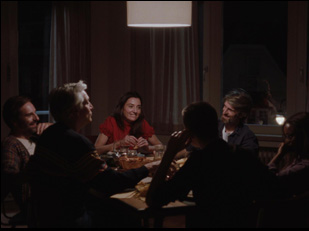 From what I understand, the camcorder took on a life of its own in terms of being a relatively small part of the film that grew into something larger. What was the evolution?
That was a gift. It was one of those things where at some point, you just have to admit that a huge chunk of this film is going to be something that you had no control over whatsoever. We had some scenes scripted with the handicam, but Nina and Laurence are like these kids. They’re extremely professional and amazing people, but when they get together, they’re so playful and they had all this extra energy. When it got to the point where we were filming these handicam scenes, Laurence filmed them herself for most of that, but then when we [called] “cut,” they just continued playing. It became a free haven for them and we just let them roll in the beginning while we were setting up the next scene. Then the first day when we got those images back, I was watching them the morning before we started shooting the next day and it surprised me how well they knew the interior of this relationship and how they became Julian and Fleur, so we started making it possible for them to shoot as much of that as possible. Whenever we were changing locations, we would just send them away and have them film each other.
That ended up being such a huge part of the film. But originally the handicam footage was something that maybe [was going to end up as] a documentary that they were going to make, so we knew that this handicam [footage was something we had] and Angelo and I, in writing it thought it was just such a beautiful idea because you can have these images and then later in the story they completely change color. We wrote some images more [into the film] more than scenes, like if we can show them two times but on opposite sides of the film, they’re going to look completely different knowing what you know at that point so it it’s almost like a materialized memory. We loved what that said about the quality of memory and how narrative it is, which is to me such an important part of this story. So it was a theoretical thing mostly in the beginning and then it was hijacked by Nina and Laurence, which I love them for.
You had a wealth of experience from shorts, but was having the larger canvas of a feature any different for you?
Yeah, for starters the responsibility of this [being] Fleur’s autobiography is huge. You have a huge responsibility towards the community, and towards Julian, who I never knew and who you can only hope would have loved the version of this story that we made. But even in my shorts, I’ve always instinctively aimed for very nuanced and longer stories. My last short especially was was like a mini feature, so it comes pretty natural in its conception. Then of course when you start production, it’s vastly different. The scale of it was unimaginable for me, but you come out the other end alive and now I’m hoping to do it again soon next time.
 I hope so too. What’s it been like traveling with this film?
I was so curious about that, but the funny thing is that we sadly haven’t been able to show it in places where it’s political potential is throbbing. I’d love to show it [for instance] in Saudi Arabia or something, but we haven’t had the chance. Most audiences I’ve showed it to [have been] pretty open minded people and there’s age differences. I’ve loved seeing elderly people [in the audience] and what’s beautiful is there was this this one man who who came and said to Fleur who was with me — and it’s kind of a dubious compliment, but I get it was a compliment in his mind — “I was thinking that I was coming to a film about love between two women and I’m so happy that it was just a film about love.” That was something that we were really trying to do, so I was really happy to hear it.
But I thought that there would be like a bigger difference in response when you look at Belgium, France, the U.S. or Canada, which [where] I’ve been with the film and actually it’s pretty similar. I would say half of the room is always completely devastated and half of the room ends up needing to see it a second time, which I love. But it’s always a 50-50 and it was very special doing this with Fleur because I’m so thankful to her in all of this, but she also spent so much time and energy coming to premieres and talking to people. I can’t even imagine what that must have asked from her, but just having her there and for her to be able to see how a room full of people will get up and applaud her really was just the most amazing gift. It was the reason I did it in the first place.
“Julian” opens on August 7th in New York at the IFC Center and Los Angeles at the NoHo 7 and will expand on August 14th to Seattle at the SIFF Cinema and August 21st in Toronto at the TIFF Lightbox. A full list of theaters and dates is here.