



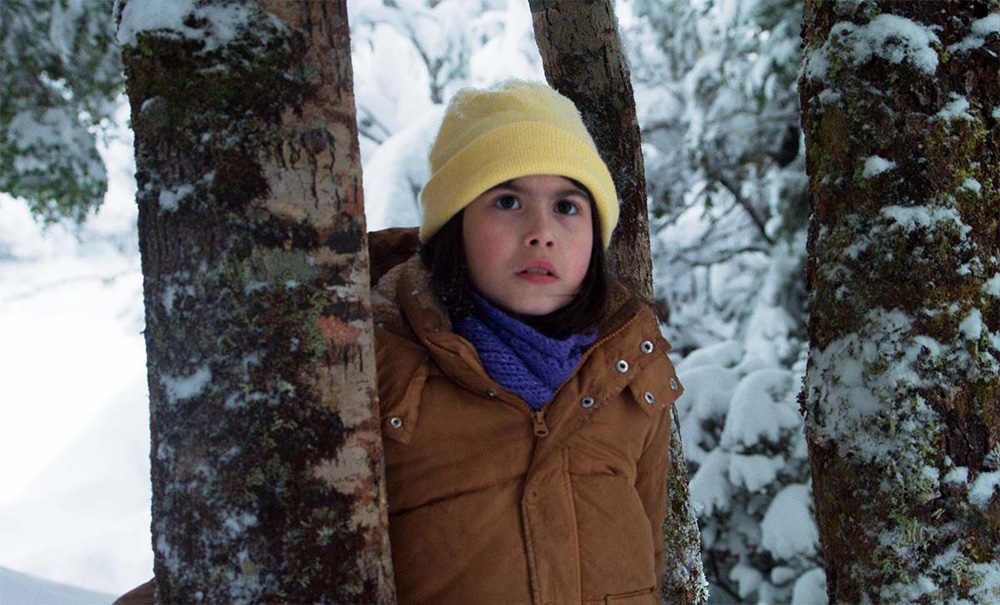

Inés (Maya O’Rourke) and Hanna (Maia Rae Domagala) are about eight and 15, respectively, in “The Meltdown,” but they share an understanding that neither could be expected to articulate to anyone else. Besides the seemingly insurmountable age gap, the two can speak the same language at the the Vista del Volcán Hotel in the Andes where the younger, Chilean-born Inés has been groomed to speak English while the German-born Hanna knows it from being a world traveler, going where the snow is as part of an Olympic practice squad for skiing. The latter is the only young woman on a team full of rowdy teenage boys, so when stuck at the resort, it isn’t entirely strange for her to end up warming up to Inés, who also seems a bit stranded in the care of her grandparents who run the resort while her parents are abroad and both have a penchant for going places that they are prohibited from.
As in Manuela Martelli’s engrossing debut “Chile ’76” in which a woman drafted into the underground resistance movement against the Pinochet dictatorship could only learn of the effect of her exploits on the evening news, the director once again demonstrates a rare ability to conjure a far bigger world in her second film than ever is directly put on screen, setting “The Meltdown” in 1992 following the end of Pinochet’s violent reign as the country was trying to turn the page and seeking a more stable democracy. Glimpses are shown of a likely futile effort in this regard as Chile went to great lengths to shave off a sample of an iceberg from Antarctica to present at a global exposition in Seville to express their transportation might, a likely building block for the future but also a less-than-ideal visual metaphor when much as it gleamed, that was a reflection of it melting away. Martelli creates a far more potent one as she sees a traumatic event through the eyes of Inés, who must decide in the situation directly in front of her how much of her past to hold onto as she moves into the future, only somewhat conscious of the history when she’s only just been born.
Inés’ ability to speak English is actually unusual at the Vista del Volcán where the much older staff regularly puts her on the phone to talk to guests, placing an undue amount of responsibility on the minor, especially once Hanna eventually goes missing and she becomes a primary go-between for Hanna’s mother Lina (Saskia Rosendahl) and the Spanish-speaking community once a search gets underway. The translation serves an obvious practical purpose for the drama, but has fascinating implications when English allows for the type of connection to the broader international community that her country as a whole would seem to desire, yet the exchange can be as fraught as it is rewarding and leaning into it too much could threaten the erosion of how she interacts with other Chileans. The search for Hanna also plays out alongside the potential sale of the hotel to a group of Spanish developers that Inés’ grandmother Techa (Paulina Urrutia) is trying hard to impress, instructing the child to be discrete when any details of the investigation could complicate a sale, a chilling reminder of the pervasive silence that gave Pinochet more power and the idea of ceding land to foreign interests questionable on its face. (As the bartender at the hotel confides at one point, his family has been on the land for generations, proudly taking out a picture from long before the hotel was built, yet now a worker rather than an owner.)
The stakes couldn’t be higher, but an unusual part of the unease Martelli generates is using the expectations an audience has of a missing persons case against them to some degree, not overly concerned with wringing tension from the whodunit aspect when Inés’ promise of silence all but ends any pursuit of any persons of interest. Still, the standard sight of a search party descending on the resort including Lina, all underlined by the sharp strings of a Bernard Herrmann-esque score from Mariá Portugal, takes on another meaning as it suggests that there are far more people lost here than Hanna, most notably her mother, who already sustained considerable loss when her country was divided by the Cold War and appears unsure if she can absorb it again. When Lina and the prepubescent Inés both have incentive to let go of what they know yet can’t for different reasons, owing to what experience they have or lack thereof, the mere illustration of such a dilemma across generations who share a common fate is more satisfying than any narrative resolution could be. The past has the potential to be paralyzing in “The Meltdown,” but in confronting the kind of trap it can be, Martelli genuinely seems to break new ground.
“The Meltdown” will screen again at Cannes on May 15th at 8:30 am at the Salle Debussy and Le Cineum Screen X at 3:45 pm and May 16th at Le Cineum Screen X at 4 pm.