




Extenuating circumstances prevented Jessica Earnshaw from being at the premiere of “Baby Doe” at SXSW in 2025, though producer Holly Meehl Chapman made sure she was there nonetheless, beaming her in on FaceTime after the film had concluded. The irony surely wasn’t lost on the filmmakers whose collaborations have been predicated on the idea that no one is left behind in a grander sense, first teaming on the unforgettable profile “Jacinta” about a mother and daughter who find themselves in the same prison when it’s a struggle to break a cycle of addiction and abuse that appears as if it’s become a destiny rooted in generations long before them and rather than being met with compassion, the only answer society would seem to have for them is incarceration.
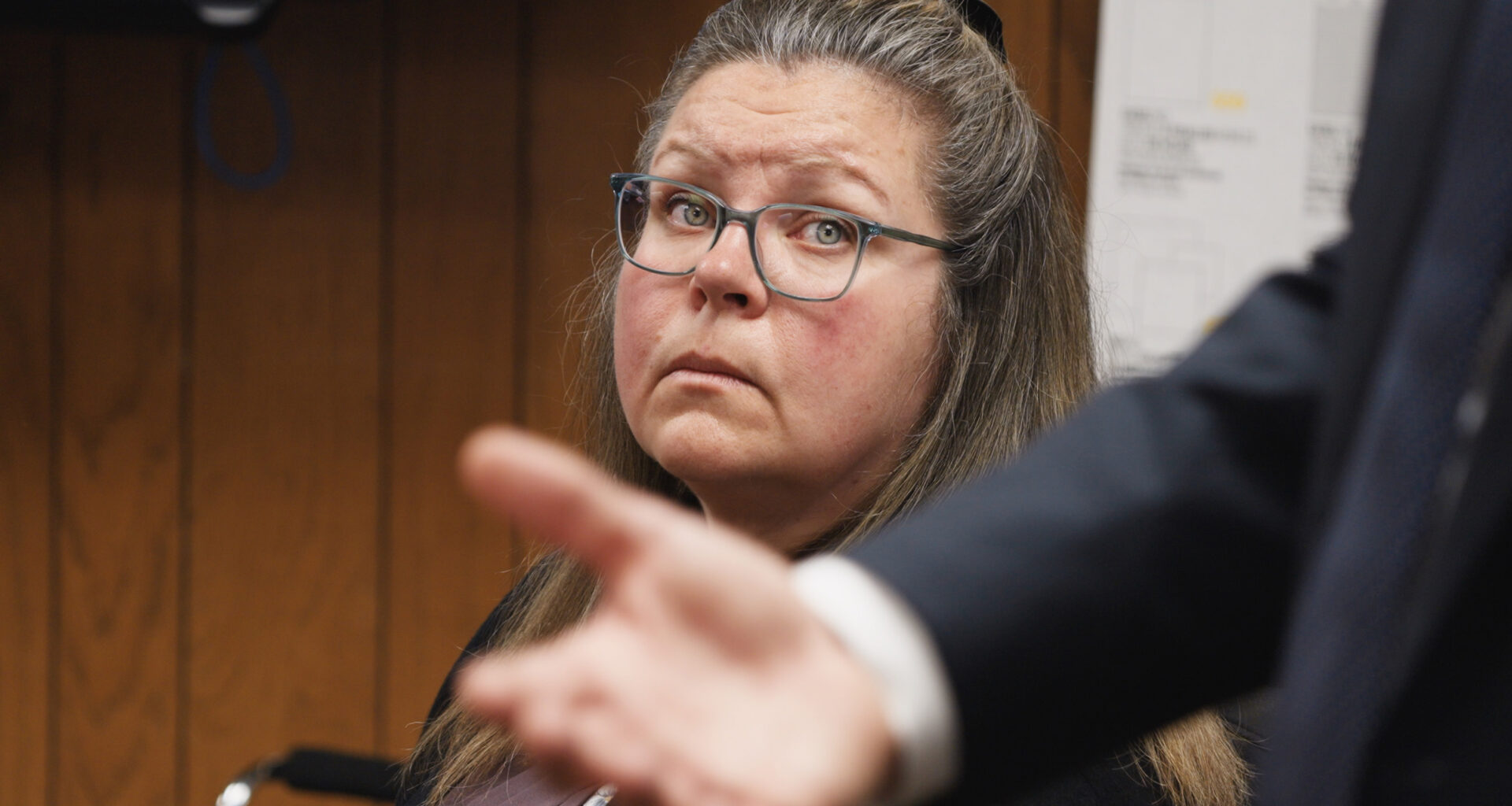
That sadly ends up being true as well of Gail Ritchey, the central figure in “Baby Doe,” who is charged with the unthinkable crime in disposing of a pregnancy she brought to term, but claims to have been entirely unconscious of, creating a shock upon delivery that rendered her unable to process or remember her actions in the aftermath. When she is apprehended for the crime, Ritchey’s memory is understandably fuzzy anyway when the only impetus for her arrest are recent advances in DNA testing that tie her to the 1993 discovery of a baby that came to be known locally in her Ohio town as “Geauga’s Child” and now after becoming a mother to two adult children and even a grandmother to one, a prosecution would involve an entirely different person than who Ritchey once was. Still, she heads to trial with an unusual defense, one that Earnshaw finds has become more common as the cases themselves are starting to surface more and more, claiming that Ritchey was overcome with shock from the whole experience that blinded her to what actually happened and had no memory of it.
Although that’s a difficult case to make at a criminal trial, “Baby Doe” convincingly appeals to good judgment in simply spending time with Ritchey, the type of upstanding citizen that would ideally be the end result of rehabilitation that is supposed to drive the justice system, but instead is ripped from her life to be punished for a crime that ultimately had no impact on anyone else. Increasingly, the film makes clear that Ritchey has already paid dearly for trying to be a positive contributor to society, raised in a faith where she was frightened to speak up about any relationship she had with men, let alone sexual relations, and suppressed any discussion of it, leaving her without the words now as she’s forced to answer any questions about it in the present and Earnshaw finds she is hardly alone as other women, such as Emile Weaver, a college student in nearby Cuyhoga County, face life sentences for similar incidents and collectively have rallied around a psychological defense known as pregnancy denial.
While punishment is doled out for an infant’s death, the devastating effects of robbing families of a pillar is seen in full in “Baby Doe” and continues Earnshaw’s stunning streak of observational portraiture and with the film now beginning its theatrical run kicking off this week in New York en route to west coast dates in Los Angeles and San Francisco throughout next week, the director generously took the time to talk about how she was drawn to Ritchey’s case, sharing responsibilities behind the camera for the first time with another cinematographer and why she hopes her work has a mirror effect.
 From what I understand, this actually started with the Emile Weaver case. How did you end up following Gail?
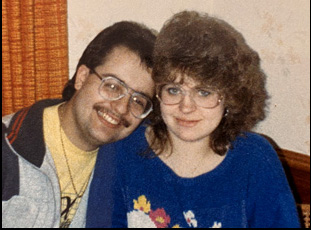
I read about the Emile Weaver case and I contacted her attorneys, who said I could meet her. I spent about a year following Emile. I met her in prison and I spent a lot of time with her mother and with her attorneys for the same reasons I wanted to tell Gail’s story, learning about pregnancy denial, knowing that there’s so many of these girls who are terrified to tell anybody in their lives because they think they’re going to be rejected, so they don’t tell anybody. Then they give birth, and in Emile’s case, in a sorority bathroom, or in a lot of other girls’ cases, the bathroom of their parents’ homes. But with Emile’s case, she had life without parole and the case wasn’t moving. The issue was in appeals and I felt I needed to have another woman to show that this is not an isolated incident.
Looking to find someone who was in the process of going through a trial, I put a Google alert on my phone and came across Gail. I was particularly interested in her case off the bat because it had been a cold case for 27 years. She was a mother, a grandmother and super Christian. A lot of what you see [with] this new technology with DNA genealogy is they’re cracking these baby cases that they once were unable to solve, so all of a sudden you’re seeing a lot more women in their later years getting arrested and what’s interesting about it is that when you’re a younger girl and you get arrested like Emile [in your twenties], there’s maybe this perception that you’re protecting society from this person who’s going to kill more children or something. But Gail is such a great example that that is not what happened.
What was it like getting to know Gail? I’ve heard that you actually were more of an observer during her trial prep before actually connecting directly.
Yeah, I wanted to spend enough time with her that she felt really comfortable with me before our first interview, but when I first met with her, I did talk to her alone for about four hours with her husband to explain what I was looking to do. Gail was willing to do it in the end, even though she was resistant at the beginning because she thought maybe her experience could help Emilie’s situation. But I did start filming the trial prep and I just didn’t do an [on-camera] interview right away, so I did experience some of the trial prep where she was being asked a lot of questions that I would then later ask her as well through that perspective of her attorneys asking her questions. What struck me at the beginning of that was she had a really hard time answering any questions about the past, as far as not remembering how she felt about things, which to be fair, because she did bury it and she was in so much denial over it, she wasn’t thinking about it back then. So it’s really hard to recount something you just really were not paying any attention to.
Were the lawyers on board from the start with being as transparent as they are about their own process?
Yeah, with everybody including the attorneys, I asked really to have full access and not to have anything that I couldn’t film and then make a determination in the edit of all the things that were most important to tell this story. With the attorneys, because a lot of that is attorney/client privilege in the room, I had a deal with the attorneys that once I was done with the film, I’ll show you the film and you can let me know if there’s anything that you think you’re uncomfortable with or could hurt Gail in any way because I didn’t want to hurt her case at all. But they watched the film and nobody had any issues, so nothing was changed in the end.
This may not have made much of a difference, but knowing your background was in still photography and your connection with your subjects comes through the camera, was it different having another cinematographer on board for this?
It was a different experience, but it was a great experience. I was still there from the very beginning all the way through, shooting everything. But there were certain moments that were just so much more helpful to have a second cinematographer. A lot of the trial prep and sometimes at the house, I wanted that person [filming] to only be one person at all times so the family could build trust and Emily Thomas, who’s a great cinematographer, came along for a lot of it. And directing and shooting and doing all the things as one person can be challenging, to say the least, at times, so it was great to have someone else there and also someone else to talk to. When I was making “Jacinta,” I’d constantly leave [a day of filming] and then you’re going to want to talk things out and I didn’t have that necessarily in the field, so it was nice to have someone else there.
 Was there anything that took this in a direction that you didn’t expect?
I’d say that when I go into any film, I go in with a general idea of what I’m interested in and then I just try to clear my mind of all expectations and then just see where it goes. So much changed, but probably one of my more “a-ha” moments was watching Gail in her trial prep where she had a hard time answering questions and couldn’t remember things. I had a similar experience as maybe even the viewer watching the film [and thinking], “What is going on? I don’t understand [why she can’t remember].” And then when I did have my first interview with Gail, she described this situation of basically putting the baby in the snow — and she says was dead in the snow and in a bag — and I just got this sense that Gail just really wanted someone to find that baby and to help her. I think she just needed help and she didn’t know how to ask. That’s a big part of this, the fear of conflict and the inability to ask for help, and wanting that help though also just feeling completely invisible within your own life. Gail also talked about people not remembering her name or felt like she almost didn’t exist, so it’s an invisible woman and an invisible baby. That was profound for me.
Like “Jacinta,” one of the remarkable things about this was to be able to speak to a flawed criminal justice system without ever becoming overtly about it. Was it tough to structure in that sense?
Both films had such different challenges, although both films have a [natural dramatic] arc. What I learned from “Jacinta,” I applied to this and I’m just interested in very intimate character studies and in mothers and relationships between family members, so all of that is just where my heart is, but also I think t there’s so much in both films that I wanted to bring out the nuance and the complexities in these cases. In “Jacinta” and in “Baby Doe,” you have women [where] it’s like these taboo stories. People don’t want to look at a woman who is a mother and is addicted to drugs and is incarcerated and there’s an inherent societal judgment towards those women. There’s also this huge judgment in the media because with women like Gail and Emelie because [it seems improbable that] you didn’t know you’re pregnant, you gave birth in a toilet, that baby was left in a bag, [and you naturally think] “just monstrous.”
But there’s so much more complexity below the surface and a complicity in society with these cases, including with “Jacinta,”[when] these women aren’t born and then do this. There is a lot of shame and a lot of feelings they won’t be supported and they can’t tell anyone, especially with pregnancy. That’s something we really need to look at ourselves, and wonder how are we contributing to this as a society. And that’s what I really feel important to me in my work and both films is that instead of you go into it maybe looking at them, I hope that you can look back at the end.
What’s it been like to see audiences engaged with the film so far?
It’s been great. “Jacinta” came out in such a weird time in the middle of the pandemic, so I almost did all my interaction with audiences over Zoom and this time it’s been amazing to go to film festivals and talk to people and to be in the room because this film does bring up a lot. People want to talk and it’s nice to be there for those conversations. I feel so lucky to be able to have made this film and lucky that I had this family who wanted to collaborate on this with me because that’s what it is. I feel like I made a lot of friends just in the people that I met through it and it’s nice to get something into the world that people haven’t necessarily seen or talked about before and to be able to have those conversations in real life.
“Baby Doe” opens July 10 at the DCTV Firehouse in New York City with special screenings in Los Angeles on July 14th at the Laemmle Glendale and July 15th at the Noho 7 and in San Francisco at the Roxie on July 19th. A full list of theaters and dates is here.