

Christie Hynde makes no bones about the fact that she didn’t necessarily sign up for the celebrity part of being a rock star, but it was inevitable that there would be a Pretenders documentary at some point as there is of any band of some fame now, so she sits down for a director Jo Crowley for an interview, though the unusual condition is mentioned upfront that only one of three sessions he conducted would be filmed, given her distaste for cameras. It’s a strange way to start out a film when so many other docs have employed a running commentary without the need for talking heads to actually appear, but a creative choice in “Pretenders” that actually ends up paying off when it reflects Hynde’s relationship to what she does in a variety of ways — a desire not to be front and center despite being the lead singer of her band and at ease making music but uncomfortable with any of its professional trappings when it became a career.
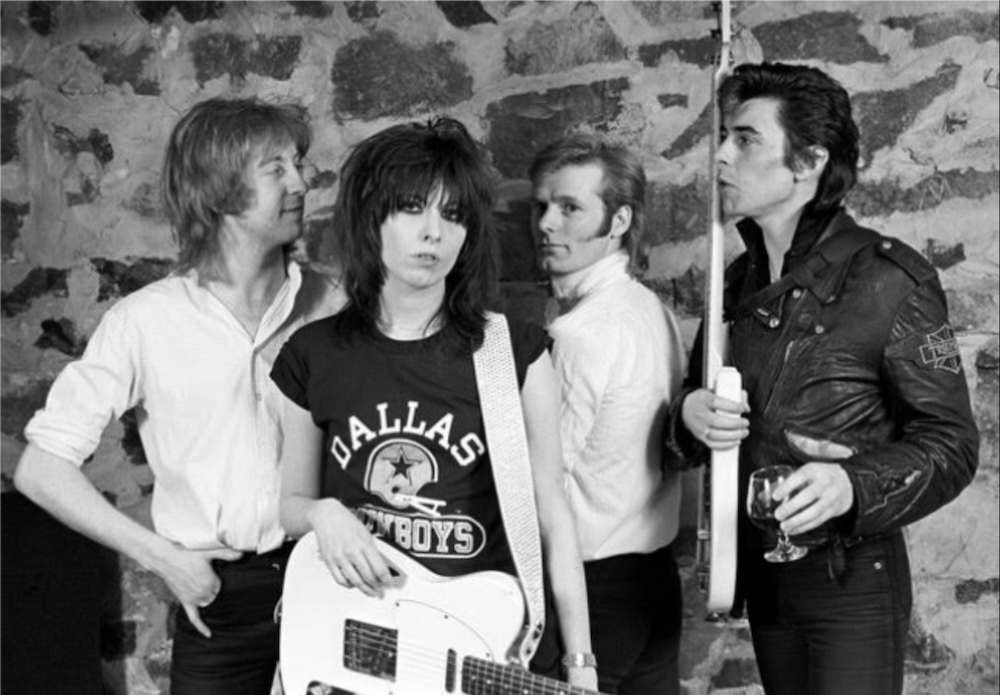
An absorbing history of the multiplatinum phenomenon once it gets going, “Pretenders” does have to overcome an odd framework with both Hynde’s reticence with being interviewed one issue and Crowley creating one of his own by immediately introducing Stan Tippins, the former tour manager for the band who kept a running diary of everything, though he is infrequently referenced throughout the film. (Back home in quaint quarters, Tippins’ earnest documentation of rock ’n’ roll hedonism is an endearing touch that ends up promising more than it ultimately delivers.) Wisely keeping the film contained to the period inhabited by its four original members, the film really hones in on what made the band work as a group initially and what led to its unraveling in 1984 when one of its founding members was fired (Pete Farndon) and two days later in a completely unrelated incident, another (James Honeyman-Scott) died. But Crowley jumbles the chronology up a bit to maintain Hynde as a through line and the conceit that she doesn’t want to be filmed results visually in a strange compromise – she’s portrayed at a distance with some obstruction always in the frame.
The approach is distracting at first, but starts to appear have real narrative purpose when Hynde will talk in greater depth later about topics that she initially demurs from, pushing past more ambiguous answers about longing to be part of a greater whole and finding freedom in London when a life in the States felt too confining to what sounds like the real reason she left America after going to Kent State. She isn’t shy about shutting down Crowley when there’s something she doesn’t want to talk about yet is clearly extraordinarily eloquent when she does, as are the many others the filmmaker interviews in the band’s orbit from Martin Chambers, the remaining founding member, to Paul McCartney. (Elvis Costello, who got to listen to the band’s first single “Stop Your Sobbing” early when he shared producer Nick Lowe with them, will often describe how the various elements in the band shaped the sound with sharp insight.)
The effect of the hybrid Crowley ends up with – not exactly making an all-archival documentary, but also one that doesn’t lean on talking head interviews, redirecting a greater share of attention to what’s going on sonically – makes the point that the music never stopped, for better or worse, as the Pretenders’ success both in a commercial and artistic sense was constantly building on what came before and pressure from their label to keep recording when a break might’ve alleviated some stress but yielded a tremendously fertile creative period. Those that might come looking for sordid tales from Hynde’s partnership with The Kinks frontman Ray Davies over the same time will be disappointed (she quips that she’d be worried about a lawsuit), but the film strikes a good balance of respecting privacy for matters that likely need no further explanation – also including the drugs that were part and parcel of the band’s early days – while giving an understanding of the emotional fallout, as Hynde’s relationship with Davies created friction in the group when she had long been romantically linked to Farndon and for anyone within the band to challenge each other for their bad behavior in general would’ve been hypocritical, so tensions simmered. When all Hynde wanted was to be just one member of a band where the spotlight wouldn’t always be on her, “Pretenders” can’t help but gravitate towards her singular talent, yet does well to become a fascinating study in group dynamics.
“Pretenders” does not yet have U.S. distribution.