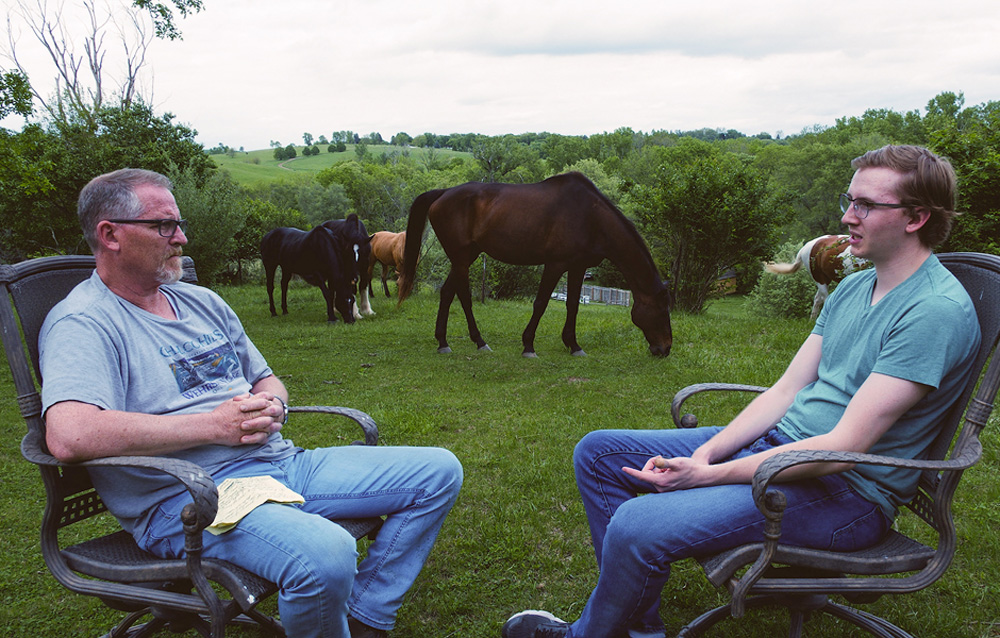

When Nick Beaulieu started down the path of making what would become “My Omaha,” he imagined going backwards in time, attempting to find the roots of how his hometown in Nebraska was shaped generations before he was born into a city where few from the predominantly white West Omaha where he grew up would make the trip to predominantly Black North Omaha and vice versa. What he couldn’t have dreamed of was having something that would be rewarding generations into the future.
“I think what’s going to be cool is as I get older [this film] is going to keep giving things back once I’m you know 40 and 50,” says Beaulieu, who only recognized well after he turned the camera on that he was making a bit of an autobiography as well. “I’m sure I’m going to keep seeing and feeling new things by watching it back.”
Although Beaulieu only means this as far as himself when he ended up with an inadvertent scrapbook of his early twenties, the film is bound to resonate for years to come for others when his good faith effort to bridge the divide that exists in Omaha, inspired by the spate of racial injustice around him in the Midwest, leads him to confront his own father Randy about his staunchly conservative views that prevent him from acknowledging that there is any issue at all. To his credit, it’s an uncomfortable conversation that the father is willing to have with his son, simultaneously made easier in one sense and far harder in another when Randy learns he only has a short time left to live with a fast-spreading pancreatic cancer and as firm as he is in his political beliefs, he is willing to join his son to attend the kind of public forums that could be dismissed as just talk yet does come across as a foundation for a closer community.
When Beaulieu cites Bill Jersey’s Oscar-nominated “A Time for Burning,” in which a white pastor attempted to integrate the Augustana Lutheran Church in Omaha at the height of the civil rights movement, as an inspiration, “My Omaha” can be seen as part of a tradition of filmmaking that can help foster a healthier dialogue regarding race and beyond attempting a breakthrough with his father, Beaulieu highlights the efforts of those in Omaha that are actively trying to make the waters warmer for such difficult discussions on their own, from Leo Lewis II, the Board President of the Malcolm X Memorial Foundation regarded as the unofficial mayor of town with his broad appeal, to Reverend Cynthia Ramirez Lindenmeyer, who truly wants to welcome all at her First United Methodist Church. It isn’t only Beaulieu who looks like he learned something from his five years of filming “My Omaha,” showing himself quite literally being fresh out of school and unsure of how to exactly set up a camera at the start, and any early awkwardness in either working the equipment or approaching such a loaded subject quickly dissipates as the film shows how much can be achieved by coming to such conversations with an open heart and mind.
With “My Omaha” making its premiere tonight on Independent Lens on PBS, Beaulieu spoke about how he ended up making what became such a personal project, the importance of mentors like Jersey and “51 Birch Street” director Doug Block, who became an advisor, and how making the film could bring him closer to his father.
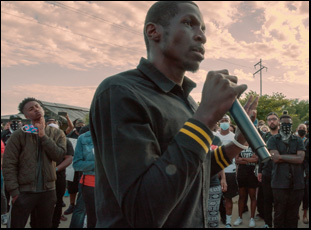 You explain it a bit upfront in the film, but what made you want to pursue this as a feature?
I was pretty young — I was 21 when I started making the movie and I just wanted to make a film about my hometown and I gravitated towards what I thought was the most important story in our city, which was the tale of two Omahas. And I think I was young and naive enough to think that I could just go out and shoot a feature film. That road ended up becoming very humbling and very eye-opening, but as the story developed and things changed, I saw we had a story there that could be a feature-length movie, but it certainly took a long time to get there.
Did you know what your presence would be from the start of filming?
That changed about halfway through the movie. It began very journalistically where I did not want to show my presence directly at all. In the early interviews, I wasn’t on camera and I wasn’t including my voice. And then obviously it does a 180 once we start featuring my dad, and that made it an interesting challenge was finding a way to personalize some of the earlier moments in the journey of making the movie when I had originally it not intended to be personalized. But I like how the end product is like a journalistic piece that is still through a personal lens.
It’s great that you decide to include just learning how to properly set up the camera. Did it take a while to decide to include that?
I worked with a lot of editors over the years who were helpful in trying to help me choose the right amount of vulnerability and meta commentary on the filmmaking process. I think it’s really helpful to let the audience know a little bit about how things are coming to be, especially in something so personal. I really like that scene [later on in the film] where the horses are threatening to kick over the tripods [on the ranch] and affect the filming because I wanted to let people know that it was just me and my dad out here in this field. There is no crew. And by making the film that way, it led to me and him having more intimate conversations because I just know had there been a cameraperson, an assistant and a sound person and producers, it would have felt really artificial, so by letting people know that this is how we’re doing it also helps justify some of the rougher production value aspects of it. But I think the trade-off is worth it.
 When you do have a camera, does it allow you to have conversations with your family that you might not otherwise have?
Certainly, yeah. There’s a pressure to do what you set out to do when turn that camera on. , but it does give you courage. Sometimes, you also have to be careful of where you still maybe hide despite that, and sometimes the other person on the receiving end can help you understand that because they may detect it too. But in the case of me and my dad, the biggest factor was the urgency of his cancer diagnosis. Every time we sat down, I treated it like this could be the last time we’re going to have a conversation like this, so I think that also led to me being much more direct.
When did this start to coalesce as far as continuing to tell the parallel story you set out to about this segregated city you grew up in and your father’s battle with cancer?
Once I started including my dad in the story, he had an arc that was very self-evident because he gets his diagnosis and he goes through this self-reflective transformation and then he dies. What was less clear was how do we begin and how do we end? And when I was originally editing the movie, I had shot footage all the way up until my through my dad passing away and I brought everything to the table. I thought we had a movie, but the editor I was working with at the time [told me], “I don’t think you have a full movie yet.” That was a gut punch to hear, but but that forced me to go back out and basically film what is the third act of our movie, [which was] the experiences I have reflecting on my dad’s loss and I think those are some of the best scenes in the movie. So it wasn’t until I confronted the footage head on that I learned really what we still needed and then what this whole story was going to be.
Leo and Cynthia become real pillars to the other side of the story. Did they naturally emerge as central to it?
I learned who Leo Lewis II was from the scene you see in the movie when he interrupts this meeting very intensely and I consider that the very first thing that happened that I shot for the film that was so formative, so Leo was on my radar from the very beginning. But it really wasn’t until I started editing the film that we realized how important he was and how he was going to emerge as a primary voice besides myself throughout the movie. I had filmed with other activists just as thoroughly as I did with Leo, but I learned that we didn’t have space for much more than one voice besides my own. Leo was very collaborative and transparent and he was the perfect participant because of so many factors. He was always willing to talk about the filmmaking process with me. Then as we built trust, it made for a great partnership.
And what’s amazing about Cynthia and the church is that the church provides this really important space where my dad attends that meeting [convened by Cynthia regarding racial equality] and it’s a very intense experience. But that church community was so supportive of the film and the making of it, and they really rallied together to help in so many different ways from fundraising to awareness to just moral support that they became my biggest supporters and champions. So everything about the making of this movie was a super collaborative experience with a lot of different community folks.
What’s it like to make a documentary in a community like this where as your father suggests, there’s a distrust of media?
I’m a journalism major, so I am a real media consumer and enthusiast and I think a lot about media literacy, framing and representation. And the first person I showed a cut to of the movie was Leo because I wanted to get a sense from him before we really locked the picture of “How do you feel about this, [and especially] me and my role in this story as a white filmmaker? How do you feel North Omaha is represented? How do you feel like this story with my dad plays into the larger picture?” I was afraid to do that, but then immediately I was put at ease when I saw his response, which is that he immediately just clocked the authenticity and sincerity of the efforts.
What everyone seemed to get is that this was a true, earnest, open-hearted exploration. There was no agenda in making this movie and no nonprofit put me up to go into the community and and doing interviews. There wasn’t this or that stakeholder hoping to get something out of it and I think that was really refreshing for a lot of people in Omaha who felt like, “This is finally a very honest depiction of what’s happening here.” You see the good and the bad and I was very relieved and and gratified that that’s been the response.
What’s this been like for you to have as something to simply reflect back on your life?
It’s complicated. The more distance I have from having finished the movie, the more I’m able to remember who I was in those moments I’m looking on at the screen and how I felt in that time period. You lose that for a long time when you’re making a film because you’ve rewatched every scene so many times and you’re you’re looking at yourself very ruthlessly as a character, just trying to tell an effective story. But now that we’re past that, the actual reality of what we’re watching is coming back to me in ways that are emotional and prideful. I look at it now and think, I can’t believe we actually pulled this off. I continue to have lots of gratitude for all the people that participated in the making of this with me. I was a first-time filmmaker who had no credits really, and people were just taking me at my word and that required a lot of generosity from a lot of other people. That’s something I’m just so grateful for because you can’t make a film by yourself.
Speaking of which, the whole section of the film where you acknowledge how you were inspired by Bill Jersey, eventually meeting him, and you’ve got another documentary titan in Doug Block as an advisor, did it become an important part to you of the film itself to show the importance of mentors?
Yeah, I have always been drawn to mentors and I’ve always felt a desire to connect, especially with men older than me who are creative people as a way of just learning. It’s ironic because it’s a movie about me and my dad and Bill Jersey emerges as this father figure-type. But that scene was incredibly moving to me as not only as a filmmaker [who inspired me] for my film, but just as a person, as someone to get genuine wisdom and advice from about how to live a creative life, how to have purpose, and all the philosophical things I wrestle with. He’s the exact kind of person who I look up to, so to get that direct commentary was so great. And Doug [Block] has been the behind the camera version of Bill Jersey for me in the sense that again as a first-time filmmaker to have someone with so much experience, industry respect and so much talent as a storyteller to come on board and help me get the most out of the story and then be such a champion of the movie — he’s really put his whole self behind promoting it and doing so authentically in a way that like just couldn’t dream of — it’s really makes me very excited to hopefully be able to do what they’re doing for me for someone else in the future.
 After carrying this with you for so long, what’s it been like to get it off your shoulders and start seeing it with audiences?
It’s great. Every theatrical experience has been an amazing experience. We played the film in New York City for the first time this week and a lot of my industry friends were able to come for the first time, which is really great. I got an awesome e-mail from a filmmaker — and he’s not a documentary filmmaker. He’s a more of a fiction filmmaker — but he wrote me, “When I think about going to the theater for an experience, I usually think about a thriller or a horror film or an action film where the big screen really elevates it, but sitting in that theater and being with a lot of strangers and watching something that personal that makes you think about these characters and what parallel experiences might be to what they’re going through…” it was so moving for him, and that communal experience he said was just very unexpected, which was so great to hear. I do think that when you see documentaries on a big screen and you’re elevating regular people with ordinary lives onto this big stage that feels operatic and dramatic just by its presentation, that does add something extra to it. So I’ve been very lucky to play at some cool festivals and to play theatrically in various places and I’m hoping that even after the movies on PBS and Independent Lens, which we’re also so thrilled about, we’re still going to be able to play it theatrically here and there because it’s an irreplaceable experience.
“My Omaha” will premiere on Independent Lens on PBS on October 5th and will stream thereafter on the PBS app and YouTube.