




It immediately catches the eye that “Revolutionaries Never Die” is addressed as “A letter by Mohanad Yaqubi” as opposed to “A film by…” or some other possessory credit, an acknowledgement that what’s to follow is a dialogue between the Palestinian archivist and Jocelyne Saab, the filmmaker who made the marginalized and displaced across the Middle East a prime focus of her work. As Yaqubi explains in an introduction, the exchange actually started out in words as Saab sought out a home for her archives, ultimately passing away in 2019 before the two could really have any formal discussions about a collaboration, but with the 11 boxes of celluloid that she put in the care of the Centre National Du Cinéma et de L’image Animée in Paris, they could carry on a conversation nonetheless when her work continues to speak to the present, with scenes detailing how critical the Strait of Hormuz is for the global economy when capturing the lead up to the Islamic Revolution or observing Palestinians’ eternal search for a home to call their own.
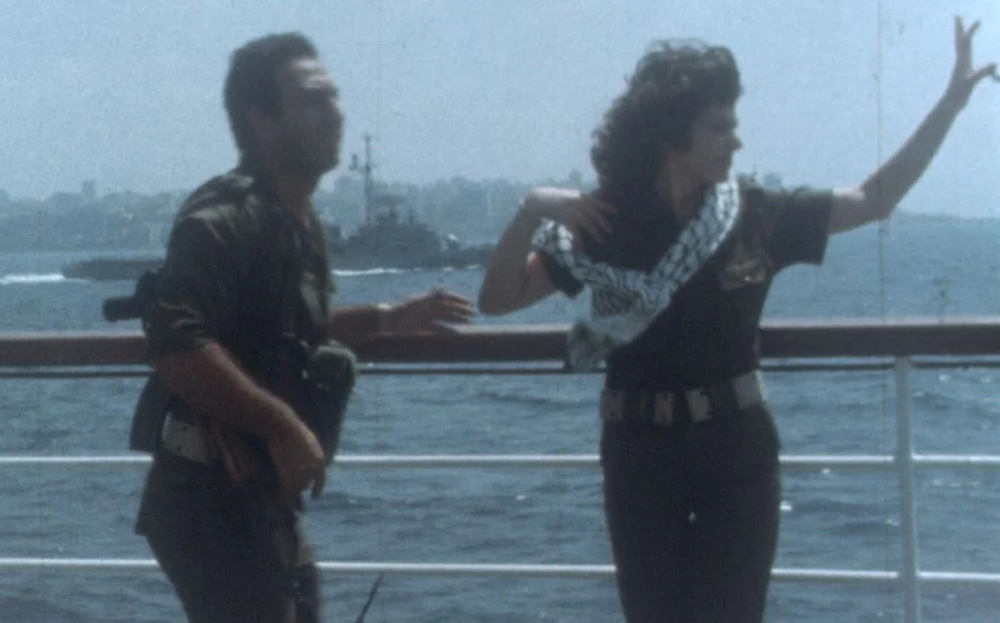
Although Saab’s films have received a bit of attention from repertory cinemas in recent years thanks to this ongoing relevance, “Revolutionaries Never Die” admirably can be expected to keep them in eternal circulation in another way and becomes a stirring film unto itself as Yaqubi threads the needle of a warm tribute to the fearless filmmaker and the undeniable documentation of horrors of the conflicts she covered. The personal framing Yaqubi applies isn’t only savvy structurally to walk audiences through his own discovery of the footage she shot from 1973-1983, a time as pivotal in the Middle East as it was to her own career as she transitioned from being a war correspondent to a documentarian, but extends a warmth that she showed the subjects of her own documentaries who could be seen in all their dimension, visiting soldiers whose survival skills are shown to include dancing to remind them of joy and those that haven’t had to pick up arms but continue to fight every day just for a sense of normalcy in their lives. As someone confides to Saab shortly after the start of the Lebanese civil war that began in 1975, “One doesn’t know how to live,” referring to being actively deprived of basic resources and confronted constantly with a memory of what was that prevents envisioning anything else in its place.
Still, Saab’s admiration for the imagination that leads to resilience needs no more articulation than her radiant observation of so many doing things they couldn’t have ever contemplated as the times call for it and the images themselves now have transformed into their own type of resistance, documenting places that have been long destroyed by war and now refuse to be erased from the public record. (The scenes of family recreation along the coast and from the Arab University of Beirut in 1974, where students understandably fret about their career prospects yet thrive in an academic environment, are the kind that exist nowhere today but on the celluloid that Saab thought to film and clearly have become a reference for other filmmakers that have brought the past of the region back to life in dramas.) Yaqubi will gently intervene when necessary to move from one of Saab’s films to another, referencing his deepening interest as his own plight as a Palestinian for additional resonance when it makes the historical context she can provide invaluable as both a prediction and a parallel, but with some skillful editing alongside Elettra Bisogno and Rita Maria Habib, the director wisely lets the reverberant power of Saab’s archive to stand on its own when words can’t do justice to describe all she captured.
“Revolutionaries Never Die” will screen again at the Locarno Film Festival on August 10th at 9 pm at L’Altra Sala and August 11th at PalaCinema 2 and 3 at 2:30 pm.