

Hanaël El Yousfi got into storytelling the way most do when there was something deep inside of her she knew had to get out, but what kind she would be was up for debate.
“I was willing to talk about things I lived, so at the beginning, I was thinking of writing a book,” Yousfi remembers ahead of the premiere of her first feature “The Daughters of Abraham.” “And then I [thought], ‘No, I want to hide behind characters, and this is also when I saw movies and [there was] this mirror effect — I found cinema was the best way to give emotion and identification to people because when I saw for instance, the Turkish movie “Mustang” or t some movies of Lars von Trier like “Breaking the Waves,” I saw how a woman can sacrifice herself and recognized myself in it, and I thought, ‘This is the best slap people can receive to take conscience of something.’”
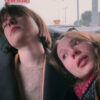
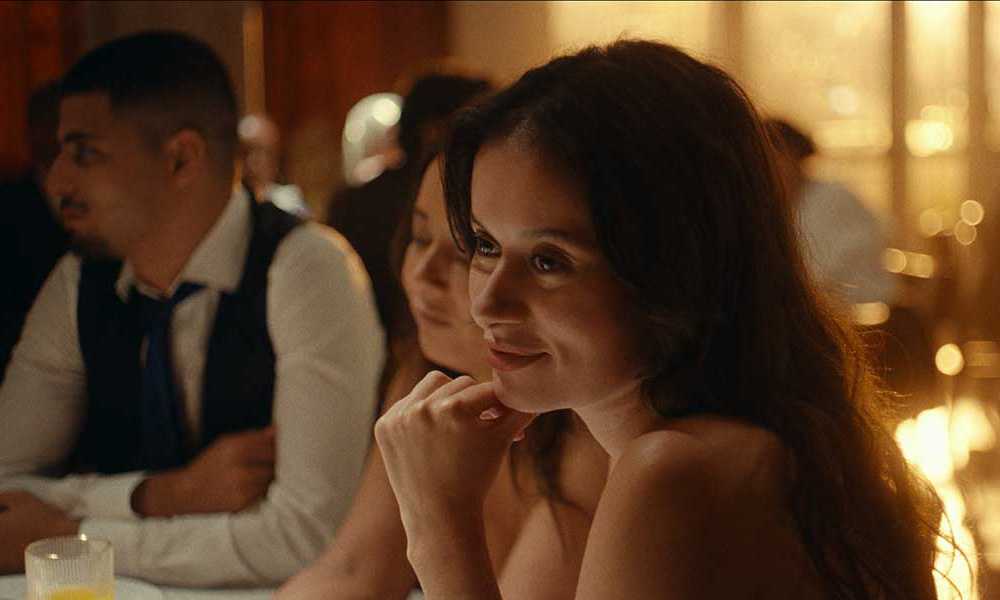
She delivers a film of her own with that kind of power in her debut, unfolding in Marseille where a pair of friends, Myriam (Mélissa Guers) and Eva (Ava Baya), reunite after drifting apart dating back to when Myriam dated Eva’s brother Mohammad (Syrus Shahidi). Their different religious backgrounds hadn’t been a cause for concern as they grew up, despite the fact that tensions between Muslims and Jews are an ingrained part of the region that sits a hop, skip and a jump from Marrakech, yet out of wanting to protect her friend from the knowledge that her parents would never allow their son to marry outside of the Jewish faith, Eva encouraged a breakup that backfired spectacularly, leading not only to a broken heart for Myriam, but eventually an avoidable scandal when video gets out of her going wild at a party adding to the idea that she’d make an unsuitable bride for anyone.
Of course, none of this would be an issue between the women if they weren’t having to navigate a world still dominated by men, but Eva and Myriam have to contend with the expectations of their parents as they try to mend fences, frustrated that while neither family is overtly devout, they are still bound by tradition to operate based on the tenets of their faith where to act any different brings shame. Not only the effects on the young women who seek independence in their own ways are felt, but through dynamic interactions with family and friends, so too how the men have been shaped in being frustrated by the old ways as well yet at a loss for how to change them when an entire culture needs to be rethought. If the start are tough conversations, Yousfi is more than willing to lead them, first engaging the people around her to write a screenplay full of real-life observation that ultimately leads to an often electric present-day drama that feels impressively unmediated.
While the writer/director was at the Toronto Film Festival, she graciously took the time to talk about how she brought different sides of herself into such a beautiful whole in the film, a commitment to authenticity to the project that invited actors to really make the characters their own and pulling off the film’s exhilarating opening tracking shot into a dance hall.
How did this film start out as far as an idea that you wanted to pursue?
It was many things. First of all, I grew up between these two cultures, so every time it [felt like I was] with one or the other, but never the same and I kept my identity and origins to myself because today the identities, it’s a mess, especially in France and you are Jewish or if you are Muslim. It colors what people think about your work. So I grew up between these two cultures and I thought it’s crazy they don’t talk to each other, but they are the same [structurally] in terms of family values, the weight of tradition and many other things. And then I remember maybe 10 years ago, I introduced two friends of mine – one Jewish, one Muslim, and both were very engaged politically – and both were very connected to their culture, but they didn’t know someone from the other culture because we grew up with the idea that the other is an enemy. When I connected them, I remember feeling, “Wow, they are in the same frame, they share same memories, they share the same love of same music, food, and humor,” and this is what I want to shoot. These girls from two different religions in the same frame and to feel what connects them instead of what divides them because when we hear about Jews and Muslims, it’s always through the conflict. But I wanted to show that they are not simply political subjects or enemies. They share the same expectation from their families and communities.
From what I understand, that wasn’t the only conversation you set up to inform what this ultimately became. Did a story naturally emerge from conversations like that?
The movie came from a personal story, but I didn’t want to write something that is not shared by others, so I wanted to check if I was the only one to have lived through some of these things. I started with one girl, and then that girl was like “You should meet that girl”, and then it was addictive. I couldn’t stop, but then I could start to write these characters. This is a bit of my story in my twenties with Myriam, but I recognize in Shana [Eva’s sister] in my thirties and Eva is someone that is very unique and in between and becomes a link between them. So it’s true that it starts with me, but it’s beyond that, I wrote something that is shared by many Jews and Muslims, but at the end, we forget that we are really Jewish and Muslim. We just see people with their problems and with their desire to choose their own life and be the author of their own book and not the book we wrote for them because they were born into this family and that one. And because I met women from different ages, I [thought], I should meet men to understand their mechanism and to understand them because I don’t want to write monsters – I think we are all victims of patriarchy.
When as you mention there might be a piece of yourself in all the characters, how much did you want to share versus allowing them to create their own characters?
All my actors I chose have something in common, which is that I didn’t have to explain the movie to them. They were close to what I wrote, or knew someone very close to them that lived that. So it’s true the topic is very sensitive, so I needed to have people who were very sensitive and ready to defend that and I gave everybody the freedom to rewrite their character with me because I [said], you will defend this character. You have to love your character to understand them, so for that, we will collaborate together. For all the characters, I spent many afternoons with the actor I chose to give the most complexity to the person they would play. For instance, for [Myriam’s] little brother, Sofiane, who hit his sister, we didn’t want to just see a brother that hit his sister. We wanted to understand how and why he is doing this act and [decided] we don’t want to associate this violence with religion, so we worked over that scene [to create an origin]. He has these friends that are not professionally very stable and then he went to the place where he slept, with other kids that were disturbing [to him]. All these are ideas that came from a session with my actor Bilel Chegrani.
You have a lot of conversations throughout the film where the energy remains high. What was it like finding a camera style that wouldn’t interrupt the flow of a scene?
I already worked with my director of photography during my short, so he knows that I like the veracity between people and I asked him to have many cameras to not lie and to seize the truth when it comes. I was doing everything possible as a director to have something true between actors. We had always two cameras and actually we did a lot of rehearsal before. We didn’t have a lot of time to do improvisation [on the set], but thanks to many, many rehearsals at my home, we had the right words and the right [rhythm], so with many cameras, we could have the present moment. For instance, the scene between Myriam and her mother, when Myriam cries because the mother said to her to not to press charges, we shot it only once because it was very in emotion and truth. We could not do that scene twice.
I’m guessing the opening tracking shot of Myriam entering the club with her cousin also only had one shot at it given how technically complex it was – and it gives such a sense of the mix of tradition and modern thought that exists in Morocco, but well worth it. What was that like to figure out as an opening to set the tone?
The starting point was the fact that I am French and Moroccan, and I wanted to show a Moroccan that is free and that is not cliché, and to see mixed people – men, women, sexy women and women with hijabs together in the same place with a woman DJ. I also love paintings and I saw these paintings of Delacroix of when he was in Morocco and Algiers during his life, and how he painted Asian women and I [thought], “Wow, these colors, this place, this is my childhood and this is how I want to shoot that girl.” But [with] Delacroix, [the woman] was a man’s point of view, submissive and just sitting. Me, I wanted women that decide, so [I thought], we will follow Nawal, the cousin that looks for Myriam, and that way we will show the freedom of a party in Morocco.
Then I wanted to shoot this scene in Morocco, but my producer says, “We have only three days of shooting in Morocco, so you can’t. We’ll shoot this in France.” I wanted walls that were not modern, and then they showed me so many places. I was like, “No, no, no, no,” and then one girl whose job it was to find places understood me and she [said], I think I found a place.” It was an abandoned place in the south of France and when I visited and I [thought], “This will do” and from the place she found, I did the storyboard. And then I am very intuitive, so I don’t think about the obstacles and the difficulties. For instance, I was telling my director of photography or my assistants, “I want to do something close to this” and I would show some scenes from Cassavetes scenes or “Babylon” for the opening, like “I want to feel this energy.” And I saw them watching me like, “She’s crazy.” But at the end, we did the best to make things happen, thanks to a collective work of a production designer, the director of photography, etc. with the place we found. I have a vision and I don’t realize sometimes how difficult it is in terms of production, but thanks to many people who believed in the movie, we did our best to have a result as close as what I wanted.
You pulled it off. What’s it like getting the film here to Toronto?
I think I am not realizing yet. It’s the moment when I feel the public that I will have emotions. But it’s unreal to be here because I didn’t do cinema school. I was born from Moroccan parents that were, my father was working as a ourvrier on the vines, like the farmers. You know, we were seven. He won the minimal salary for all his life, working very hard, so I still haven’t accepted being here and I’ve tried to stay down to earth because the movie’s for the public and my community and when the topic is sensitive, just to have people see the movie, it’s the best thing I can receive.
“The Daughters of Abraham” will screen again at the Toronto Film Festival on September 20th at 6:50 pm.