



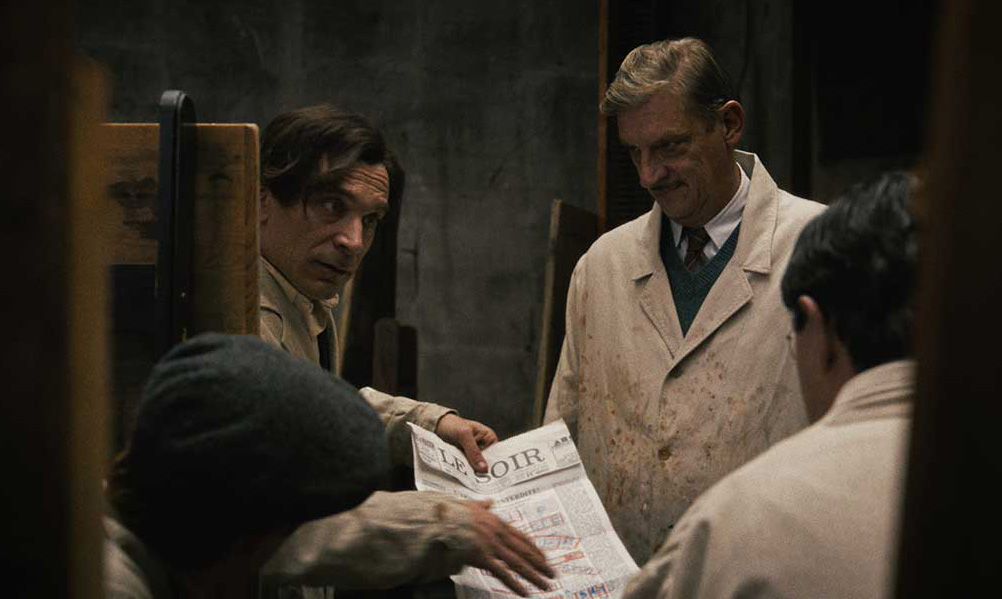

“You should know the Nazis call machines like this weapons of war,” Ferdinand Wellens (François Damiens) says of the printing press he has in “Le Faux Soir,” Michaël R. Roksam’s crackling historical drama that takes the form of a heist film, only it’s the masses that are reaping the benefits of an intricately designed plan. Unusually timely when the flow of trustworthy information is worth its weight in gold, the film is a good old fashioned thriller about a resistance effort in Nazi occupied Brussels to deliver a single day’s newspaper that could assure those left without hope during World War II to keep up the righteous fight.
The film marks the welcome big screen return of Roksam after nearly a decade away, showing both the idiosyncrasies that made his debut “Bullhead” so memorable as well as the tense, deliberate pace of his follow up “The Drop” in recounting the brilliant plan by a ragtag underground group seeking liberation that would sell a subversion of the local paper Le Soir that would feature articles that would break through a constant stream of propaganda, subsequently using the proceeds from fooling customers into reading the truth from the front to fund further actions. The plan sounds all well and good in theory, but put into practice, it is a logistical nightmare when everything from getting a volunteer with a printing press willing to risk their life to using the wrong typeface that could tip off a vendor is fraught with danger. Using pseudonyms to ensure plausible deniability later, the man who goes by Yvon (Arieh Worthalter) has to take on the jobs of being both a publisher and copy editor, which any journalist could tell you is a deeply risky proposition even without the threat of Nazi retribution.
Channeling his inner Jean-Pierre Melville, Roksam delivers the kind of absorbing backroom thriller with men in fedoras made in the era just removed from the era of occupation where messages are furtively passed on the back of bar coasters and fistfuls of cash are placed into a book of psalms to keep things quiet as the gestapo is always a stone’s throw away. Yvon is tasked with assembling a crew where those working on one part of the operation won’t know those on the other and has to pull together plans to distribute the paper throughout Brussels while controlling costs. (An original plan to publish on a Wednesday is nixed when it would require one extra piece of paper per issue to include stock market listings.)
Never has there been so much talk about flongs, the part of the printing press required for the masthead, outside of a newsroom, but the level of detail fussed over by both those on the makeshift staff of the fake publication and Roksam and his own crew to get the other kind of period accurate is worth all the effort, with both the energy and intricacy behind the paper conveyed well by a boisterous score from Christophe Chassol that has both the classical notes of taiko drums and more modern piano and cinematographer Jordan Vanschel’s gentle addition of sleek camera moves to the sturdy, well-crafted presentation that’s expected from films of the era in which it’s set. “Le Faux Soir” becomes a reflection of the product being made at its core, sneaking something fresh into what could feel routine and bringing some unexpected joy in dark times.
“Le Faux Soir” does not yet have U.S. distribution.