




In recent years, it’s felt like Jesse Moss and Amanda McBaine have been working on a larger project than any one film when the sibling films “Boys State” and “Girls State” checked in on teens attempting to set up their own government with ruthless campaigns for office and Moss subsequently trailed Pete Buttigieg on his 2020 run for the actual White House for “Mayor Pete.” When it seems like America has lost its way, the two have looked towards the younger generations for guidance.
“Lately, I’ve been thinking about the work of Howard Zinn, which I read many decades ago, but the idea that there’s a history that’s written from below that could easily be written out of the official histories, but it’s often told by people who don’t have power and don’t have authority and we love telling those kinds of stories,” says Moss, of what led he and McBaine to make “Teenage Wasteland” about a group of enterprising teen reporters who uncovered a massive toxic waste scandal in their backyard. “And this was one of them. It’s like a chapter that could easily be overlooked or forgotten, but actually we think has great value in the world, even today.”
Adds McBaine, “It’s also such a local story, which helps me feel less intimidated by all the problems of the world when you keep it very local. Here’s what I can do here. Here’s where I’m not going to give up. It makes actions seem doable in the face of something insurmountable like the climate crisis.”
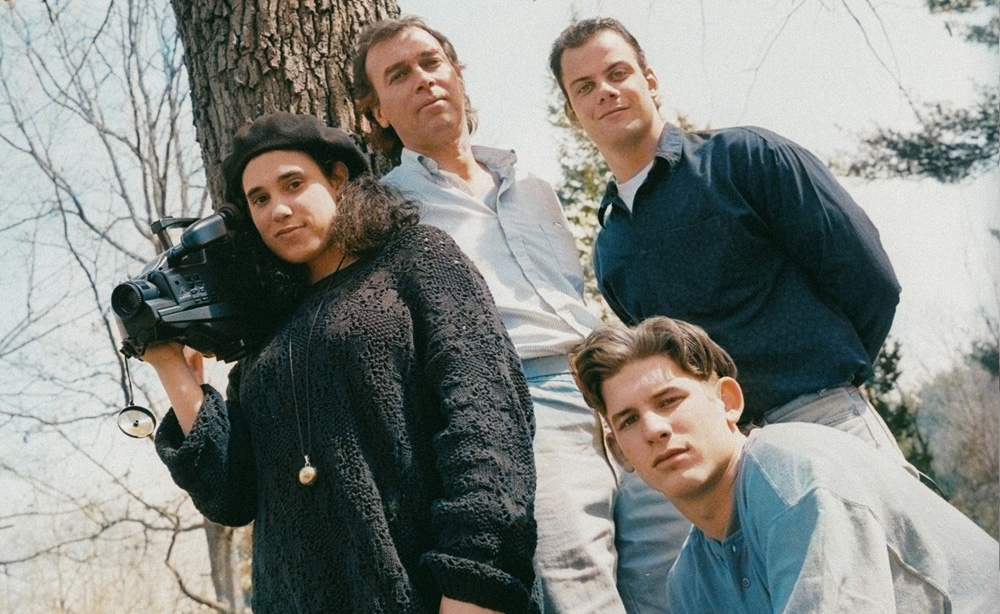
Originally titled “Middletown” when it premiered at Sundance last year, Moss and McBaine’s latest is both a celebration of journalism and what a great teacher can inspire when it starts with the story of Fred Isseks, an English teacher whose interest in technology led to encouraging his class to make a documentary with the video equipment on hand about the landfills in New York’s Hudson Valley and their increasing potential to pollute the local water supply. Regional journalists and politicians visited the class out of a sense of civic duty, but found themselves answering actually tough questions from the students that led to the story gaining traction at on a larger scale while the students themselves pressed ahead with their own film “Garbage, Gangsters and Greed.”
The students uncovered a surprisingly sordid story with all kinds of amazing characters when so much malfeasance was uncovered over the years, with one class picking up the baton from another under Isseks’ guidance when the digging took over six years to report in full, but Moss and McBaine find there was an equally remarkable story to be told three decades removed when students can look back at how fearless and enthusiastic they once were compared with the adults they are now as experience may have tempered their impulses for better or worse. It also offers a generous spotlight to Isseks, who ended up devoting his life to bringing the scandal to light and kept all the receipts with an archive that Moss and McBaine draw from to great effect when in spite of pre-high def footage, the story is made to feel entirely contemporary. With the film now streaming on Netflix, Moss and McBaine kindly took the time to talk about how they found the predominantly ‘90s-set story relevant to now, how they felt personally connected to it and the privilege of being able to tell the story of a great educator.
 Jesse, I understand that that you read an article in The Guardian about Fred that led to the film. Have you been keeping an eye out for a journalism-based story as part of these films you’ve been making recently about a functional democracy?
Jesse Moss: As our democracy frays, we’re looking for signs of hope and optimism and recognizing simultaneously how traditional journalism has decayed but finding new ways to tell important stories. And I think we loved how powerful these voices were of these young kids in high school. This film is confronting some darkness, but it’s a very inspiring story. And it was partly about our generation — both of us are about the same age as these kids where we came of age in high school in the late ’80s/early ’90s, so we could definitely identify with them — but also very much about today. Having a high school journalism class changed my life and it was something I could connect with in this story and this one had that and it had optimism.
Was it interesting doing a film involving this much archival when you’re so acclimated to being a verite filmmaker? It seems like this film takes place in the present tense, even though so much of it is the previous footage?
Amanda McBaine: This one was a little easier in that way because they are basically our contemporaries. We also came of age in the ’90s as filmmakers, so it was a past and present that already felt personal to us. It’s about young people, but it’s also about looking back at being a young person and most fundamentally it was about Fred and I’ll follow Fred anywhere. He was the North Star of this particular project and the past is so present for him. He has such amazing recall of everything in his life.
Jesse Moss: And the beauty of the whole project is that Fred kept everything instead of throwing it out like most people do. So when we went to his house in upstate New York and he showed us his incredibly well-organized archive, including the the digitized outtakes from ten years of investigation, it was like a documentarian’s dream to fashion scenes from from this material and allow the kids to be the authors of the story, really in the spirit of the tradition in which they worked. So we loved bringing up the present tense frame to it, but from the beginning, we wanted to really allow their material to bring us into the story to help define what the story was about and also to get to know them as characters in it. Then we were overwhelmed by it as one is always with the archive, but that’s a challenge we’re familiar with.
And the basement is where we put things away and maybe some of us hope to never have to confront them again. But Fred was the custodian of this story and it was the story of the past, but as we know environmentally, it’s it’s not gone anywhere. And he knew that it would have value if they could tell it again, not just for the fact the waste is still in the water and in the ground, but because the the moral of the tale of what people can do when they’re motivated and given the freedom and have the belief in their own ability. So I love that Fred never saw it as a story that could be forgotten.
How much of the story did you lay out from the archival before really setting up the present-day production?
Jesse Moss: [The archive was] definitely where we started and one thing we did is we hired two 17-year-olds, one of whom was our daughter, to watch the dailies — the highlights mostly, but it was still a lot of footage because we wanted to know how young people connected with it and what they saw in it. And just from watching the film, it’s a bit of a labyrinthian “Chinatown”-esque plot, and you could get lost in it, so part of the challenge was how do we streamline this because the project did take a number of years and took these detours.
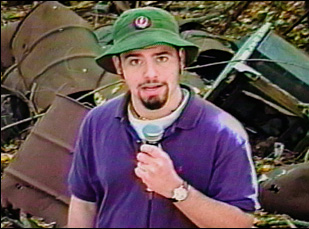
But it helped that we quickly identified our [main] characters were Jeff, Rachel, Mike and David. Many kids worked on the project, but they were some of the most active in documenting the work that they did, and they were very visible on camera. There were also certain scenes that were so evidently set-pieces, they were incredible like the local newspaper editor who comes to class and gets really irritable. That was such a powerful scene and had so much to say about the integrity of [the students’] work, but also the pushback that they were getting. And we knew it could be a turning point in the story, so we built out a roadmap of key scenes and and then when we felt like we really knew the story and we really knew the kids as 17-year-olds, we were ready to meet them as 50-year-olds.
One of my favorite scenes in the film is another one of those classroom forum scenes where someone actually articulates so well what journalism should be, telling the class “Everyone has a little piece of the story” and it’s so organic to the narrative you have. What was it like to naturally come across something like that?
Jesse Moss: This is true in all verite filmmaking too — you have to be far in the edit to really and be willing to go back into all of the footage even as the cut emerges and its coherence because it’s so easy to miss things that actually speak to a larger truth. That’s Don Terrell, a friend of Fred’s who’s this sage who comes in and had gotten him interested in this story, then becomes a kind of oracle for the students. All of these characters [like Don] were extraordinary and as supporting characters and Ward Stone, and Mr. B [the anonymous informant] and Don Terrell, each of whom could have also been their own major subplot. But the beauty of Don and of Fred is they really believe in the the power of young people and I love that Don is really exhorting them to chase the story and become real journalists.
That key line that “You pick out the fragments, the mosaics that have to be built from these tiny shards of the story and and it’s only when you lay them out does it form a picture,” that’s what journalists do and that’s what we do — it’s a reflexive film too. That’s an aspect of the story that could have swallowed us. It’s a documentary about a documentary, right? And we didn’t want to swallow our tail, but we love that it is about what we do and what we value — truth telling and patience. It was great that they had this studio in the classroom where they could invite people in, but then of course Don is exhorting them to go out into the world.
You move so fluidly in and out of the archival footage where it all feels as if it’s coming from the same place. Was it difficult to achieve that flow?
Jesse Moss: Tribute should be paid to our brilliant editor Chris Passig, who had edited “Telemarketers,” which was a favorite of ours. Chris is just a beautiful spirit and a wonderfully inventive editor who really explored the porousness of past and present and how to utilize what we had access to in the archive and then the older subjects looking back at themselves in footage and through the monitor and that dance. There was no roadmap for that and it was a lot of experimentation in the edit, but such an essential theme or feeling for the movie to capture.
Amanda McBaine: Yeah, [Chris] went into like a fugue state and took in so much VHS material shot by 17-year-olds and metabolized it and I think part of the genius of “Telemarketers” was, using that footage and having it play as present tense, so again, we’re verite filmmakers. We like to use footage as an immersive, we are here [feeling] and what was genius about what Chris did is that the adult perspective — the 50-something people talking about what they remember of the past, that doesn’t really show up until you are fully situated and immersed in the footage like um the older people almost talking in present tense about their experience as a high schooler, so it’s those big reflections you don’t you get as an older person, like “high school meant this to me” or “Fred was a father figure to me.” That would have been a revelation that came later [in the lives of the subjects] so those revelations don’t show up until 20-something minutes into the film. So the beginning is just ”Oh my gosh, this toxic landfill and cameras…” it’s just fun and light and weird and young. That was smart on his part.
You alluded to it a few minutes ago, but I can’t help but wonder when you’ve made “Boys State” and “Girls State” as your own kids have become this age, have stories around this time in life held a special interest or coincidental?
Jesse Moss: It’s happened organically in a way, but looking at the work as a body, there’s something very disarming about who teenagers are and to invite audiences to a story when when we’re beleaguered, we’re besieged, we’re fatigued and we need to find creative ways to talk about sometimes challenging subjects, polarization or our environment. I’m not saying this is a new trick, but young people are complex. They’re wise and impulsive. They have a duality.
Amanda McBaine: But they’re capable of great depth and emotion and vulnerability and when you get older, you get hardened and cynical. The 17-year-old who’s on the cusp of [being] young and old, that’s a fascinating moment in time. You just do a lot of shifting in your behavior and in and and in your embrace of the world and all of its light and dark realities. What’s so interesting about this movie in particular though is that then those same people who we meet and fall in love with as “The Breakfast Club” kind of roles that they [have] in high school — and we can all bring as an audience our own memories of that person in our own high school —they then grew up and there’s certain things that people bury from their high school experience and there’s some things that just you let go of when you get to be middle-aged. And that was a twist on what does it mean to be young and old that I learned from this movie — the stuff that you carry on, you have to uncover, you have to deal with it. like toxic waste, whatever that is for for you that you definitely need to deal with. And then there’s other stuff that you age out of.
There’s some people who, in the bad version of that, sell out, and they stop having that youthful pushback against the bad things in the world. And that’s sad. But what’s so incredible again about Fred is that he took that electricity of being young and asking questions with him into middle age. He’s still an optimist and he still listens. He’s not a Peter Pan. He’s a Fred. He kept the good piece of being young and left the bad.
Jesse Moss: It’s hard to imagine in this day and age teachers who would be comfortable letting their kids hop fences. But the commandment of the movie is of Fred commanding us all to hop a fence as we fight for the things that we believe in. And from the very beginning, reading that article and then actually really talking with Fred and meeting him in person was like we wanted the world to meet Fred and to learn about who he is and what he did and how he inspired people. We just thought there was great value there.
This film has taken an unusual road to launching on Netflix today. What’s it been like getting it out there?
Jesse Moss: It’s a challenging landscape for the form [in general and] the distribution side, all of it’s changing. We’re survivors and we continue to do independent work that we’re excited by, so for us to know that this film in particular that’s a bit radical and has a renegade spirit that’s the work of some high school students in 1991 to 1996 is going to be seen by a global audience truly makes me happy for Fred and everything that he’s fought for. That’s all his project is really about. It’s a great outcome. We didn’t expect it. We had a great Sundance premiere and we’ve had a really wonderful festival life, but taking a film into the world that it’s outside of the algorithm is hard and we thought Netflix was maybe beyond what we could hope for. So we’re very fortunate. It’s been a little bit of a bumpy ride, but we’re very happy to be here.
“Teenage Wasteland” is now streaming on Netflix.