




“The time has come to tell us the truth,” a police inspector says to Jeanne (Marion Cotillard) in “Karma,” days after her godson Mateo mysteriously disappeared and all signs point to her being the one responsible. An unusually high blood alcohol level and a coach’s testimony that she was the last one seen with him during a soccer practice have a strong likelihood of standing up in court against her, but director Guillaume Canet has already relieved her of any guilt, at least in a criminal sense when accompanying her around town where the concern is more about her being gone than the kid, leaving only a small degree of doubt when it’s learned she blacked out for a few minutes and she’s been known to go off her meds when the mood suits her. It’s the kind of woozy character that Cotillard has long had a special talent for playing in the kind of twisty thriller that Canet has had great proficiency in, first making a major splash behind the camera with his Harlen Coben adaptation “Tell No One,” and playing to their strengths in their latest collaboration yields a deliriously entertaining potboiler.
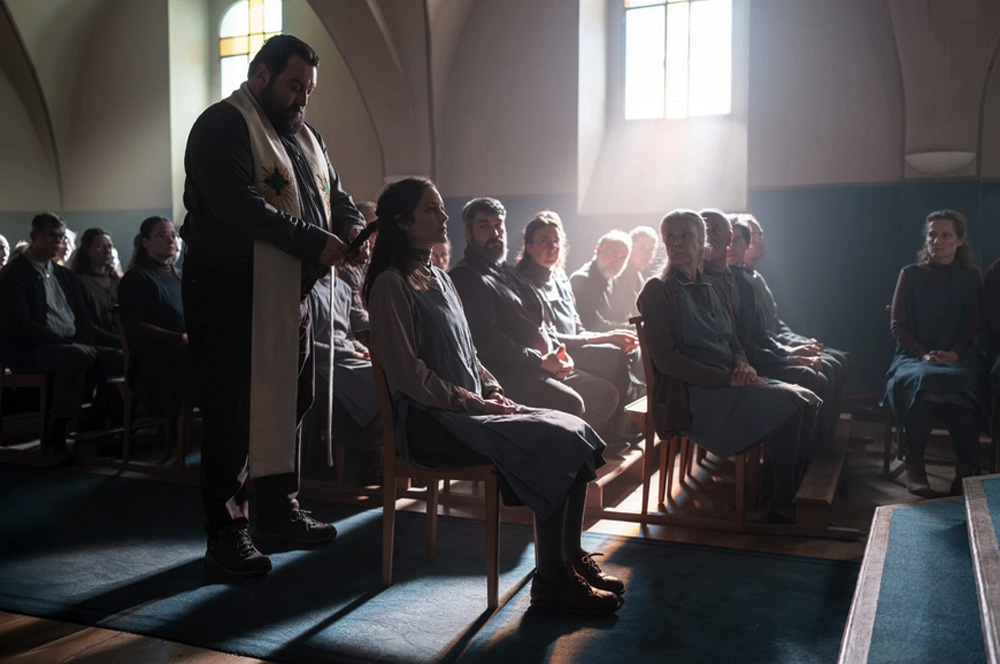
“Karma” makes good on one of the juiciest premises of recent memory when Jeanne goes on the run and immediately knows of a great place to hide, only it is far more dangerous than any potential prison stint could be when it means a return to the religious cult she grew up in in the French countryside. Its leader Marc (Denis Ménochet, whose sunken, piercing eyes full of judgment are used to maximum effect) runs a tight ship and his flock knows how to keep a secret when their arcane practices surely would bring scorn from the rest of society, though whether they’d want to keep one for Jeanne is an open question when she fled a decade earlier for Spain. After arriving at their gates, she is reluctantly accepted after she does penance by holding rocks in the palms of her hands until she goes limp on a rainy night, but many within the compound still clearly distrust her. She has to also live with the knowledge that there remains someone she actually does owe an apology to, Daniel (Leonardo Sbaraglia), her partner for the better part of the years she spent trying to live down her upbringing, who has to contend with the ongoing police investigation into Mateo’s disappearance while launching a bespoke one of his own when he realizes Jeanne was never who she said she was.
It wasn’t until leaving the theater that I realized “Karma” was two-and-a-half hours long when one lurid revelation after another piles up like layers on a cake that make it all the more delectable, but the decadent run time is ideal for a film where everything is appropriately just a little over the top as Daniel races to get to the bottom of where – and who – Jeanne is and she looks to save herself from being brainwashed once more by the beguiling Marc. Canet and co-writer Simon Jacquet don’t miss a trick when imagining the perversity going on in the medieval commune of Saint-Céré with a sect still stuck in the past, or in tying Jeanne’s current predicament to how she untangled herself before with the practical logistics of escaping far less difficult to overcome than the psychological barriers, watching a new generation consigned to the same fate she was and knowing she can’t possibly save them all, let alone herself. A cleverly conceived score from Yodelice doesn’t only accentuate the tension but encapsulates it, invoking the pipe organs of yore emanating from a modern keyboard to reflect how difficult it is to run away from history or the church (although as Marc relates, the fictional religion in the film is comprised of all their favorite parts of other faiths). Even before Jeanne sets her sights on burning it all down, “Karma” gets on like a house on fire.
“Karma” will screen again on May 16th at Le Cineum Salle 3 at 11:30 am and May 17th at Le Cineum Imax at 5 pm.