




Frank Pavich knows how to capture a dream. It’s been over a decade since he took on the daunting task for recounting the development process for the ultimately futile adaptation Alejandro Jodorowsky had in the works for what would’ve been the first big screen version of Frank Herbert’s “Dune,” but essentially realized the “El Topo” auteur’s vision with the help of the director himself and bits of H.R. Giger concept art and a planned score from Tangerine Dream in “Jodorowsky’s Dune” in what felt like a feverish fantasy, so it wasn’t as much of a stretch as one might think when he was invited to Cabarete in the Dominican Republic to take a look at what was going on at the Academia de Bachata where Benjamin de Menil has encouraged students to dream a little bigger, using the country’s grandest musical tradition.
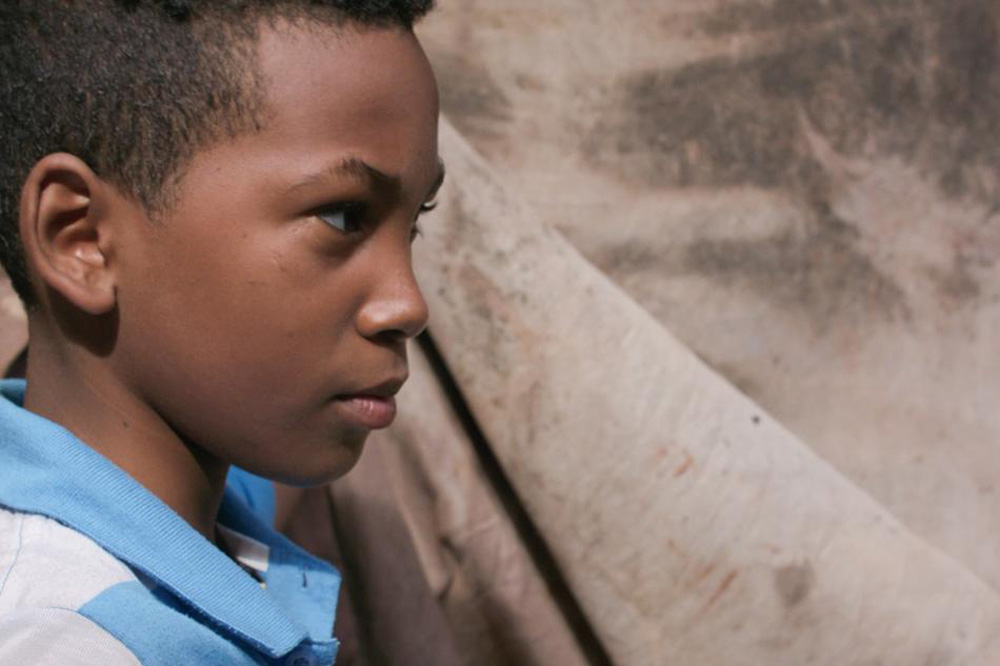
“This is a country where we sing our joy and we sing our sadness,” someone can be overheard saying in “Agridulce (Bittersweet),” the result of nearly a ten-year gestation period that led Pavich to follow four kids in their formative years as they harness their natural talents and have plenty of material to put into their music from their lives. The film tracks Yurian, the prepubescent son of a Bachata singer whose bid for stardom fell just short but clearly passed on his passion for singing, Orianny, a young girl whose life is a miracle when she was born six months premature and continues to transcend the odds, and teenagers Edickson, a guitarist, and Frandy, a singer, who contend with becoming men as they grow up without their fathers in their lives. They have the mentorship of Martires de Leon, who put a celebrated international career on hold to return to the DR to teach a new generation and found what he planned to be a month or two stay at the Academy become indefinite.
He isn’t the only one who can’t fathom leaving as “Agridulce” unspools, with Pavich often filming as if there’s a levitational pull towards his subjects with a camera that floats through the streets, bringing beauty as they do in their music out of a tough environment. When the musical form itself grew out of a desire to be heard from a marginalized community, with lyrics often nakedly biographical, observing the quartet find the power of their voice takes on a momentum of its own as they navigate the universally tricky issues of adolescence with the filmmaker’s dedication to seeing the story through paying off considerable dividends. Now with the film headed to SXSW for its world premiere this week, Pavich and de Menil generously took the time to talk about putting their time and energy into the project, matching the soul that the musicians bring to their performances in the film and how they not only witnessed lives take a funny turn for their subjects but for themselves.
How’d this come about?
Frank Pavich: It came about from Ben, who is not only the producer of the film, but he’s also the founder of the of the Bachata Academy in the DR. He had this whole great idea to document essentially what was happening there, not with the goal of making a promotional video, but like a real film about these kids and he had seen “Jodorowsky’s Dune.” I had never even heard of bachata music before, but through Ben, I was introduced to this whole world.
Benjamin de Menil: I started out as a producer of bachata music about 26 years ago as Bachata was becoming this international phenomenon. I was focusing more on the traditional side and I wanted that story to be told because this was a style of music that really could be appreciated all over the world and and wasn’t known about and a bit inaccessible. The first idea for why this film should exist was as a film that brings people into that world in this visceral way that they can connect to, but then over time the idea, which percolated in my mind, evolved into something that would be following grown-up [musicians] or old timers to discovering the culture through the eyes of children, so it’d be like discovering it together [for an audience].
Frank Pavich: Ben had a hard road to walk, being the founder of this school, but then also being the producer of this film and it very easily could have fallen into the wrong side, like I said [where it] a promo [for the school]. But he had this real love for the culture, for the people and for the music that doesn’t come from a place of how do I promote the school, but really celebrating this world and inviting new viewers to learn something new, fascinating and hopefully beautiful as well. I find it very impressive that he was straddling both sides of that, but when it came to the film, he was very much of the mind that he wanted to make a real film that would stand alone.
Ben, did you have an idea of the right people to follow?
Benjamin de Menil: In the beginning, it was [asking ourselves] who are the kids that have the most musical talent. We started following quite a few and obviously, an artist is more than just somebody who sings or plays their instrument well. There’s something about their expressiveness — the magnetism that they have, so we were looking for that as well. We followed a number of kids and then gradually we narrowed in on on the four that are in the film. We almost didn’t have to make a decision. They were just the ones.
Frank Pavich: And being a musician, it’s their experiences. It’s not just a series of notes that they play, but what they’ve lived throughout their lives that allows them to express themselves. This was an opportunity to really see these formative [moments] all of us have growing up. Something happened to us when we were eight years old or 12 years old, and those things stick with us, so we actually really got to immerse ourselves in those experiences with these children as they were growing up, which makes them into the adults and the artists that they may become as well. That was a really unique opportunity.
It really does seem like a unique opportunity when the lyrics of the songs they sing express so much about their lives as they working through it. Did that change your ideas of how to convey the story? There’s no sit-down interviews, for instance.
Frank Pavich: We were really lucky to be able to make a film like this, which is not a musical, but because the sentiments that are in the lyrics of these songs these kids sing, it’s almost like a musical film where someone is singing about the person they love or the person that’s wronged them or whatever it is. That’s the way that these kids live — as if they’re almost in a musical. It’s really unique. There’s the scene when when Edickson and the girl he’s dating break up and then they’ve got to go into class and the teacher tells her to rehearse this song, which is all about “how you broke my heart, but I don’t care. My heart is now made out of steel and you can’t hurt me.” And all that just happened. If that was in a musical film, you might go, “This is hitting the nail on the head [too much], but it’s real. Everything we filmed was real and these kids truly express themselves through these songs.
Benjamin de Menil: In the editing, it just seemed so many times like serendipity that these things were just connecting so well. It wasn’t something that, as we were filming, we necessarily knew what was going to happen.
Was there anything that happened that you might not have expected, but you could embrace as it became part of the film?
Frank Pavich: I don’t know what we really expected. To me, it was all new and the first time I went down to see the school with Ben, we had cameras with us and we got there at night, but we were out there filming the next day and all my experiences came through that camera.
Benjamin de Menil: We went into it with [some] ideas. We had talked about “Streetwise” and Salaam Bombay,” a film that I was moved by, and we’d even talked about “Mad Max,” [because of] how you see these trucks that look like they’re put together from different pieces of things. Those were all elements we were recognizing going into the film, but what for me was surprising was how as the stories developed about the protagonists, these were people that I already knew and I thought that I knew them pretty well, but as we we got into it, I discovered these things that I had no idea about that were very intense. In my role as the director of the school and as a mentor for these kids, it was emotionally hard at times to receive this information, so it was a real journey.
Frank Pavich: Yeah, [Ben is] really connected to all of these kids. They go to this school and then when they age out of it at around 16, 17, 18 years old, a lot of them end up going to college and Ben is really there to continue [encouraging them] with their lives and really help them out and support them along. It’s not just like, “Okay, now you’re 18, goodbye. He’s invested in the lives of these kids and the people in this town, which is really remarkable.
What’s it like to be sending this baby of yours out into the world now?
Frank Pavich: It’s funny because you and I met back when back in Austin when “Jodorowsky’s Dune” played at Fantastic Fest and Jodorowsky’s new film at that time was called “Dance of Reality,” which had its US premiere at South by Southwest, so I’m excited because I’ve never actually been to South by Southwest and I think it’s a great festival for this film, the mixture or this film and music festival when this film is really is a combination of so many things [itself].
Benjamin de Menil: And before I was a a film producer or a founder of a school, I was a music producer and my dream as a young music producer was to bring a band I was producing to perform at South by Southwest, so [to bring a film] is very unexpected and very rewarding that instead rather than a band it’s a film.
“Agridulce (Bittersweet)” will screen at SXSW on March 12th at 3 pm at the Violet Crown 2 and 4, March 14th at 6:45 pm at Violet Crown 1 and 3 and March 16th at 11:15 am at the Alamo Lamar 8.