



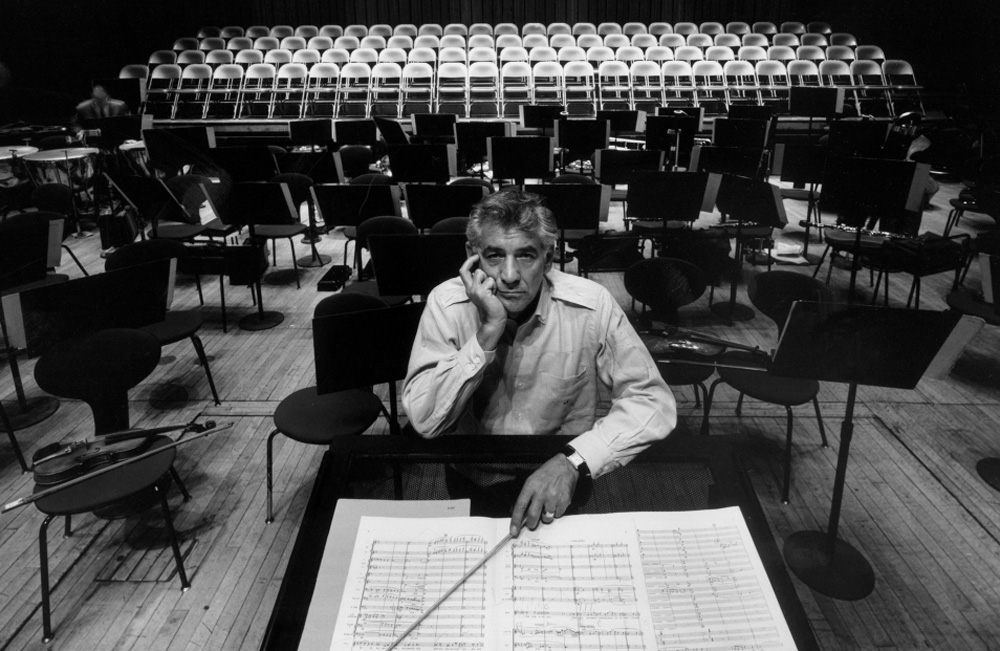

When Douglas Tirola began bouncing around ideas for his next project following his 2019 documentary “Bloodroot,” it took even his longtime producer Susan Bedusa by surprise that he showed an interest in the legendary conductor Leonard Bernstein.
“We’ve worked together almost 20 years and I’ve never heard you mention Leonard Bernstein,” Tirola recalls Bedusa telling him and it wasn’t as if he was suddenly listening to a lot of classical. However, as he grew more and more animated discussing Bernstein’s passion for a wide variety of social political issues that he would be able to find an expression for both inside and out of his music, Bedusa surrendered when the words were no longer necessary to describe the film he’d make. “She goes, ‘I get it.’ It sounds a lot like you.”
Tirola wouldn’t dare compare himself to one of the great musical titans of our time, nor would he necessarily even call himself a fan – at least for the same reasons that most would, yet he has made an unconventional biography that doesn’t so much cover a life as it feels infused with it when he taps into an idea that was at Bernstein’s core, imagining his perch leading an orchestra as a way to compel a far larger population to work in harmony with one another. “Bernstein’s Wall,” alluding to where the film opens on Christmas Day in 1989 when he figuratively chipped away at the border between East and West Berlin with a performance of Beethoven’s Ninth Symphony before quite literally taking a chisel to the wall itself, posits that his transcendent artistic talent was always put in service of a higher calling. Although the fame that came with success surely gave him more influence, Tirola finds that as Bernstein worked out his place in the world around him, frustrated with being ineligible to fight against Nazis in World War II and somewhat helpless when both the war in Vietnam and the rise of McCarthyism seemed far more worthy of attention than his work in the arts, he could use music as a universal language where even discord could be conveyed elegantly enough for people to respond to, rather than shutting down a conversation before it could begin.
Bernstein may have had doubts about how far his voice could reach on its own, yet Tirola understands its power so thoroughly that it becomes the anchor for an all-archival documentary, allowing him to share his story in his own words, from taking the helm of the New York Philharmonic at a precocious 25 years old to being constantly vigilant of keeping the form vibrant and accessible for the next generation. He undoubtedly leaves an impression with his work, but the film is careful to show how the world imprints onto him as he reinterpret classical compositions through the lens of his times and it can seem as if “Bernstein’s Wall” is doing the same when the conductor’s thoughts still hold considerable currency in a contemporary context. After premiering at Tribeca at the height of COVID, the rousing documentary has taken some time to reach theaters, but the wait is well worth it when it is bound to pick up anyone’s spirits and as it opens at the hallowed halls of New York’s Film Forum before heading west, Tirola generously took the time to talk about the Herculean task of doing justice to Bernstein, the challenges of working with only material he hadn’t recorded himself for the first time and responding to his infectious passion.
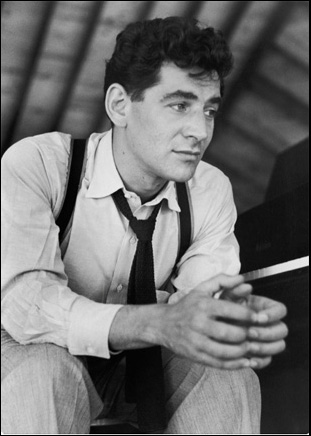 How did you get interested in Leonard Bernstein, particularly this dimension of his story?
I was researching a project that I still hope to do that explores New York in the 1980s, and in doing that, I came across one of these lists, like “Great Moments of the 1980s,” and it led me to the Leonard Bernstein concert on Christmas morning in Berlin seven weeks after the Berlin Wall had fallen. I had a vague memory of it because my mom is one of those people who grew up in New York in more modest circumstances, but loved the arts, the sort of person who would stand outside a Broadway theater and sneak in at intermission into the standing room. She eventually was able to get herself and our family a subscription to the New York Philharmonic because she’d worked for this very wealthy woman, and [the woman] became a widow and moved to Arizona and remarried, so she split the tickets with her, so I was aware of who Leonard Bernstein was and being passionate about film, I knew his score from “On the Waterfront” and “West Side Story.”
My longtime producing partner Susan Bedusa would say all my movies actually disguise the fact that they’re trying to discover the meaning of life, but I was drawn to trying to understand Leonard Bernstein’s personal philosophy, specifically his relationship between himself, his art, his work and his family. Now it’s a common term, but I don’t think in his era a “life/work balance” was not a term yet. [And I wondered] what made up his moral rudder? I’ve learned, especially over the last ten years of life, that not everybody has one. But he seemed to be someone who was not just trying to create a masterpiece for Broadway or a symphony, but trying to figure out what his philosophy was and what it was all about. One of my favorite lines in the movie is when he’s in Israel and he sees Israelis and Arabs together and he’s like “They’re working together, they’re playing together” — I still get goosebumps just thinking about it — he goes, “This is what it’s all about.”
That led me to a radio segment that he had done for Edward R. Murrow called “I Believe,” where he would have well-known people and some ordinary people and it was three minutes where somebody would would say, “This is what I believe.” And there were so many things that I felt I shared in common that I try and live by [that Bernstein said], and just his approach with this intense belief in the goodness of people, some of it maybe to his own detriment and detriment to others. But he coached up people with his art and his work and his presence to bring them to a better place. I think he also had the belief that everyone else was trying to do that. This is not to to erase any of his complicated personal struggles or flaws. As he wrote in one of the letters that’s in the film that I also particularly love is, he didn’t shy away from dancing with those demons or acknowledging them. But we look for heroes [now] — to our politicians, our religious figures, in our stars in whatever the thing we’re into — movies, theater, music, art — to inspire us or reflect that what we’re doing we think is right in the world and I thought if we can tell his story, these ideas that I believe in, we can get out into the world, even though he’s not with us physically anymore, through his story. I always say if Bernstein didn’t have a musical genius, he might have been a rabbi or a politician.
It’s all archival. Did it involve thinking about how to structure a story in a different way?
I was lucky enough to make a living writing scripts and you realize in movies certain things have to happen at a certain point and that’s what’s telling the audience how to follow along, even if they don’t understand the the science of it. So pretty early in the movie — in a script, it’s what someone would call the inciting incident, [Bernstein] says, “People ask me can art make a difference? Can an artist change the world?” And that is really what the movie is about. Obviously, you can have a two-hour biopic about him or a 12-hour PBS series, but [we focused on] the theme, can art make a difference? Because I feel that was what his flight was. He was using his talent and his work to try and make a positive difference. Sometimes it worked out. Other times maybe it didn’t. Certainly there were times people made fun of him and mocked him for his beliefs — or how much he believed in his beliefs and how vocal he was.
He’s also got a lot of great lines, and one of the things I’m very happy with how our film came out is that when you see a scripted movie, people often say “I love that line,” but you don’t get a lot of people quoting lines from documentaries. And they should be. One of Bernstein’s great line, in “I Believe” is “I tend to believe in everything.” He’s a believer. And I guess I’m a believer. You dive right in and sometimes it’s the right thing and sometimes maybe it’s not what you’d hoped it would be, but that is why I made this. But because I’m a filmmaker, I needed it to be a good engaging story and any film still needs to work as a movie. I hope people go to theaters to see this because the way [Bernstein] talks directly to the audience and the performances that we have, I do think there’s something to be had seeing it with an audience.
 I know a lot of Bernstein’s voice in the film came from an interview he did with John Gruen. How far along were you when you realized it would even be a possibility to be able to have him tell his own story?
I think maybe for me going through that frustration of scripted world, I [always feel] “You know what? We’re just getting a a cinematographer, a P.A. and a sound guy, and let’s just start making something.” And that’s been successful for us, so with this film, we did the same thing. It’s like, “You know what? I’ve got an idea, a too long outline, and some good archive. Let’s just start, going to do interviews.” And I think we did three interviews all with people that had known Leonard Bernstein that were great and a number of [other] people highlighted his talent, but [I thought] I want to hear Leonard Bernstein. Obviously, he wasn’t available. [Still] when I listened to the archive, Leonard Bernstein sounded like he was talking about today — about political and cultural issues. It didn’t sound like some guy from another century telling us, “We’ve got to try and do these good things.” It sounded like he was looking at his phone or watching the news on on TV and commenting on these issues of the economy, income inequality, the judicial system, racism, anti-Semitism or just religion in general.
I had heard some of these John Gruen tapes and they are incredible. We found out his daughter, who is amazing, owned these tapes and [Gruen and Bernstein] had a long-term working relationship and friendship for many years and [Gruen’s daughter] actually has had an amazing life on her own, [running] the Keith Haring Foundation for three decades. it was right when COVID was shutting down New York City and she said, I’m heading out of the city. I can meet with you tomorrow. It was at a coffee shop on Lexington Avenue on the Upper East Side and we made a deal on that day. It was like a movie. And then she headed out of the city and that was an incredible gift that she gave us, trusting us with these interviews.
We had enough visuals where the concept was imagining Leonard Bernstein just played some great concert performance somewhere in New York or Vienna or Milan and he would be somewhere eating by himself. He was always around people, but I think there were moments where he was by himself and he would strike up a conversation with somebody at some restaurant and [I imagined] he starts to tell them his story and his reason for telling him his story is to try and impart his philosophy, just as a rabbi or a politician would. That’s in line with him trying to use his work to change the world for the better. So this unexpected conversation is supposed to then translate onto the screen as he is talking directly to the audience.
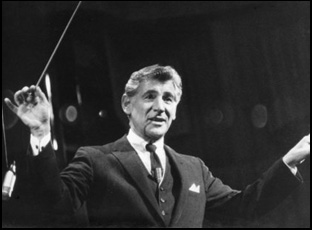
So we found as much [footage] as we could of where he is talking to camera, breaking the fourth wall, so to speak and when we needed to get something else in there, which a lot of was from the John Gruen tapes, we would cut away and hopefully you would still feel that it was from that same conversation. The other significant archive that we got was a film made for the State Department in the 1970s. They were making these cultural movies to show the rest of the world that America was more than Saturday afternoon at a football tailgate, which was basically the world’s view of us at that time. They did one about Louis Armstrong and our archivist found this film that was done on Bernstein and then called the Leonard Bernstein office, which the family runs and they gave him permission to talk with the filmmaker, who’s now 70 and had a office at DuArt, which is a storied and important part of the New York film business, and was a bonding point for us since I worked there as an assistant. We made a deal and that footage you see [of Bernstein] from Carnegie Hall where he’s looking right at you, we were able to get these outtakes that nobody had ever seen. This filmmaker had turned it over to Bernstein’s manager and it was in storage and to the LBO’s credit, they went and got it for us. We agreed to have it digitized so they can have it for the future if we could use it.
The idea was [Bernstein] is using his the drama of his story — and his life is full of drama — as a way to tell you these other things he really wants you to hear about — what he thinks about people, about the world, about all these issues that we are still dealing with. When we started this pitching this to raise money and meeting with the Bernstein family to explain what our vision was, I think part of the reason we’ve had this great relationship with them for so many years now is we would say he’s talking about all these things we’re dealing with right now. Unfortunately, the world has caught up with our movie and and I think more than even when it had its festival run.
 The last time we spoke for “Drunk Stoned Brilliant Dead: The Story of the National Lampoon,” I know you took so much pride for instance in making the backdrops for the interviews compelling – was doing an all-archival doc as satisfying creatively?
There were some late nights where we were certainly referring to “Bernstein’s Wall” as “Drunk Stoned Bernstein Dead,” because I always say if you’re not laughing, you’re crying and there’s a lot of reasons to cry, so you need to create some reasons to laugh. But the process of filmmaking is about problem solving and if you get satisfaction out of solving these problems that are unique to filmmaking, there is nothing better than when you’re working late, and you find that piece of archive and you’re trying to get a thought across — and you have 70 or 75% of the thought and you find something and you put it in the right spot and you sit back and you watch it with the editor or the producer, and you think “this is awesome.” You don’t know the movie’s going to be awesome, but we solved that problem. And maybe it’s like the original hip hop where you’re sampling. If somebody wanted to use something I shot in their own movie years past, I’d be excited that the work has another life and [the all-archival approach was] satisfying because it’s problem solving.
I was a locations person in New York City in the late ’80s and early ’90s when people came to shoot the Empire State Building or Yankee Stadium, the Plaza, and at one point, I knew how to turn on and off every light in Times Square. Which isn’t as many lights as switches as you need because some people like the Schubert organization own a lot of them, but it’s a lot more than some people would imagine and I found that satisfying — finding a location and then seeing it on the screen. But this was equally satisfying. When it all comes out and at least it’s watchable, that’s what it’s all about. You just want someone to to watch your movie and hopefully be impacted by it. You’re trying to say something. And part of the art of it is trying to say it in an entertaining way. Because if it’s not engaging, no one’s going to hear the message.
“Bernstein’s Wall” opens on April 24th in New York at Film Forum.