


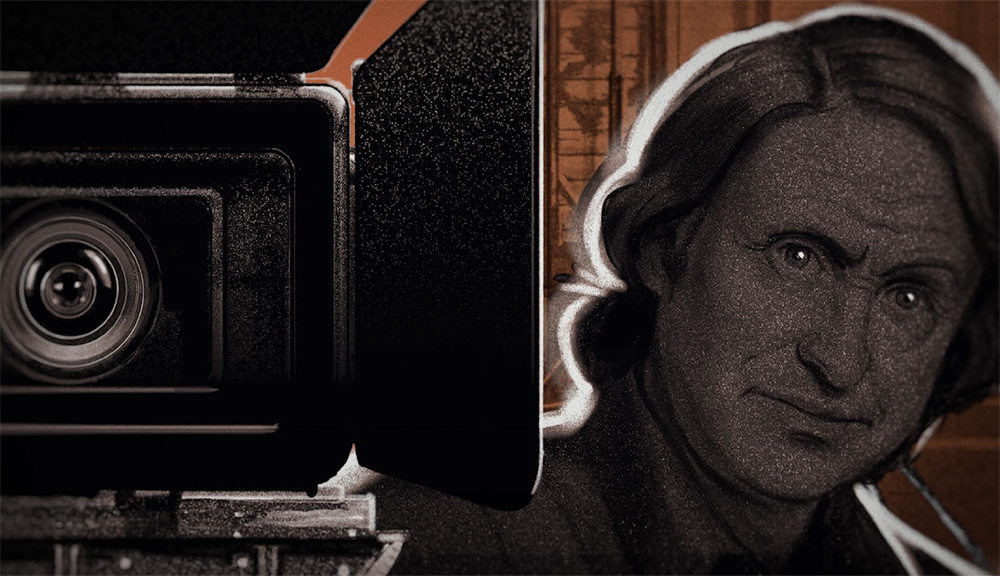

David Kittredge had reason to believe there might not be much of an audience for “Boorman and the Devil” when the film that it would be about — “The Exorcist II: Heretic” — was known to clear out theaters upon its release in 1977, a notorious bomb despite the fact that it doubled its budget on name recognition alone. Still, like Martin Scorsese before him, Kittredge was a fan of the audacious sequel to William Friedkin’s landmark horror film where John Boorman had carte blanche between the insurance of IP and the credibility he had left over from “Deliverance” (even with “Zardoz” in between) to make the craziest film he could conceive of with the support of studio head John Calley and in making a documentary about the film, Kittredge was determined to be just as bold, but like the film in question he worried it might not be for everyone.
“After working on this for seven-plus years, you get to a point where it’s like, ‘I’m just making the movie, I want to see it. I don’t know where it’s going. I don’t know if anyone’s going to ever see it or pick it up, but this is the movie I wanted to see,” says Kittredge, who delivered one of the biggest crowdpleasers of recent memory. “So to do that and then to have it get into the Venice Film Festival and l have all these people that love it and get a theatrical release in 2026 with a documentary, I feel like I’ve won the lottery. I’m nervous and really want people to see it, but I’m just so happy and and grateful right now. I can’t even express it.”
That kind of joy is truly infectious in the case of “Boorman and the Devil,” which gleefully recounts a snakebit production after the “Deliverance” director asked for the moon and actually got it to make a sequel that had few ties to the original and wasn’t exactly going to cater to fans. Instead of a fright fest, Boorman delivered metaphysical science fiction and a trip to Africa where it felt like the locusts that were unleashed were an actual attack on the audience, with its phantasmagorical imagery in stark contrast to the moody lighting employed by Friedkin and a rousing, frenzied score from Ennio Morricone of which the iconic tubular bells from the original are merely a building block. Which isn’t to say there wasn’t any horror, only that it was largely behind the scenes as Boorman may have had all the resources to fulfill his wildest imagination, but had to contend with a cast that didn’t necessarily want to be there and hopes for a multinational shoot ended up being confined to the Warner Brothers’ soundstages in Los Angeles in addition to many health scares throughout the production from contracting valley fever himself while scouting for the picture to dangling Linda Blair from the top of a skyscraper.
The end result may have confounded audiences – it takes some work even for Kittredge to convey the narrative of “Heretic” coherently — but it is no longer arguable that “The Exorcist II” has now yielded at least one great movie and Kittredge’s passion for Boorman’s film could convince skeptics that there are two when he creates such a loving portrait of an artist that truly makes the heart race. After taking the fall festival circuit by storm this time last year, “Boorman and the Devil” is all set to inspire “Exorcist II” rewatches across the country as it begins its U.S. theatrical release and Kittredge kindly took the time to talk about the endlessly entertaining making-of, keeping the film at a reasonable length when everyone had juicy stories to tell and how the film represented a true turning point in Hollywood history.
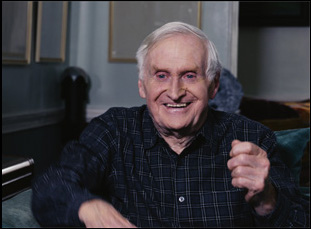 You’ve said that this started with all your friends knowing what a big “Exorcist II” fan you were. What made you pull the trigger on developing a feature?
My friend Jeffrey Schwarz, a wonderful documentary filmmaker, basically said, “If you don’t make this documentary, no one will make it. And these people who [were involved in the producerion] are getting up there, and this is 2017, and I was so furious because I knew he was right. I got in touch with Boorman because I felt like there were two documentaries — one without Boorman and there’s one with Boorman about “Exorcist II” — and Boorman had to trust me that I’m going to speak ill of the film or mock it. After some coaxing and a kind of courtship, he agreed to be [interviewed] in Ireland in his home and I went there in February 2018, which shows you how long this documentary has taken to make and we talked on camera the whole day. It was just one of the most remarkable interviews I’ve ever heard and I knew I had a responsibility to make this film now.
I had no choice because this is one of the greatest filmmakers that ever lived and he’s not spoken about this one movie in the middle of his career that nearly destroyed him — he nearly died on it and it nearly killed his career. But he’s also talking about his family, about art and about ambition and he’s talking about his other films and and how he made “Point Blank” and “Zardoz” and “Excalibur.” And that’s when the documentary changed from it being about “Exorcist II” to really being about Boorman and being about what does it take to be an artist? What does it take to make a piece of ambitious art, especially a movie, which is the most expensive and complicated art form I think has ever been created.
The story behind the making of this infamous film [“Exorcist II”] just has to be one of the most interesting stories I’ve ever heard because there’s so many things that it intersects with. It intersects with the sequel culture that we’re still dealing with today and this vast influx of money that came to Hollywood that changed it forever. Audiences were different then. There was this beautiful era of of American filmmaking from about 1967 to about 1980-81, where studios would back these amazing films that would get wide releases and make money, everything from “Butch Cassidy” to “Chinatown” to “Klute” to “McCabe & Mrs. Miller” to “All the President’s Men.” These are movies that for all the the intents and purposes, studios don’t want to make now. And unfortunately, I think when you have an entire generation that’s raised on only escapist films, you’re going to get people who don’t know what to do with a movie that’s not just an escapist film or maybe they’ll even avoid it.
I’d like that to change. I don’t know what to do except keep making movies, but “Exorcist II: The Heretic” is a risk that I think is unfathomable today — to make a sequel to the what was at the point that point the third-highest-grossing movie ever made, “The Exorcist” and they made a sequel that bears almost no resemblance to the first film thematically, visually, tonally, but it is in its own universe a really interesting film. The story behind it is just what kept me going all these years to just make this movie. I just really wanted to tell the story.
 That’s a lot to get in a film, but you manage to get the historical context in. What was it like to figure out what was important?
Yes, the first rough assembly of the documentary was 196 minutes because everybody that we interviewed, especially the crew, all remembered this movie like it was yesterday. These are people who had dozens and dozens of credits and it was a very, very entertaining 196-minute cut. We showed it to a few people and absolutely nobody said it was boring. But it was like going to a really fantastic restaurant and getting five entrees and after entree number two, it’s just like, “What do I do with the rest of this food?” So I knew as a director and as an editor, the film had to come down without losing any real content. A lot of that came from the first third, which was enormously long at first because I didn’t just set up Boorman, but I set up Warner Brothers and the executive John Calley [who greenlit “Exorcist II”], I set up New Hollywood, and there was a whole piece on “Jaws” because “Jaws” was the first “blockbuster.” It wasn’t the first movie that made a lot of money, but it was the first movie that came out in so many theaters all at once, buoyed by 30-second TV ads. That was the first time that happened. And it was at that moment when that movie opened so huge and started doing so much insane business that everybody in Hollywood just turned their head like, “Wait, what?” And two years after that was “Star Wars.”
I guess that had to happen, but in that transition, audiences got more used to seeing, I would say more thematically undemanding stuff. It was mostly escapism, which is not to denigrate escapism, but it’s not the only kind of movie. And “Exorcist II” went down at least in part because of that. Because “Exorcist” is a great film, but I don’t think it requires as much of the audience as “Exorcist II: The Heretic” does. You really actually have to pay attention and do work. I think this particular work was a perfect storm of a lot of stuff. There was the audience expectation aspect, the movie industry changing aspect, there’s the audience changing aspect and then the film itself, as Boorman says that he did not get the performance he wanted out of Richard Burton for various reasons. There are a lot of things that ding the film, but the more people I talked to, the more stories I heard, the more context I heard and when you get that many talented people together, anything that a group like that would do should require the attention of anybody who loves cinema. And this crew was extraordinarily talented — you had William A. Fraker, the cinematographer who went on to be nominated five or six times for Oscars. You had one of the greatest actors in history, Richard Burton. You had one of the greatest filmmakers in history, John Boorman. You had a production designer, Richard McDonald, who had done amazing work on “Jesus Christ Superstar” and “Day of the Locust” before and “Altered States” after. Tom Priestley was the editor of “Deliverance.” These are all fantastically talented artists, and as Boorman says in the interview, “I did some of the best work of my entire career on that film” and he was sad that it wasn’t regarded that way. And if the documentary can do anything, it would be great to have people give that movie the look that it deserves.
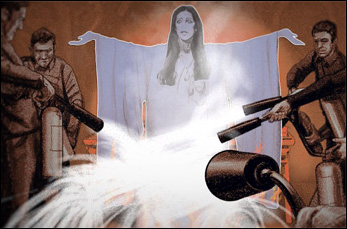 What was it like to speak to a viewer that had seen “The Exorcist II” and those that hadn’t?
This was actually a conversation we had a lot. It was really important to me that the documentary for people who had not seen “The Heretic” or who had not seen it in a long time. You don’t need to see “The Heretic” before seeing the documentary. In fact, don’t see “The Heretic” before you see the documentary because if you watch it after, it’s a much richer experience because you see the context. And the context is one of the issues because it doesn’t always come through what they were trying to do. But it was all very consciously formulated that way that this movie would not be for the few of us who love this crazy 1977 movie. No, this is about moviemaking and art and ambition and movies of the 70s, using “Exorcist II” as an example and the story of “Exorcist II” had a lot of these things that happen that are truly amazing.
When you’ve been making movies yourself for some time, did it feel like you could express anything you’ve experienced working in the form?
I’ve been on plenty of sets and I’ve made a narrative feature before and everybody who’s been on a movie set, especially an independent movie set, will tell you stories of things that happen — crazy coincidences, crazy compromises. It’s funny because “Exorcist II: The Heretic,” if you look at the number of things that went wrong and the severity of the number of the things that went wrong, it’s notable. It’s not often that an entire production has to get shut down because the the director is hospitalized with a rare fungus because of dirt they bring into a soundstage and blow around with fans. As far as things that happen on the film set, there are not a lot of movies that can compete with “Exorcist II.”
“Boorman and the Devil” opens on August 28th in New York at the Quad Cinema and September 2nd in Los Angeles at the Laemmle NoHo 7.