





If Cyril Aris had a hard time committing to one tone in his narrative debut feature “A Sad and Beautiful World,” it was only because he was staying true to how it felt to live in his home of Lebanon these past few years.
“The evolution was very much a result of whatever the country was going through in times of crisis and turmoil, particularly in 2021 and 2022,” Aris says now of his swoonworthy romance that unfolds over decades of turmoil in the country. “There was much more of a political message within the film [when I started writing it], but then the challenge was not to make a film that was so anchored in its time and to really try to develop this couple and the romance between them.”
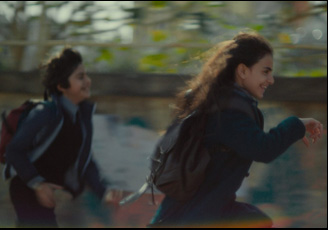
It becomes debatable what is the greatest romance in the lovely drama when as Yasmina (Mounia Akl) and Nino (Hasan Akil) fall as hard as they do for one another, they have to contend with how devoted they are to remaining in a place as unstable as Beirut where both were born as bombs were hitting the hospital they were delivered in. The shelling hasn’t ever seemed to stop as the country has been in constant conflict, leading Yasmina to increasingly looking to help from abroad as an outside consultant while Nino sets down roots in taking over his family’s restaurant. The two, who knew each other as children, are reunited just before Yasmina plans on leaving when Nino crashes his car into her mother’s office and the collision leads to a torrid courtship with the potential to wreak even more havoc when the two want a future together, they couldn’t envision it any differently from one another, particularly if they were to raise a family.
The idea for “A Sad and Beautiful World” came before Aris spent time on the set of his star Akl’s directorial debut “Costa Brava, Lebanon” to make the documentary “Dancing on the Edge of a Volcano,” which detailed how the production was nearly derailed by the fallout from the explosion at the Port of Beirut in 2020, and even as he expresses his doubts about sticking things out through Yasmina and Nino’s concerns, it is evident from the passion he injects into the drama and the exhilaration that often results where his own heart is, imagining Lebanon as where such intense love stories take root. Acknowledging a tortured history that shapes his central couple’s decisions, the director cleverly fashions a film that isn’t ever beholden to it when he’ll bring in a synth score at odds with most films set in the Middle East and exudes a restlessness in its fluid and ferocious structure where there’s a constant sense of movement even when Yasmina and Nino seem to have reached a standstill in their relationship.
When it doesn’t appear as if there could be any better representation of the country as it exists now or a greater point of national pride, “A Sad and Beautiful World” became a natural selection as Lebanon’s official entry to the Oscars for Best International Feature and Aris graciously took the time to talk about how any turbulence he faced in mounting the production emboldened him to seeing it through to the finish line, getting such great chemistry from his lead actors and why cooking lessons were required.
 How did this come about?
The project has been years in the making. The script actually started in 2019. as I was personally battling the question of forming a family and bringing children into our world today within this wave of pessimism and cynicism towards the future, which is a worldwide phenomenon applicable to all my generation and I wanted to study that question through two polar opposites, an eternal optimist and a realist pragmatist. and trace their relationship over 30 years of the contemporary history of Lebanon, going through ups and downs, going through wars and crisis, but also periods of peace and vibrancy and prosperity.
You had also just made “Dancing on the Edge of a Volcano,” which documented the turbulent shoot of Mounia Akl’s “Costa Brava, Lebanon.” I could imagine that could be incredibly discouraging, but did it end up being emboldening?
We did have our own fair share of obstacles, which were related to a completely different event. We were shooting this while Israel was bombing the south of Lebanon, a few weeks before the full-scale war between the two countries. so we were living with this constant threat of if Beirut was going to turn into another Gaza with this quite violent rhetoric [going on]. It was a very different set of obstacles than what “Costa Brava” was going through, but I feel that just like Paul Thomas Anderson says, “Every film is a miracle,” particularly in our region.
What was it like finding the right actors for this? Was Mounia actually in mind from the start for this character of Yasmina?
She was on my mind since the first draft, but when it came to the actual casting, it wasn’t a given that Mounia was going to do it because she stopped acting a while ago and she really moved behind the camera. So I did do the exercise of auditioning other actors, but all roads led back to me wanting Mounia because I she has something quite particular is that she can play this distance and this coldness, but at the same time, you can always see a sparkle in her eye or some childlike innocence, and that juxtaposition is quite interesting and very hard to find in an actor.
For Hassan, the challenge was to find someone [to play Nino] who you love instantly. As soon as you see him on camera, you feel that this is a chaotic person that has a big lust for life and an intense joie de vivre that is quite reflective of Beirut itself. But at the same time, someone that is a dramatic actor willing to show vulnerability. [Hassan] had such a wide range of just being immediately lovable, but at the same time, someone who’s deeply vulnerable and very much in touch with his feelings and when he entered the room [during the casting], he told me, “Listen, I’m going through a depression. I don’t want to act. I didn’t even want to come to the casting, but you insisted so much that I’m here.” And then a minute later, he was just full of life, doing the Nino scenes. So [I thought] “This is exactly what I’m looking for.”
 Did it change any of your ideas about this seeing them in a room together for the first time?
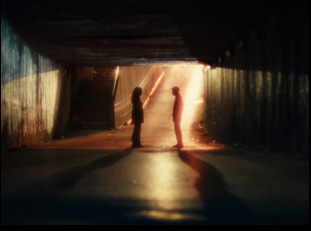
Yeah, because the way I like to work is to treat [the actors] as collaborators, and I’m not just casting the actor. I’m casting the person with all of their life experiences. So when Hassan knew that Mounia was going to get cast, he told me it’s going to be very easy to fall in love with her. But seeing them act together, I started rewriting some scenes according to how they spoke and treated each other and what they started liking about each other and disliking about each other.
Is it true you also had Hassan go to cooking classes? Can he actually make a mean kibbeh now?
He did take cooking classes, but he’s not that good of a cook. [laughs] You’ll notice in the film that most of the cooking is actually done by his chef Shafiq [at the cafe he owns], but he had a few scenes where he actually needed to cook and when I first cast him, he told me you’re going to have to teach me because I don’t know how to hold a knife properly. So we had to send him to some cooking classes.
Those scenes moving in and out of the kitchen were so elaborate and elegant. What was it like to figure out the visual energy?
We were really treating the kitchen as the reflection of the state of the city, so when the city is alive and vibrant, the restaurant is full, it’s chaotic, it has this charm in its chaos and in its randomness and the mix of cultures and cuisines is very much of an embodiment of Nino’s personality. My cinematographer Joe Saade and I framed everything in longer takes with dozens of extras with people in the foreground, people in the background, and the relationship between the two, so that in the third chapter when the city is dying and is crumbling down, going through crisis, all of a sudden the restaurant is much more empty. The [color] palette of the restaurant becomes much colder and more somber and the camera loses its exuberance. All of a sudden, you find yourself in wides and static shots, so the staging around the restaurant was an essential way of telling the story and communicating the state of mind of the world around them.
It was interesting to me that Nat Sanders was an editor on this since he’s generally known for working on American Indies such as “Short Term 12” and “Moonlight.” Were you looking for an outsider in that role?
This film is an equal production between Lebanon and the U.S. and since the whole production happened in Lebanon, the producers were quite keen on taking care of the post-production, specifically the creative elements like editing [in the U.S.]. Given the producer Jen Blake’s relationship to Sundance and Nat Sanders’ relationship to the Sundance Institute as well, we were able to get in touch with Nat, who was my first choice for editing this picture, simply because I like how he paces his films, particularly Barry Jenkins’ “If Beale Street Could Talk” and “Moonlight” [where] the passage of time is a big element and how time becomes something that plays in favor or against the character, which is very much the case in this film, as well as his emotional approach to performances and scenes as opposed to something that is very much structured or by the book. Having someone that doesn’t speak Arabic with me being present there [in the edit], I thought it would be a good mix of seeing how he is reading the footage and it was very interesting for me to see how he hears the musicality of the dialogue and judges the performances based on that.
Is it a difficult to track these two characters that cover so much time?
Yes, especially when it comes to Nino and Yasmina between the second and third chapter when we see their energy switch completely. While he’s the flamboyant, exuberant, energetic one, he becomes much darker in the third chapter and for her, it’s the opposite. She’s quite cynical and pessimistic and she finds herself with the duty of carrying [others] on her shoulders, so playing with that evolution, I do commend my actors and we tried to shoot as much as possible chronologically so that they can fall in love with each other and fall out of love with each other. I remember when we’re shooting the third chapter, they stopped talking together on set and really the only communication they had was inside the scenes, so that helped a lot in transforming that the energy and feeling the passage of time.
 It’s a really unusual score that blends different musical styles that play with time as well when it can feel modern and classical. What was it like to put a score on this?
There’s two types of music — the diegetic and the non-diegetic when it comes to the score, and this is my fifth collaboration with the composer Anthony Sahyoun, who’s quite experimental and mixes a lot of ambient tonalities with strong Arabic influences. He [naturally] mixes between something that is quite modern and digital and something that is traditional and more oriental and I knew that combining these two elements was something that I wanted to do. I did not want to have the expected score or musicality when it comes to a romance, so [Anthony] started playing around with analog instruments, with a synthesizer and organs and specifically the double bass, but playing not the way you expected and taking all of these analog sounds and processing them electronically. It gives you a perfect mix of what sounds nostalgic mixed with something that feels very processed, very digital and very modern.
It took a few months for us to find that mix and the right tonality, but by the end of it, the whole score relied on these few instruments and when it comes to the tracks that you hear in the restaurant, they’re mostly very traditional Arabic tracks that [Anthony] covered and revisited, inviting other Lebanese musicians, some who have an inclination to the blues and others to rock and others to jazz, and mixing them all together to create this wide spectrum of influences, which is very much representative of the culture of the restaurant [in the film].
What’s it been like to share the film with other cultures, traveling with it since its debut at Venice?
It’s a great honor. We had the first release of the film locally and the reaction we got is that people are quite proud that this is the film that is representing us because they identify and relate so much to the characters and feel this is a valid representation of our hopes, our dreams, but also our pains and our wounds and what’s quite interesting traveling with the film now — and it’s going to start getting released in all of these different territories in the winter — I can see how different cultures see different things in the film. There are some audiences that are relating much more to the question of exile and immigration, of leaving versus staying. Others are hanging on to this idealistic romance that [some] do not believe so much in anymore. And finally, others are identifying much more with the question of bringing children into this world. Because it’s such a mix of genres and styles, it’s interesting how different people find their different hook to the film and that’s great because this is the power of cinema. Once it’s out there, it doesn’t belong to the crew or to the makers of the film, but it just becomes the property of the audience.
“A Sad and Beautiful World” will open on July 24th in New York at the Quad Cinema and July 31st in Los Angeles at the Laemmle Royal, Santa Barbara at the SBIFF Film Center, Chicago at the Uprising Theatre and Huntington, New York at the Cinema Arts Centre and August 7th in Eugene, Oregon at the Darkside Cinema.