



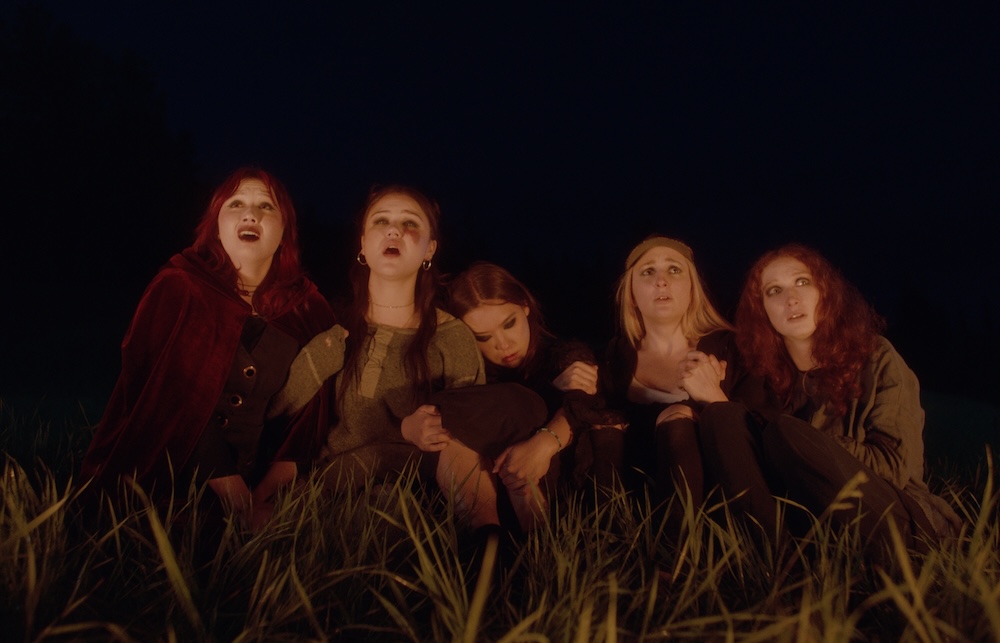

The idea for “Camp” had been kicking around in Avalon Fast’s head for a while, but the writer/director had been careful to never let it solidify.
“There’s a thing there that I’m building off of and then the things that transpire in my own life, the feelings I feel, they’re brought into these films and they become deeper and more personal as I continue creating,” Fast says of their second feature that unfolds over a summer at a retreat for the young. “‘Camp’ feels like an opus of its own kind, but I don’t think it’s the end of that question, but a continuation of it, so I would say this started for me when I was 13 and I’ve been working off it ever since.”
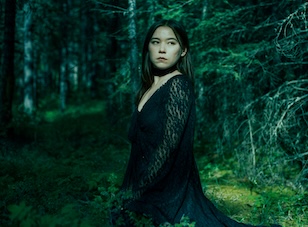
That perhaps is why Fast’s films have had a spiritual quality that it’s hard to put a finger on and equally hard to shake and after their feature debut “Honeycomb,” filmed before they were of drinking age with a collection of their friends from high school indulging in a “Lord of the Flies”-esque scenario on a remote island, it’s wild to think that at the director who was christened as a wunderkind at 22 is now old enough to be directing actors half their age (an experience Fast laughs off as “horrible”). In “Camp,” there is a group of girls that have come to the rolling hills of Alberta, Canada for a sense of belonging, just a few years before they’d be of the same age of the young women in “Honeycomb,” and Fast embeds with a group of counselors who could appear as the slightly more grown versions, too busy bonding themselves to keep much of an eye on the prepubescent. It may be a Christian camp, but that isn’t where religion is found as the other counselors can’t wait to tell Emily (Zola Grimmer) of an enchanted attic on the premises, picking up on the fact that something seems amiss with her.
In fact, Emily is haunted by being behind the wheel for two tragic incidents, first being responsible for a fatal collision not long after she first was allowed to drive and subsequently seeing her best friend die from an overdose in the passenger seat after a party, leading her father to send her away for the summer to recover. Fast may find the fresh air in Alberta can be rejuvenating and fellow counselors Rosie (Cherry Moore), Nev (Lea Rose Sebastianis), Clara (Alice Wordsworth) and Hope (Ella Reece) are aware of a fantastical portal, but the true magic lies in the community they come to form with one another as if they had long dormant superpowers activated upon becoming friends. Still, “Camp,” like “Honeycomb” and its predecessor “Night Trouble,” comes across as a dark fairy tale when such unions seem nearly impossible to form in the face of a world that appears to conspire against it when audiences have been conditioned to think that neither female friendships or magic are to be believed and grief hits everyone differently at times they couldn’t possibly predict. (Curiously, Emily is quite comfortable talking about hers, yet still is very much processing it throughout.)
While showing preternatural cinematic sensibilities beyond their years, Fast, being so close to the age of their heroines, speaks directly to them in disarming fashion, capturing a certain innocence that needs to be preserved as labels start to be applied with age and it can appear that the filmmaker is combating the same type of branding, maintaining a distinctive voice as the production of “Camp” was more ambitious with a bigger budget than the scrappy “Honeycomb.” (It’s telling that Fast turned around and made the back-to-basics drama “Drinking and Driving” with longtime collaborator Jillian Frank immediately after.) At a crossroads as “Camp” is being released into theaters now, Fast graciously took the time to talk about staying open to instinct, the compromises involved with a larger scale shoot and how you can’t fake the energy of a party.
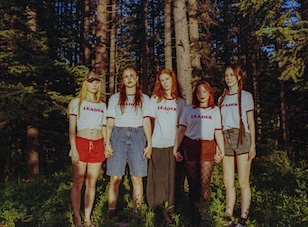 It was interesting to learn after watching the film that you had planned to film in Vancouver Island where you grew up and that Zola Grimmer, who plays the lead, is the actor you had the least amount of familiarity with beforehand. Was that actually a boon to this film about feeling like an outsider?
Absolutely, there was totally a sense of displacement and that feeling of heading off to summer camp that you feel as a child being in a somewhat foreign environment, being in a different community, working with people that I didn’t know as well. I think that brought something to the film. It was still important to me to at least have shot a portion of this near my home in Bank River Island, which we did with a lot of that Super 8 footage, the opening party sequence — these things were shot at home. And then to do the rest of it out in Alberta, it ended up being such a cool experience being in a different environment and and learning to understand it.
What was it like to find the perfect campground in Alberta?
We had to find five different perfect campground — there’s a mix of a lot of different things because in reality we actually couldn’t find the perfect campground. How I remember summer camp and the vision of these ‘90s cabins and and dinner halls with real wood structures, these are slowly disappearing as camps begin to renovate, so we could find bits and pieces all over and then stitch them together. But that’s fun. That’s what making a movie is all about.
This was a bigger production than “Honeycomb.” Was it interesting to hold onto the spirit that made that kind of film possible while doing something with a larger infrastructure?
Yeah, it’s funny because one of the biggest goals is to be able to have more resources to be able to see your vision through as a filmmaker. So in theory when you’re working with more money, that comes with the idea that you may have more freedom. And in ways, this is true. Being able to work with our animator Sofiya Iurkevych, who’s also from Alberta, and to have these crazy lighting setups [on set] and being able to cast this many people — being able to pay this many people — all of these really cool things came with “Camp.” But then there is this sense of it’s harder to experiment on the day or that things have to be mutually understood between a lot more people when you’re working at that level versus something like “Drinking and Driving” or “Honeycomb” where if we have an idea and we think we can pull it off, it goes around between two, three, maybe four people and we think “Okay, let’s try to do this and we can do it.” On a bigger production, you don’t have that kind of freedom, so there’s a balance and and I think both have their their pros and cons. I wouldn’t necessarily say that working with money immediately gives you all of this freedom. I actually found it to be somewhat of the opposite.
 With something like animation, does the process start earlier than the physical production? Likewise, the music seems so endemic to the film, are you kicking around ideas before it begins?
Yeah, there were so many animated sequences I had in mind for this and I didn’t meet Sofiya until late stage post-production, so it was something I had I was holding for a long time and then only got to see right at the end of the process, which was super cool. It was a bit of a different story with Max Robin, who did the score for “Honeycomb” as well. I feel like him and I are constantly working and as soon as there’s a project in mind, I’ll let him know and we’re working from that point forward. Things come at different at different stages — even before production, there was some of that music had already been created and then some of it appeared like a week before we were finished making the film.
Often a film shoot is referred to as summer camp when you bring together all these people who may not necessarily know each other. Were there actually any bonding activities that you engaged in?
Yeah, a lot of those actors all shared a house together while we were shooting, so there were natural things that were happening, but I had no part in any of their bonding. I feel like either people are going to find it and figure it out or not. I remember one of the cast members that lived in Alberta had us all over for like a barbecue in her backyard the first weekend and it was just so magical to get to spend that time together and realize how much we all actually enjoyed hanging out together even outside of set. Those things continue to happen and that’s super cool but all of it happened pretty organically.
It seems like there’s at least always one day on your films where you’ll just let the cast go nuts and film it — in “Camp,” it seems like the bonfire scene is that moment. What was the energy like on set?
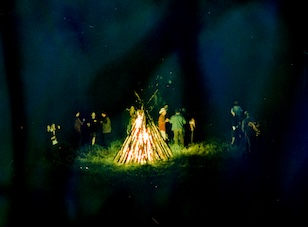
It really helps to have people that can get that energy going, and I would say Lea [Rose Sebastianis], who plays Nev, and Cherry [Moore], who plays Rosie, were getting it going. We did have music from a big speaker playing as well, which is always how I will do things [though] there’s some kind of rule about not doing that, so you can get the audio of these people actually partying, But I just cannot imagine trying to create a party scene without a real party vibe and energy and I think it’s just so much more fun for everybody involved, so it’s always as authentic as possible.
 How much ownership over the characters do you actually give the actors once they have the part? From what I understand, some of the clothes the actors were wearing at the end were stitched by the actors themselves.
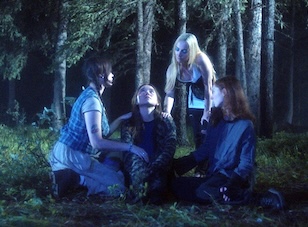
I feel like I had a really good grasp on who these characters were in the story and in this place and time, but as I would cast, I left it open to the actors to decide who their character was before they got to this place in time. And if they wanted to, I had a couple of the girls write it down and we would go over it together. That was a cool way to collaborate on the character because, for some of these for some of these characters, these actors were people that I had known before and I knew I wanted them to play these roles and then for other people, like Zola or Ella or Alice, I didn’t know prior, so it was cool to come up with their characters in some way together.
You’ve actually been acting more and more in other people’s films. Has it changed your ideas about directing?
What’s interesting is I haven’t directed a film since I’ve done a lot of my acting, so I don’t know yet, but it’s definitely been a really exciting part of all of this for me. I love acting in movies and I love dissolving the responsibility of being a leader on set and just being guided by somebody else that’s in charge. There’s definitely things that I’ve witnessed or experienced that I will take into the next thing that I do as the leader.
 What’s it been like having this film under your belt?
Yeah. it’s been a while since I’ve been in that space [of “Camp”], but more so being in the space that I’ve been in lately with sharing the film, I’ve had this feeling that I really enjoy the independent world that I’m a part of and I feel as humans and as filmmakers and artists, we’re striving or pushing for something that’s beyond ourselves, so it gets bigger and wider. I just feel really, really happy and really satisfied with some of the audiences that I’ve been able to conjure and some of the spaces I’ve been able to be in and the people that I’ve been able to meet. It makes me feel like I’m doing the right thing by being here. There’s so much confusion about whether you’re doing the right thing or or what you’re really doing at all and at the end of this process, I’ve been feeling really good about it. It makes me not necessarily push to do something bigger, but to to continue being in this world.
“Camp” opens on June 26th in New York at the IFC Center and Los Angeles at the Laemmle Glendale and will screen at Alamo Drafthouses across the country on July 2nd. More dates and theaters can be found here.