



The first thing a Western audience is bound to notice in “Tehran, Under the Skin” is the unusually modern face director Afsaneh Salari puts on Iran, returning to the country herself after relocating to France 15 years earlier. Perhaps it’s her own fresh set of eyes that leads to different way of seeing the country, typically portrayed as dusty and ancient on screen where religious strictures have slowed a move into the 21st century, but Salari sees streets that look no different than metropolitan thoroughfares in Japan and Paris in their architecture bursting with color, with an accompanying hustle and bustle that rivals anywhere else. Progress appears inevitable, but at the same time, something the director can’t help but be a bit skeptical of when she says in a voiceover taken from the journal she’s kept over the years, “the city opens its mouth… it devours everything.”
Although Salari only set up her camera recently for her second feature, she unwittingly began documentation for “Tehran, Under the Skin” from the time she was 11 years old, folding in her diary entries into a peek inside Iran’s booming plastic surgery industry where the fact that it’s cheaper to get a nose job than a cell phone has made it a more common practice than one would expect, particularly when the results would be largely covered up at least for women in a society that still insists on hijabs. Tucking in her own memories of puberty and the development of an unhealthy relationship with her body as she observes more and more turn to the knife, the director wonders how much of a makeover really is possible in a culture that remains rooted in patriarchy and while plastic surgery can be seen as a personal choice to boost self-confidence, the desire for it seems more of a reflection of what needs to change rather than what has.
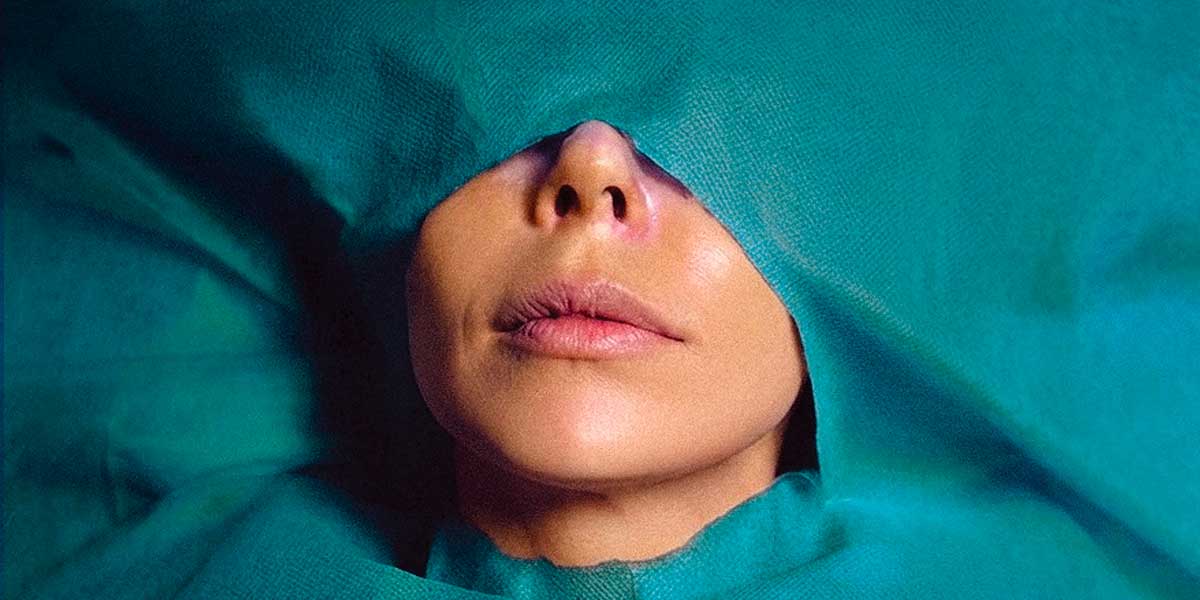
“Iranian society is bipolar,” one of the two doctors that have allowed Salari into their clinics to film can be heard saying after ending an initial consultation with a patient, noting the person that just walked out of their office is a school teacher whose request for a breast lift may seem at odds with her clear preferences for modesty. The physicians generally would seem to discourage surgery as Salari sits in the waiting room and with the patient’s permission, occasionally in the office or the operating room, as mostly women come in and request rhinoplasties and breast implants. Demand is such that getting an appointment appears difficult, but at least a few are dismissed when they’re past the age when it would be safe to do the procedure and others clearly don’t need it as a physical improvement. (One amusing scene also involves the wife of a patient who got a discount seeking one for herself, only to be turned away by the doctor who didn’t intend to offer a family rate.) The waiting room itself is notable when women come in with hairstyles (and hair colors) that might look more typical in Los Angeles than in Tehran, but as Salari moves back and forth from inside the clinic to just outside of it where more contemporary buildings are sprouting up in centuries-old neighborhoods, the director is able to pull the identity crisis that many residents seem to be experiencing at a gut level into view as the place they all reside can also appear in flux.
Salari tastefully documents the surgeries she does bear witness to, so it’s actually the more abstract interrogation into her own life where things can get a little squeamish, recalling how she was chastised by a teacher ahead of her teens for reaching puberty before a lot of her classmates and unable to hide her developing figure, planting lifelong insecurities that would carry on through a a marriage at 19 and fears about having to hide her pregnancy out of shame. The inclusion of Salari reading from her journals is a clever approach when she is unlikely to engage with any of the patients in deep conversation as they slip in and out of the clinics hoping to go unnoticed, assuming at least some of the reason that they’re there while being careful not to ever suggest those reasons are uniform. Ironically, while a specific standard of beauty leads people to seek out the services of a plastic surgeon in “Tehran, Under the Skin,” it’s the variety of people that Salari observes that becomes most compelling, creating a complex portrait of Iran that runs counter to much of what audiences abroad have seen before both on a surface level and beyond.
“Tehran Under the Skin” will screen again at the Toronto Film Festival on September 17th at the Scotiabank at 5 pm.