



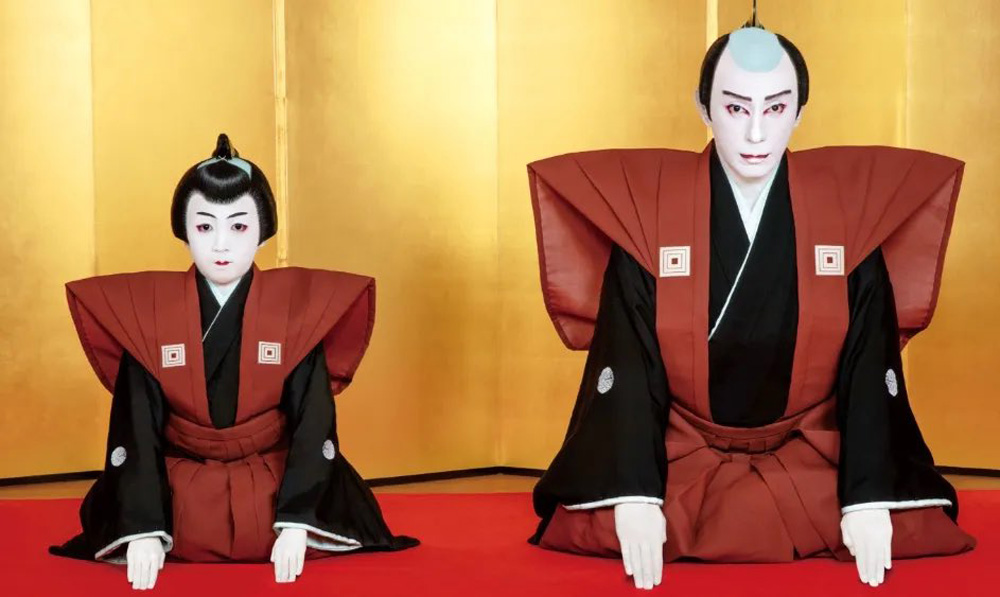

The likely marketing hook for “Shumei: The Living Legacy of Kabuki” is that it is the first documentary from Takashi Miike after a hundred other narrative features and while the imprimatur of the director of “Ichi the Killer” and “Audition” might set up some unreasonable expectations for what is ultimately a straightforward piece of nonfiction, one can see pretty clearly why the tradition of Kabuki theater where there’s as much drama offstage as on was a world he wanted to enter. Arriving a year after the enormous success in Japan of Sang-il Lee’s epic drama “Kohuko,” which led to a resurgence in attendance for live theater, “Shumei” offers a brisk history through the lineage of one of the most famous families to tread the boards in the Ichikawa clan as they arrive at a turning point where the 41-year-old Ebizo is set to take over as a lead actor for his company, a role that extends back to his father, his father’s father and so on all the way back to the 17th century. (The transition known as “Shumei” gives the film its title.)
It is noted by the female narrator who speaks almost breathlessly at times over the verite footage that Miike has assembled that though the form of Kabuki is old, there’s always been a bit of a punk attitude behind it with its bold costumes and performance style, seemingly opening the door to Miike’s interest in it as well as how he chooses to portray it. While the director seems to eschew direct interviews, he bears witness to the crushing weight that Ebizo has seemingly steeled himself against when he’s put through the gauntlet of acting in three different shows daily for three months ahead of his anointment and contends with a much larger history. As much as his family have pioneered the form, they have also been subject to various tragedies throughout the years as one of his earliest known relatives was once killed on stage by another actor and more immediately, his own father’s career was cut short by leukemia and his wife died of cancer, leaving him to take care of his young son Kangen and daughter Reika by himself. Ebizo is clearly a proud man and hyper professional practitioner of the arts, but whether what he’s doing is sustainable for anyone becomes an open question, particularly when he starts to suffer from throat inflammation that requires him to take a break.
The urgency that comes from the responsibility that Ebizo feels is conveyed well by the film’s energetic pace, though the narration can be a little dense with information at times, and it surely is a rush to witness backstage costume and makeup changes that looks like a NASCAR crew fixing tires during a pit stop as the actor is touched up to play an entirely different role. The speed really does make it feel as if things come to a grinding halt, first when Ebizo’s throat gets the better of him, leaving Kangen to take over in a fascinating turn of events on its own when his own shumei can’t be expected for some time. (Plus, it’s fascinating to see a prepubescent boy take on decidedly adult roles with the same unshakable poise as his father, being by his side for all his own preparations.) Then when Ebizo’s shumei was set to occur two months after the COVID lockdown is put in place, he endures a much longer break than he could’ve expected, though it sets up a triumphant return to the theater where both the actor and the audience can take their rightful place after years of being separated.
If Miike makes one provocative decision, it is to not translate the Kabuki performances for the benefit of non-Japanese speakers, making the nearly half-hour finale a matter of taste when the theatrical form that emphasizes emotional expression over words in the first place may not resonate narratively but the passion it can still elicit truly takes center stage. Ironically, “Shumei” may make an extended look at Kabuki (still in abbreviated form) unnecessary to have an appreciation for it when it’s impressive enough that the same bloodline has not only dedicated themselves to kabuki, but really put in their blood, sweat and tears and in capturing a generational transference, it shows that’s what’s needed to keep traditions like this alive.
“Shumei: The Living Legacy of Kabuki” will screen again at the Venice Film Festival on September 5th at 2 pm at the Astra 2.