


“Who is this chick?” a resident of Hungary asks of the American lady with the camera that’s come to film around the village of Iregszemcse about 85 miles outside of Budapest in “The Grandfather Puzzle,” informed by a friend that she is a descendant of the baron. He isn’t all that impressed, recalling that his grandmother used to be a day laborer at the baron’s castle, yet jokes to the friend, “Don’t stand in front of me or I won’t be in the video,” the start of a warm welcome for Ora DeKornfeld to her grandfather’s hometown where excitement around her visit even leads to a mayoral proclamation.
That may seem like a little much to the filmmaker, who takes the fanfare in stride as she tries to get to know more about her family’s roots, but in fact for anyone that has been following the nonfiction space in recent years, the question of who she is has often been asked with an aura of awe around it as she was part of the editing team on Elizabeth Lo’s “Mistress Dispeller” and shot Isabel Castro’s “Mija” in addition to directing a varied and dynamic collection of short film portraits such as “Fighting Cuba’s Boxing Ban” about a young woman caught up in training for a sport she isn’t legally able to participate in due to a new law, and “USA vs. Scott,” which she co-directed with Castro about the court case involving a good samaritan accused of conspiracy upon helping two men who crossed the U.S. border get some water and food. Her work is really coming into focus this weekend at DC/DOX where fresh off recent bows at SXSW and Full Frame where they each claimed a top prize, respectively, “Stalin Boys” (co-directed with Bianca Giaever) and “The Grandfather Puzzle” will be screening in the nation’s capital with the director in attendance.
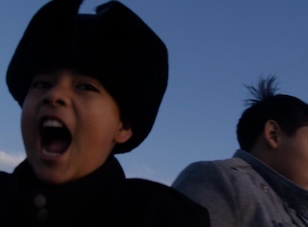
The two films show DeKornfeld’s range as well as balancing a sharp sense of humor against serious subject matter when taking on two distinctly different subjects, with “Stalin Boys” taking her out to an even smaller community than the one her grandfather was raised in as she and Giaever head to Marathon, Texas where a middle school with just 11 students has not only a science fair to pass the time but also a history fair where students bring the past back to life. As cute as it is to see Malachi, one of the kids, spearhead a play about Joseph Stalin and procure the Russian regalia to wear as the young men take their act on the road to a competition at the University of Texas at Austin, the film sees the students stripping the dictator’s motives down to terms they can understand when recognizing him as a bully, actually getting something of value in playing dress-up.
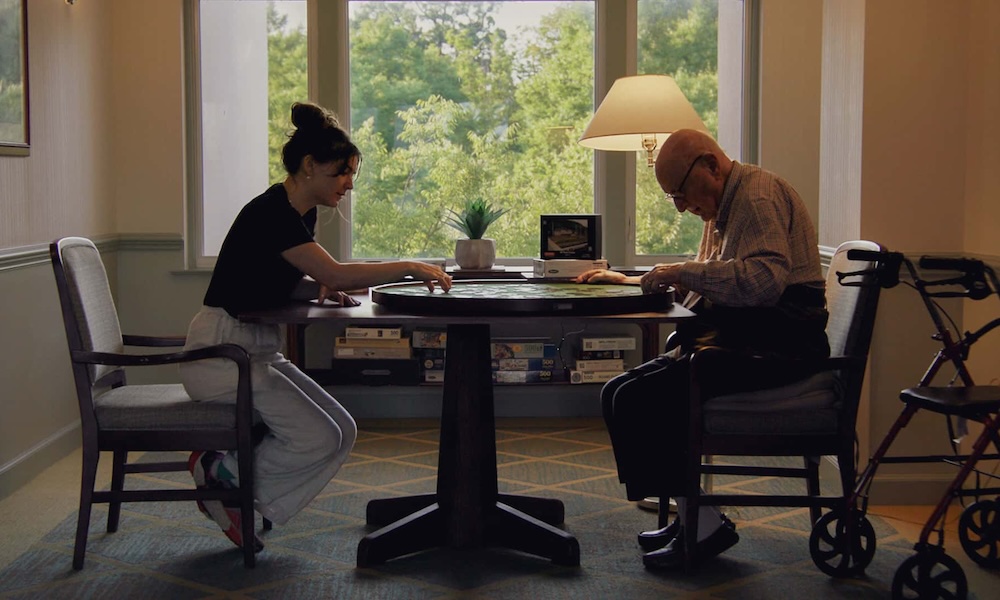
In “The Grandfather Puzzle,” it is DeKornfeld herself who is asked to dress up at a certain point when locals encourage her to put on a gown as a baroness would to be in touch with her past heritage, something that her grandfather Thomas has always been reluctant to talk about himself, having had to flee Hungary as the country was overtaken during the Nazi occupation. When DeKornfeld knows that there’s got to be an incredible story in his life before he reached the U.S. and his recent birthday brought him right to the century mark, the director is determined to find a way into his busy and sacrosanct daily routine, which starts with reading the Baltimore Sun and then a murder mystery followed by a glass of sherry at noon, only leaving any real leeway when he solves a 500-piece puzzle in the afternoon. With the hope that a trip abroad to take a snapshot of his childhood home that she can turn into something he’ll be interested in once it’s broken down into pieces, she ends up putting a history together herself that’s pretty overwhelming as she gathers details as well as new friendships from the community.
Although it’s hardly unusual for a filmmaker to wear different hats on a production, it is rare to see someone with as much skill as a cinematographer and editor as DeKornfeld has with both crisp notions for compositions and cuts, and her versatility isn’t only on display this week at DC/DOX, but also at Tribeca where she was behind the camera for Giaver’s indie pilot “Free Help” and the Tracy Jarrett feature “Retrieval.” Needless to say, it was quite special to fit into her quite busy schedule these days to talk about all of these films landing at once, finding fascinating stories in far-flung locales and how making something more personal could lead to something more playful.
 How did “Stalin Boys” come about?
I directed this film with my good friend Bianca Giaever. Our mutual friends Crawford Hunt and Clayton Whickham were actually eloping in Texas when they were recruited at a gas station to teach at the local public school. A couple weeks later, they moved to Marathon, this tiny 300-something-person town, to teach middle school in the middle of the Chihuahuan Desert. Bianca and I were curious about their new life, so we road-tripped to visit them and ended up giving a filmmaking workshop to their class. That’s where we heard about this Joseph Stalin play some of the boys were writing. Crawford showed us a picture of the boys competing at the Regional History Fair competition, where they won second place — out of two. In the picture, the four boys are lined up tallest to shortest, dressed in their oversized Soviet outfits, and we just thought it looked so cute, like a Wes Anderson film. We went home, grabbed our gear and flew right back to Marathon to film the boys in their final week leading up to the big state competition.
Beyond the competition, you appear to take a day and let the kids loose in the desert playing war. What was it like to film that?
Yeah, that was actually the first thing we did when we got there. We had met the boys when we taught the interview workshop, but we hadn’t spent too much time with them outside of that. Marathon’s a town of about 300 people in a remote part of the desert in West Texas, so there’s a culture of being a little wary of outsiders — we wanted to do something fun that helped introduce ourselves to the boys in this filmmaking process. We just thought that these Soviet costumes in this incredibly beautiful but also a little intimidating desertscape was an interesting juxtaposition, and visually showed how unusual their interest was, given where they’re from and where they’re growing up. It was later that we discovered that Malachi was actually dreaming about Stalin every night, so it ended up being a really fortuitous shoot because it perfectly captures that uncanny dreamspace feeling.
The film really comes to center around Malachi. Did he immediately stand out?
Yes, it was abundantly clear that Malachi was the one pushing the production forward. He had really become obsessed with Stalin — at certain points he was dreaming about him almost every night. He wrote the play largely on his own at first and then convinced the other boys to put it on with him.
You’re quite unusual in being both an editor and a cinematographer on projects that you haven’t directed. Does one inform the other on the films where you’re both?
I definitely think being an editor makes you a better shooter. You’re always editing in your head as you’re looking for shots.
For “Stalin Boys,” we only had two or three days between discovering the story and starting production, so doing it on our own was really the only way. I got into documentary through video journalism. I went to the University of North Carolina, Chapel Hill, where we learned how to shoot, edit, and make our own work. Then when I worked at the L.A. Times and the New York Times, it was quite similar — we did have bigger teams, but you were still doing a lot of all the roles. I’ve just really enjoyed having a hand in every part of the process. My co-director Bianca also worked at the New York Times, on the audio team. She’s had a whole career in radio, from various This American Life stories to her independent work, Constellation Prize. Together we are a pretty nimble two-person team: her running audio and me on camera.
The music also really gives this a great energy, as it does in “Grandfather Puzzle.” What was it like putting a score on it?
Our composer Elori Saxl did a beautiful job creating a score that felt playful and intriguing without being campy. At first we weren’t entirely sure how we wanted the film to sound — we played around with possibly doing klezmer and Russian-inspired scores. It was a challenge to find the right tone and make sure the score wasn’t too predictable. We ultimately went with something that feels whimsical but pushes the story forward. We saved our big Russian track for the very end, where our friend Xavier Markowitz chopped and screwed a very old Russian opera song, so we got to do some of that really fun, playful stuff as well. We also licensed a track from Caroline Shaw, an incredible composer, for some of the more introspective moments.
I imagine this was purely coincidence, but both “Stalin Boys” and “Grandfather Puzzle” end up connected to World War II. Was it at all conscious?
Yeah, it’s a funny coincidence that I’ve just done two films that touch on this period of time. I learned a lot.
What was the impetus to make “Grandfather Puzzle” now?
When my grandfather fled Hungary, he left behind a castle, a baronial title, and a life he never talked about. I had wanted to capture his story for a long time — maybe ten years ago, I finally decided to do something about it. He had always shut me down, denying my interview requests on the grounds of being “too busy.” He has a very strict routine and does not like it being disrupted. But I figured if I really put in the effort, he’d come around. So I organized a proper shoot — hired a DP, rented lights — and the day of, he canceled on me. That’s when I realized: he really is resistant to this. A few years later, with his 100th birthday just around the corner, I knew my window was closing. And I thought: if he won’t bend his routine for me, I need to find a way into his routine. My grandfather only leaves his apartment for one reason — to go down the hall and work at the communal puzzle table.
My friend Nirvan Mullick had the brilliant idea that I should go to Hungary myself, photograph the places meaningful to my grandfather, and turn them into a puzzle for us to do together, effectively slipping a [visual] interview prompt into his routine. So I traveled to the village where he grew up. I thought if I could put the castle in his hands — literally, as a puzzle — he’d finally tell me about the life he left behind. His childhood. What it felt like to lose it. What he carried out with him. I didn’t get what I set out for. Or rather, I did… but just not in the way I expected.
You definitely got something incredible. What was it like setting up a production overseas with a local Hungarian crew?
One of the most gratifying parts of this film is not only feeling closer to my grandfather, but getting to know this life he left behind — the life he never got to live. My friend, Alex Garcia, calls this concept a “ghost life”. I kept imagining: what if my family had never left? What if I wasn’t an American filmmaker but a Hungarian one? In that alternate life, all of these cool Hungarian creatives would have been my friends — and now they are.
Zsófia Paczolay was such a crucial part of the process — she is why the film exists. It really was just the two of us at first, setting out to see what we’d find. That “scout” ended up being 80 or 90 percent of the film. We returned the next summer for more intentional shooting — portraits of villagers who had items from my family, passed down through generations. For that, Máté Artúr Vincze and Noémi Szakonyi from MatchFrame Productions came on board, organized the shoot, and sourced an incredible crew. My editors Marina Katz and Doraya Bouandel, and of course our composer Ádám Balázs, were essential collaborators as well. It was one of those productions where the people you meet become the film.
Did making something more inherently personal make it possible to be more playful?
Yeah, this was my first attempt at a personal film, and generally in my filmmaking I’m trying to make things that embrace humor, because that’s what I most want to watch — things that are both funny but also exploring deeper, universal truths. If I had come at this more as a journalist or an outside filmmaker, I would have been more hesitant to make it funny because of some of the heavier topics in the film. But because it’s about me, I get to make fun of myself and the absurd situations I find myself in, which is a total joy. Self-deprecating humor is my love language. It felt easier to experiment because this film is about my family history.
It may not be much of a distinction, but when you went to school for journalism, was it much of an adjustment becoming a documentary filmmaker?
I’ve never truly felt like a journalist because, at heart, I think I’m more interested in understanding other people’s experience rather than nailing down the facts. What does it feel like to be this person? Why are they making the decisions they’re making? Ultimately, films where I’m able to be more editorial felt like a better format for me.
Have you been able to share “The Grandfather Puzzle” with your family yet?
For some reason it didn’t occur to me that my wider family would be interested, but a lot of cousins and aunts and uncles have reached out to see the film. Several family members will be attending the screening at DC/DOX.
I haven’t shown it to my grandfather yet. I’m going down to Baltimore to show it to him for the first time — he’s about to turn 102. My dad and my aunt are extremely nervous about it, but I have a feeling he’ll be touched.
I can’t speak for him, but I was. Beyond these two films, you’ve also got a couple projects you were a cinematographer on at Tribeca this week. What’s it been like to put all this work out into the world all at once?
It’s been crazy to have three projects at Tribeca all at once — sometimes all literally screening on the same day at overlapping times. It feels like a time of harvest. I’ve been working hard in this field for a long time, but I’m just now finding the courage to really find my directorial voice. Short films are a good sandbox for that.
Bianca and I are launching our production company, Pipsqueak Productions, together in the fall. The kind of mutually supportive collaboration that Bianca and I have cultivated — along with other talented people we love working with, like our editor Natalie Ancona and producer Carrie Weprin, to name a few — has created the kind of fun, curious, and generous environment I’ve always dreamed of. It’s a really life-affirming place to be creating from.
“Stalin Boys” will screen at DC/DOX as part of the shorts program “The Tender Age” on June 12th at 2 pm at Regal Gallery Place”The Grandfather Puzzle” will screen as part of the Shorts Program “Between Us” at 11:15 am at Regal Gallery Place.