



With the amount of attention that the civil rights movement in the United States received during the 1960s, it could be easy to overlook the broader struggle for equality that had been going on elsewhere in North America, though “True North” illuminates how it was no less fervent or necessary up in Canada. When Francois Duvalier came into power in Haiti in 1964, spreading far across the country with kidnappings and death squads as part of a brutal regime, Canada welcomed those seeking political asylum, yet support didn’t extend much beyond opening the border, with discrimination showing its ugly face in attempts at assimilation, from limited job opportunities to being sidelined at school and many ultimately taking up residence in an area in Halifax known as Africville located near the city dump.
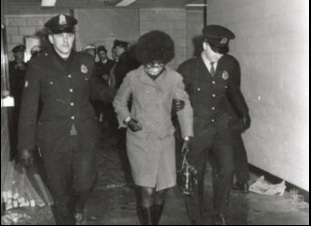
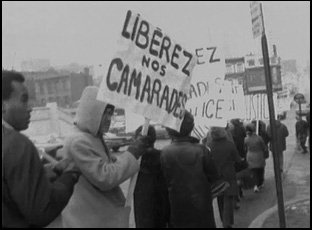
Michèle Stephenson had not yet made it across the Atlantic when students at Montreal’s Sir George Williams University in 1969 took a stand, only having just been born in Port-Au-Prince, but she would grow up with its consequences, eventually attending college in the country herself when her own parents ultimately migrated to Canada. After covering the recent 2013 decision in the Dominican Republic which left Haitians feeling abandoned when they were no longer recognized as citizens after the two countries shared a tortured history in “Stateless,”Stephenson goes back further in time to show how those that fled violence from the country of her birth have had to continually assert themselves as she tells the story of Dr. Rodney John, a student at Sir George Williams whose complaint against a white professor known to treat pupils from the West Indies with contempt was disregarded until he and fellow students staged a campus sit-in. With tensions running high five months after the assassination of Martin Luther King Jr., the peaceful protest was met with aggression from police, pulling the lid off of what many Black Canadians had long felt was true of a country that’s reputation for being a polite society could often mask the latent racism that existed just beneath the surface.
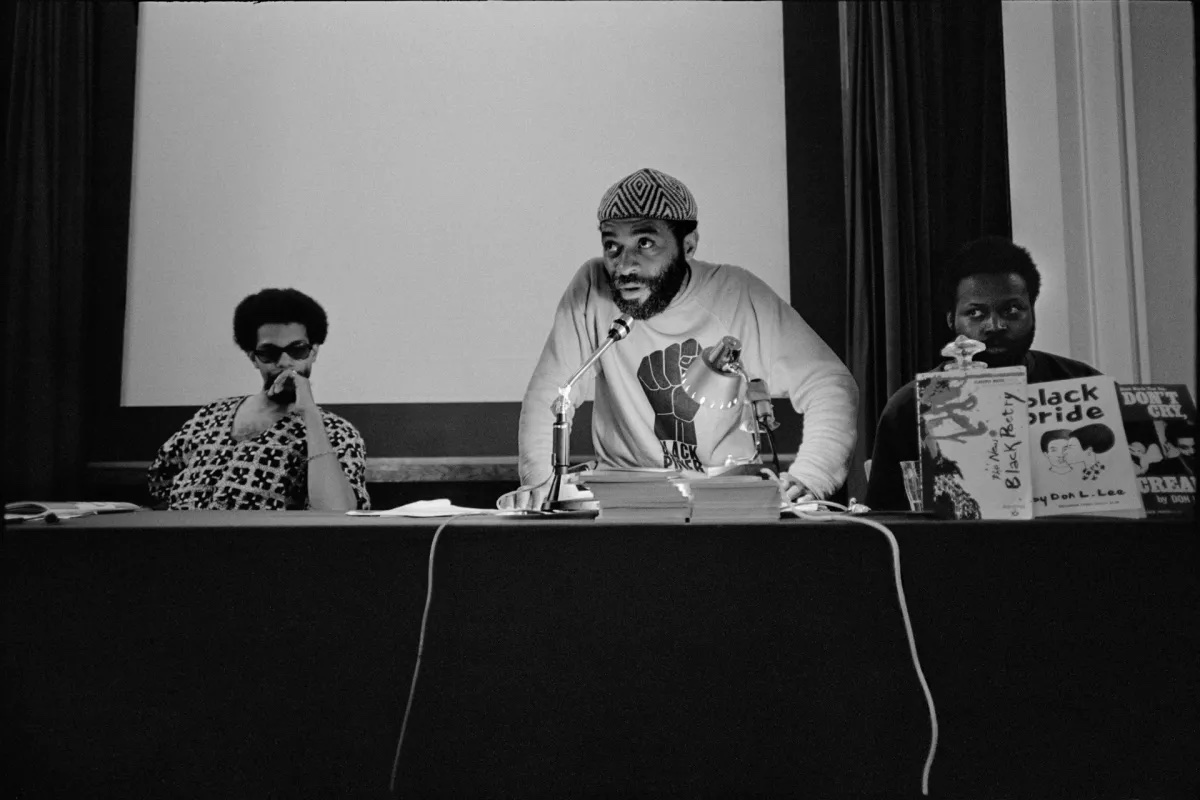
It now appears that the passage of time has added another layer to obscure the issue – or that there was sustained resistance – when Stephenson wasn’t even aware of this event until she began looking into the Black Liberation movement that was concurrently going on in Canada as the Freedom Riders and the Black Panthers were making strides in the U.S. (The fact that Sir George Williams University was rebranded as Concordia added to the burial.) Although “True North” features the student occupation as its climax, it only gradually comes into focus as the director makes clear it’s the product of a cumulative effort of a movement, spearheaded by Roosevelt Douglas, a local activist who would eventually become the Prime Minister of Dominica, but first organized the Montreal Congress of Black Writers while at school himself, introducing Canadians to the likes of Angela Davis and Stokely Carmichael and giving a generation displaced from the West Indies a feeling of community. News footage from the era not only provides witness to the unfolding events, but how a push for equity was often framed as a threat to a way of life still rooted in colonialism by the media at the time and while picking up on obstacles that weren’t evident to those in the fight at the time, “True North” exudes the intoxicating exhilaration of coming together for a righteous fight as those that were there can recall it as if it all took place yesterday.
Following its premiere at the Toronto Film Festival last year and a celebrated festival run that will continue through this year’s Blackstar in August, “True North” is now being made available throughout North America on PBS with its premiere on Independent Lens tonight and Stephenson graciously took the time to talk about how she came to recognize that she was telling a personal story to some degree, building on momentum of her own as she continues to work on a similar thread of history and finds the proper expression for it and seeing how the film plays on both sides of the border.
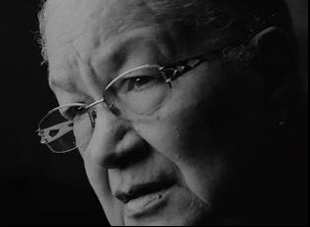 From what I understand, you actually went to college with Roosevelt Douglas’ daughter. Was this actually in the ether for some time as a story you’d want to pursue?
It’s so strange because Debbie and I are the same year. We went to McGill together and we were part of this cohort of Caribbean students in Montreal, who were very involved in the anti-apartheid movement at the university. And I knew of her father, but I never knew about this story. I also met Kwame Ture [known primarily as Stokely Carmichael] through her, and it’s so funny because he came back to Concordia and did a speech about Stokely Carmichael while we were at school and since he was a good friend of her dad’s, she dragged us all there to listen to him. It was really a transformative speech for me. But even with that, I never heard about this occupation issue. I knew about her dad, who had become prime minister [of Dominica], but I was not aware of the occupation, so it was really strange. It was like going full circle.
I feel in some ways the ancestors were calling. It’s my parents’ generation and certainly the story of the militants and activists who were fighting repression in Haiti, and in Canada — some of them self-imposed exile — became involved in social justice work and their militancy and convictions never wavered. Then I later found out while I was making the film that I had cousins who were of my father’s generation who participated as well, either helping to provide food or were outside on the street — some were actually on the ninth floor as well. So it’s full circle.
It’s really interesting because there are things I found out about my family in Haiti that I didn’t know about while I interviewed Philippe [Fils-Aimé, one of the subjects in “True North”] about the level of resistance that they were involved in in Haiti. I call myself a one-and-a-half immigrant generation — I left Haiti too young to have any memories of it, but I wasn’t born [in North America], so it’s this in-between thing, being part of immigrant family that was deeply traumatized, being in a space as exilees and reluctantly adapting to the country, but not necessarily be communicative about everything that happened to them, right? So this was a journey of self-discovery, and also healing for me in terms of my relationship to Canada because there was definitely this cognitive dissonance where the myth of Canada is that we’re this multicultural mosaic. New York is a melting pot. We don’t assimilate. We accept all these different cultures. Yet my family experienced racism. There was discrimination in housing and work at school, and [I thought] if this is happening to me but there’s no historical connection because I’m not being taught about the history of the settler/colonial origins of this country, it’s propaganda I’m being taught. My choice was to leave in some ways. So this is coming full circle and hopefully honoring the work of these elders, but also contributing to the history of Black Canada.
 It really does feel like that. It’s been really interest to watch your work as a nonfiction filmmaker evolve from verite filmmaking to making history like this come alive in the present, first with “Stateless” where there was a significant amount of animation and in “True North,” you’re working with archival in such a way that it feels very immediate. Has it changed how you approach a story?
I feel like each film I complete contributes to the evolution of the expression of the next one. I don’t know if I could ever do a full verité film again, but my decades of experience with observational work informs how I see archival material. Right now, almost all the work I’m doing is archive related because it’s so rich and there’s definitely a healing aspect and a less extractive aspect to it because in observational work, there’s always going to be a power dynamic with the participants you work with and the intentionality requires a lot of work to fight against that, like it’s almost a default with documentary work.
We had conversations with the editors about looking at the archival not as B-roll, or as literal representation, but what does it add itself. There were moments that were very intentional about letting the archive speak for itself, so we’re fully immersed in the psyche of the era, whether it’s how we open the film with the talk show between Rosie Douglas and these very aggressive TV hosts who embody these unconscious white supremacist assumptions. We wanted those moments to be part of the building block so there is not just a story, but an immersion of experience. We were also looking at how the archive could be metaphor and how can it reveal the interior lives of these participants and their lived experiences. So we took experimental work from the 1960s and remixed that as abstractions that put us in either their moment of fear for Rodney John in certain moments or the nostalgia of people like Josette when she thought about Haiti and how she grew up, and it becomes this palette for collage, for emotion, and for immersion. The occupation footage was also crazy — this is mostly [from] CBC reporters who came in with cameras and we let that live and actually saw the younger selves] of our participants, so how do we create this tapestry that moves us and gives us a better understanding, but through cinematic tools as opposed to pure exposition and with this hugely abstract imagery from previous films that also used archive and these testimonials that are current day that anchor us in the lived experience, we feel like we’re living the experience as well.
A very important thing here as well was the use of archival sound and audio. That became another texture, whether it’s the poetry readings or the speeches of the Black Writers Conference or also the beautiful recurring archival songs that we used — “The Seat at the Welcome Table” is part of a Negro spiritual recorded in Halifax at the turn of the 20th century — so we use that as a trigger into our emotional, nonrational part of our being. That’s what makes cinema and speaks to this idea of working through the puzzles. And for me, documentary is an art form. A lot of people talk about putting the cheese on the broccoli. I don’t see it that way.
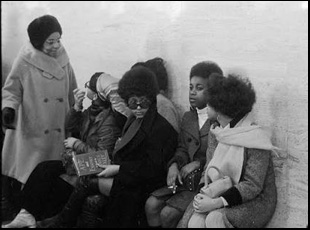 That’s clear from the filmmaking, which can be exhilarating. I’m thinking of the transition to Saint Vincent where there’s so much joy to be found in the act of resistance at a sonic level – people chanting in unison or working together, even if the work itself is in response to something that isn’t to be celebrated. Was that exciting to work on?
When we talk about the Black Atlantic or the diasporic experience, it always involves rhythm and dance and any kind of resistance has got some rhythm and dance in it. You even see it in the occupation. So not only I am aware as a person of Caribbean descent the importance of rhythm and dance, but then I also see it substantiated in how people express themselves in the middle of the occupation They’re finding any kind of material to create that rhythm and create moments of joy — and “joy” maybe is overused, but moments of community and communication through rhythm, dance, and music, so that had to be interspersed throughout [“True North”] because It’s part of what we call the passing on of embodied memory. It’s what allows us to keep resisting. It’s what was brought through the middle passage and persisted. That was very important.
So rhythm and music are very important in the transitions, but you’ll see moments of dance — sometimes it’s two people dancing in the Negro Community Center where the children are learning about dance and rhythm from a very young age because it is part of it. Part of my critique sometimes of these standard liberal documentary storytelling is we waddle in the victimization. We waddle in the pain. And I don’t want to take away the pain. I think the pain is important. But anywhere where there is oppression and difficulty, there are always moments of laughter. You can’t have one without the other, otherwise you can’t find the force to continue to resist. So where does that strength for resistance come? It comes from community and from moments of sharing. It comes from playing dominoes or cards or dancing or creating music because that is where the replenishment happens to confront. So that had to be throughout the film. And for that carnival dance moment in Saint Vincent, those [scenes] were beautiful that we really wanted to make sure we gave space to that and we come back to it at the end.
Was it difficult to find the structure for when you really do immerse people in this era before getting to what the film is ultimately about – this occupation, which only emerges in the third act?
It was difficult because I consider this film [to have] a collective voice. This is an ensemble where the five different voices you see eventually becomes one, so the idea of collectivity was really important in the film. But we always had this issue about that fifth person. Is it too late to introduce them? Will people get tired of these various voices because there’s something about the traditional sort of three-act structure that we’re used to that really restricts how many voices we can have that keeps people’s interest. So we really played with that because we knew we had to have Rodney’s voice in there. He’s the last person who’s introduced, and for the occupation, he’s the only original complainant in this collective voice. So we had to massage that a lot and and figure that out.
But the idea of the lived experience of these various participants not only was important to understand how they were coming from very different experiences, but experiences that in the end they became united against in this cause. We also have two other participants, Rocky Jones and Rosie Douglas, who had passed away and we were careful to make sure that their voice was there too because they were so crucial in defining the black power movement, not just in Canada, but in this hemisphere, so we used their archive very intentionally as well. But I think we succeeded in having these multiple voices that become collective while not losing the nuance of each of them and what they brought. But it was not easy.
 You threaded the needle beautifully. Has it been interesting to see the reaction to this one both sides of the U.S./Canada border? It premiered in Toronto and then went to DOC NYC and I know it’s been criss-crossing ever since.
It has been and I’m looking forward to many more moments of community engagement. There’s a lot of momentum building in Canada around the film, but it’s so interesting that there’s a common ignorance of this occupation on both sides of the border. What I’ve witnessed certainly in Canada is dealing with more emotions of pain around not knowing that history and there’s something very personal in the exchanges that I have had, that the revelation that this film brings, taps into something deep for the black Canadian community, which makes sense. On this side of the border, because there is so much more discussion about Black power and the civil rights movement, it becomes added information of this arc that there is a collective knowledge around.
What I was hoping for also is pushing towards a more hemispheric understanding of our history that pushes back against borders. Again, it’s part of this evolution from a film like “Stateless” and pushing back against this idea that these borders separate us. They don’t. Wherever there have been borders, we have punctured them. And we have punctured them for solidarity. We have punctured them for community. And this is a demonstration of that — that Canada represents his last frontier of the Black Atlantic, and that we need to take this hemispheric view to reclaim our power. We have to push back against these notions of border and also notions of where our experiences as the descendants of enslaved people start and and finish and complicate that so our connections can be more powerful. Then there’s this whole aspect also of student resistance, standing up being the moral compass of our society again and again — this is one knot in that chain — and I hope we can continue to share for the next generation of students who might feel isolated, especially as I see these elders who are almost 80 years old talking about that past while understanding the cost probably wouldn’t change anything [as far as their generation was concerned], but they’re still as radical now as they were back then and that people survive. They survive and they make change. So there is that aspect of the film that I hope is a contribution to to the history of the legacy of student movements.
“True North: Canadian Myths and Black Power” airs on Independent Lens on PBS on July 6th and will be available thereafter on the PBS app and the Independent Lens YouTube Channel.