



Carla Simón has been building to the climax of “Romería” ever since she first picked up a camera, with her latest being the culmination of one of the greatest runs of three consecutive films that anyone has ever had. With “Summer 1993,” “Alcarrás” and now “Romería,” the director has chronicled her youth, growing up in the care of others than her parents who passed away before she turned six, a pair of Bohemians who contracted AIDS likely through intravenous drug use. The films have been lightly fictionalized when Simón has left the room for her casts to basically become their own family units, spending months ahead of filming to build their own bonds and shared memories before the cameras ever roll, but collectively they have been tied to a child whose consciousness of the world has been shaped to some degree by the knowledge that they’ll never know everything about themselves after losing their parents at such a young age.
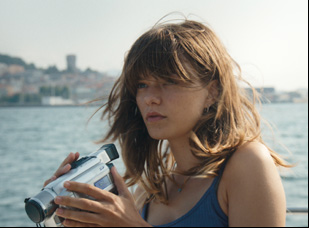
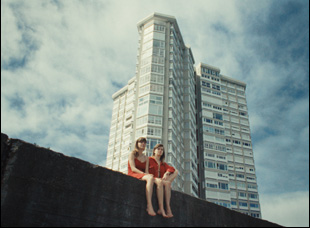
Still, the trilogy has been joyful as Simón has allowed audiences to bask in the same feeling of love from her extended family that ended up raising her amidst the not too shabby environs of her native Catalonia, Spain (though she was careful to note in “Alcarrás” the increasing marginalization of the farmers she grew up alongside and serve as stewards to the land so beautiful). “Romería” is no different in this regard, but there’s some delayed gratification as it follows the 18-year-old Marina (Llúcia Garcia) back to where her father grew up by the sea, led to a trip into the deep end by her mother’s diary. Planning to soon enroll in film school, a camera is never too far away from Marina’s hands, but they are quite full already as she becomes acquainted with relatives she had only heard about on her father’s side of the family, surprised to learn that they’re wealthy, making her feel like even more of an outsider when she grew up more humbly with her mother’s parents than the gap created by the lack of time they’ve spent together. However, retracing her parents’ romance as well as gain perspective on who they were individually using the letters as a guide, allows Marina to bring them back to life in a more tactile way for herself.
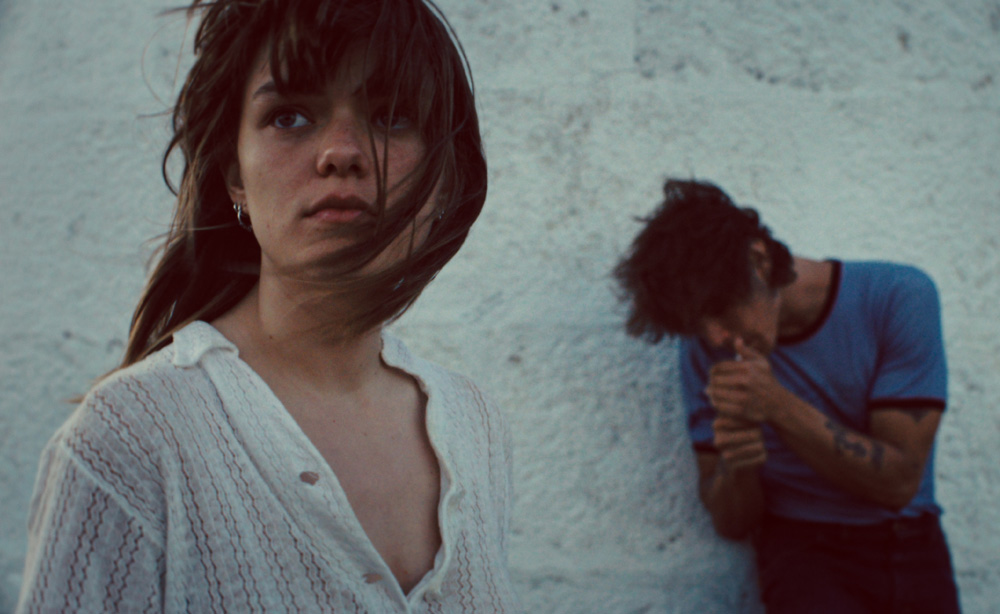
As Marina can use her imagination to get to know her parents better, Simón puts hers towards one of the most ecstatic experiences that one could have in a theater, marshaling the medium’s ability to freeze time and space to capture the sensation of the 1980s when her parents came of age themselves and while clearly there are factual touchstones, the director is set free to imagine a different future for them than what history had in store. It is a tremendously moving capstone for a series of films where Simón hasn’t only shared the story of her youth but has clearly come into her own as a filmmaker as well, crafting dramas with an extraordinarily light touch that nonetheless are incredibly powerful. After its premiere at Cannes around this time last year, “Romería” is now arriving on U.S. shores and Simón graciously took the time to talk about how she was able to make a connection with her parents from beyond the grave, creating the right atmosphere on set for a family that has such history, and finally feeling comfortable with moving onto a new chapter of her life and career.
 I was so moved by what you did here because of how rooted I know your films have been in the reality of your earlier years. What’s it like to start stepping away from the truth as you know it to imagine what happened or what could’ve been?
It was mainly because I was coming from making two films that had this big commitment to reality and when I decided to make “Romeria,” I realized that it was a film about memory and I started to investigate how memory works. I realized that you cannot trust memory, it’s very selective, very subjective and also when we remember something, we don’t remember the fact. We remember the last time that we remember it, so it keeps transforming in our minds. So I realized that it was a film about the quest of someone trying to understand her past and the thesis cannot match. It was very organic that her catharsis was giving her the permission to imagine a possible story [of her parents] or to fill the gaps, which was the same for me to be able to create the images that I don’t have for my parents, so it was a very freeing exercise for me. I really felt like the film was born out of the anger and the frustration of not being able to understand my parents’ love story, but it ended up with a happy ending where I feel very free from that.
Is it true this all started with reading some of your mother’s letters?
Yes, they were very important because at some point I wanted to know a little bit more about my mom and I tried to collect some of the letters that she wrote to her friends and family. I realized that they were probably what [would allow me to] discover more things about her because it was a way to hear her talking. When you write a letter, it’s very intimate and I could [pick up] the way that she was expressing herself and how she was talking about her relationship to to people, to friends, to my father, to work and to music, books, and films, but also to drugs. They were very poetic and they were talking about a way of living her youth that helped me to understand and somehow they were a generational portrait because I felt that that it was her, but it was also talking about many other people. [These letters] were very valuable and I tried to make a short film at some point with my voice reading these letters. I went to show empty spaces where she wrote them from, but then I realized that the images that I showed with my camera were not good enough to go with these letters. So I continued exploring it and and it was good to be able to make “Romeria” because I felt that the images that we’re creating were okay with to go with these letters.
It ends up being a very evocative location that you do end up filming in – this seaport. How did the setting come to mind?
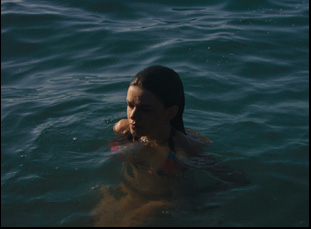
This location was very organic because my biological father was from that city, so my family still lives there. And I know that my mom lived there for a while in the ‘80s because it was a city full of life at that time, full of music with a lot of parties and my father loved sailing. That’s why the sailing boats have an important part in the film and it was complicated to shoot in the sea. It’s beautiful because it’s very alive, but I always remember that day [on the water] in the morning. We had a catastrophe because there was a lot of wind and we tried to shoot a shot with the drone and the wind came and the drone ended up deep down in the sea. We never found it again and we were very sad, but then in the afternoon, we were shooting the last scene of the film. In the script, it said “The dolphins come out,” and suddenly the dolphins came in the scene when we need it. Everything that you see shot in the video camera, it’s real. It was [really] happening at that time, so sometimes it takes [from] you and sometimes it gives [to] you. It’s very unpredictable, but you have to trust its magic.
 What was it like to find the right actress for this?
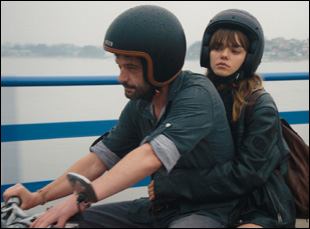
It took really long to find her because it was difficult to find a girl who could do both [roles]. Some of them were good for the mom, some of them were good for Marina, so we found her [through] street casting. She was coming back from a Boy Scouts meeting and we stopped her and invited her to the casting. She had never acted before, she just danced and then I could see in her as a teenager, because she was very innocent and very curious, but at the same time, she had the strength even if she looked fragile, so there was something interesting in her and she was very close to Marina. But my question was can she make it a mom? At the time, she was about to turn 18 and she was trying to become an adult somehow deep inside and I asked her, “What are you afraid of?” And she said, I’m afraid of looking silly in front of the others, so I realized that she was conscious that she had two faces somehow. That’s why I could see that we could keep working to create this mom inside her.
From our previous interviews, I know what a prized time it is to spend with the actors ahead of the shoot to make them feel like a real family and have authentic memories together. What was that time like on this?
It was very beautiful to rehearse the part of the ’80s where Llucia and Mitch [Martín] were a couple [as Marina’s parents], and not only between them because we built out their love story, but also with the rest of the family, even if the family didn’t interact so much with them in the ‘80s. For me, it was important that the family could picture who were these people who died and who was on the phone, like their son and their brother. So that was the biggest change [from my initial idea], because there were some moments in the rehearsals that Mitch and Llucia were a couple [from the end section] and Mitch was the brother of the rest of the aunts and uncles and also the son of the grandparents, so even if there was this age difference, we were playing this and it worked. Then there were some rehearsals where he had another role and he was the son of Lois [in the present] and the grandson of the grandparents and the cousin of Marina, so that was a little bit messy, but it worked in a way that I feel that when we went into the shooting, everyone could have in mind who was this person who died and that they loved and also who was Marina’s mom. For me this is something that you cannot tell if it will work or not, but for me it’s there.
 You’re working with the great cinematographer Helene Louvart and I understand she actually was part of the rehearsals for this, which is unusual.
Yes, this is very crucial for me that we have done previous work with the actors improvising moments that could have happened before the story and it’s very beautiful when you can have the [cinematographer] in the rehearsals because I try to work in a way that the staging comes a little bit organically from the actors. But then you have to adapt obviously, so the fact that [Helene] was there, we would try to rehearse on locations, and I would try [scenes] a little bit with the actors and then she would come and we would see [the scene] through the camera and together we were able to think of the blocking from the actors in a very organic way.
The music is quite a strong and powerful element of the film, which you’ve really only used sparingly in the past. What was it like to work on?
It was a beautiful process because it was made by my brother and we were raised in the same house, so we have a similar sensibility. You realize how important the place where you were born was in terms of taste, and it was the first time that I used a score like that, so I wanted to feel the music comes in in a way each time that Marina feels close to her mom in the street, like maybe my mom was stepping the same place where I am now, or she’s feeling something there that could [remind her of] the story of love of her parents. It comes in in a very strong way, giving this meaning. It’s not like underlying emotions, it’s more [indicative of] something else.
 From what I understand, this will be the last of your films for a while that will be recounting your family history. What’s it like to have made these three films and move into something else?
It feels like I’m closing something with it and that I’ve freed myself from my past. It’s not by chance that I finished “Romeria” at the same time that I gave birth to my second child and somehow I created my own family, so it’s a new new time and I’m preparing a flamenco musical, which has nothing to do with my family, but it gives me a lot of freedom and allows me to be very playful and to think about cinema from another perspective. Also to get to know worlds that I wouldn’t know if it was not making a film, which is something that I think that we take advantage of when we are filmmakers.
It looked like you may have already gotten some practice in with “Romeria” for your next film – it has some great dance scenes.
Yes, I was rehearsing. [laughs] But I realized through dance, you can tell many things and it’s very poetic. In the dance in “Romeria,” I realized that it was a way to express that this is not only the story of this couple, that it’s the story of a whole generation and it’s very simple, but music and dance are very powerful in that sense.
“Romería” opens on June 26th in New York at Film Forum and Los Angeles on July 1st at the Laemmle Glendale.