


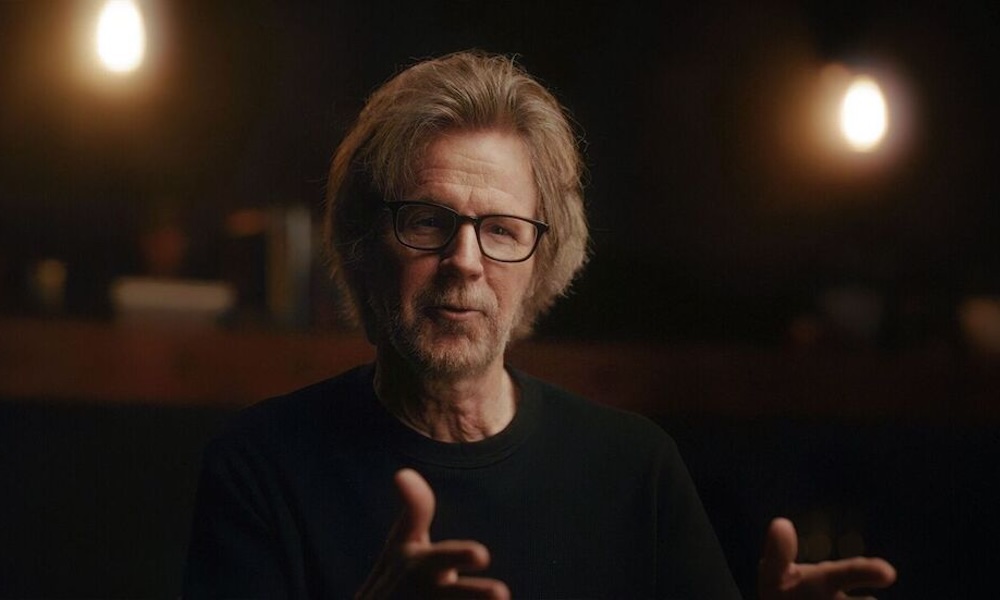

It can be a bit jarring to see the earliest iteration of Dana Carvey’s George Bush impersonation in “Playing POTUS,” nowhere near the end product with neither the makeup or the voice making much of an attempt to resemble the president. Carvey tells director Josh Greenbaum that he wasn’t shaped by politics as he developed a talent for doing uncanny impressions and on “Saturday Night Live,” it wasn’t until Al Franken laughed at how Carvey honed in on what Bush did with his hands that anything made sense about Lorne Michaels asking him to play him, though once things clicked, there was no turning back. “I was terrified for the first hundred times,” he confesses, as much because he couldn’t know whether he got anything right as what would happen if he did, poking fun at the leader of the free world. Of course, that fear seems more justified now than at any other time in recent history, which adds an extra bit of intrigue to Greenbaum’s engaging and generally lighthearted look covering the past 12 presidential administrations with the comedians that played politicians.
Like Carvey or any of the others that have stepped into spoof those in power, “Playing POTUS” takes some time to find its footing, appearing unsure of what exactly it wants to be though admirably resisting being by the numbers. (A running gag involving narration from Morgan Freeman since he played a president in “Deep Impact” doesn’t exactly work, but the effort is appreciated.) Its director Greenbaum surely had the access to pursue a proper adaptation of the 2023 book from “Candid Camera” impresario Peter Funt when he himself has been in the comedy orbit for years, particularly with “Saturday Night Live” stars when teaming with Kristen Wiig on “Barb and Star Go to Vista Del Mar” and Will Ferrell and Harper Steele on “Will and Harper,” but a slightly strange structure results when the film is interview-driven and clearly tilted towards “SNL,” the most prominent platform for such impersonations, feeling as if it’s straining slightly to include anything else.
The film rushes through an early history of the form that is fascinating as the advent of television made it possible for Vaughn Meader to reach the masses with his take on John F. Kennedy, to the Smothers Brothers being run off the air by Nixon for their pointed humor (covered well already by the 2002 doc “Smothered”) to get to Studio 8H at Rockefeller Plaza, but does find its groove once Chevy Chase begins to describe how a small stumble down the steps of Air Force One was enough to create an entertaining impression and by extension help define a presidency for Gerald Ford, despite the fact that physically the former Michigan athlete was about as steady as they come. Regardless of who they were playing, the process described by comedians such as Chase, Carvey, Ferrell, Darrell Hammond and James Austin Johnson of character building in “Playing POTUS” is fascinating, unlocking an entire impression with some small vocal or physical tic, as well as contending with the effect it had on public perception. (Ferrell, for instance, could be surprised to discover that playing George W. Bush as a simpleton had a softening effect on his public image.)
However, when decisions on what to cover were clearly dictated by who could appear in the film, there are some strange zigs and zags — the Reagan years aren’t broached when the late Phil Hartman isn’t around to talk about them (or his memorable Bill Clinton before Hammond took over) and both Kate McKinnon and Maya Rudolph may be welcome presences to talk about inhabiting Hillary Clinton and Kamala Harris, respectively, but obviously it’s a reach outside of the film’s central premise. Although it also may seem like a stretch to include Keegan Michael Key to talk about his turn playing Obama’s anger translator Luther on “MadTV” given how “SNL”-centric the film becomes, he delivers one of the most interesting interviews, describing how Obama’s carefully curated public image required a different way to find comedy than a straight impersonation and also sets the stage for a humbling conclusion when it was Obama’s address at the 2011 White House Correspondents Dinner that both he and Seth Meyers were involved in that have been widely suspected to have coaxed Trump into running for president after being unable to take any of the jokes.
Despite the scattershot approach to its subject, “Playing POTUS” does end up embodying one of the oft-repeated refrains of the comedians that are interviewed, finding a kernel of truth that can only be recognized or acknowledged with humor to connect with an audience and as it surveys those that have impersonated the commander-in-chief, the film offers an alternate view of recent American history as far as what the public would want or accept in satire of a political figure and how consequential those impersonations have been in helping to shape perception. While there’s only a nod to Trump’s attempted recent crackdown on free speech by steering media consolidation his way or siccing the FCC on the major networks that still broadcast late show talk shows, “Playing POTUS” nonetheless has a potent punchline when identifying a true barometer of how healthy a democracy actually is.
“Playing POTUS” will screen again at Tribeca at the Village East on June 9th at 2:45 pm.