





For her feature directorial debut “The Plan,” Jessica Barr wanted to put everyone on edge, herself included.
“I just like making things that make everyone feel uncomfortable, whether it’s coming of age and someone’s crush denies them or more of an elevated psychological or horror when everyone is unsure of what everyone’s motive is and when your expectation of reality is met with another,” says Barr, who has grabbed attention with shorts such as “Tight” and “Private Moments” that are hard to shake after with their intensity.
In order to push audiences out of their comfort zone, Barr fearlessly does so herself by leaving no room for error in a film that unfolds in a single take like Sebastian Schipper’s famed “Victoria,” tracking the movement of a group of friends over the course of an afternoon where the graduation gown and cap draped over a chair at the beginning may suggest a celebration ahead in a Los Angeles apartment building, but reports of unrest from around the city that start to seep in allude to something a little more serious afoot. During a time in which helplessness can feel pervasive in the face of all the crises going on, not only does Barr’s inability to cut away result in a technical marvel, but keeps audiences as engaged as its characters aspire to be when everyone that finds themselves at the home of Mads (An-Li Bogan) is eager to make change, but how best to affect it is left up to fierce debate. A scheme is already in place to take action, but as people become uncomfortable with how far it may go or what consequences there might be, the coalition threatens to implode.
Barr captures in real time the fraught group dynamics that often stymy collective progress with a convincing ensemble that includes Eve Lindley, Ryan Simpkins, Logan Miller, Jordan Hull, Arkira Chantaratananond, Percy Hynes White and Frank Mosley as pals who threaten to turn against each other by the end of the night. While they may seem as if they’ve reached a standstill, there never is one for the drama itself when boasting the energetic camerawork of cinematographer Sarah Whelden and the lively environment set up by production designer Kelly Wilcox, both of whom worked on the story with Barr to deliver an experience as urgent as the story that unfolds and with a premiere at Slamdance this weekend in Los Angeles just over six months from when principal photography was in the can, “The Plan” is truly meeting the moment we’re in now head-on, bound to be a conversation starter after it explodes onto the screen. On the eve of the film’s debut, Barr, Whelden and Wilcox graciously took the time to talk about a production that came together in a whirlwind but they hope will leave a lasting impression, engineering a shoot that would capture the spirit on set and the hope that emerged from a successful collaboration.
 Forgive me for starting off with the obvious in so many ways, but how did “The Plan” come together?
Jessica Barr: I had a concept of these kids who were posing as recent graduates going into a graduation ceremony and originally it was just an outline that spanned eight pages that I sent to Sarah and Kelly. Sarah and Kelly [said], “This is too much to conceptualize. Can you write some dialogue?” So then I wrote maybe a 30-page thing and I also [thought] I want to shoot this in a oner…
Sarah, is that the most exciting thing or the most intimidating thing you could hear as a cinematographer?
Sarah Whelden: To be perfectly honest, I think my response was like Jess is crazy and also so talented that I know we can pull this off, so [I thought of it] in the best possible way. That was one of the very first things before I even knew what the film was about, and originally it was mostly improv, and then we [thought], “Let’s craft something that still allows the actor’s room to move, but gives enough structure because you run the risk with improv of it going and going and going and I [thought] I can’t hold the camera for seven hours, so we need to keep it at least contained enough for my sake. [laughs] Then we had this great concept, so now we just had to build the tension as much as possible.
Jessica Barr: That was part of the development of the story was how can we use basically all the space in my apartment to make the film dynamic? For example, when the older roommate [played by Frank Mosley] who doesn’t really know what’s going on comes back, that was [Sarah’s] idea because she was like, “How does this [scene] motivate the camera as well? Knowing that it was a oner really did shape the script and what played out, especially when [everyone] goes outside. We just needed to get out of the apartment and then the car too. All of these things were shaped by us talking about the camera. Even the beginning was different at first. It started in a car and we [realized] we can’t start in a car because there’s too many things out of our control that could go wrong at the beginning.
At what point do you start bringing actors in versus just working out the logistics for yourself?
Jessica Barr: The actors were essential and I wanted to cast as soon as possible to build more of the story around them. I cast against type, which was really fun for me and fun for them. For example, An-Li [Bogan] is the sweetest human ever and historically has been in lighter roles, like the love interest and casting her as the sociopath-like cult leader was really interesting as well as talking to [all the actors] about why are [these characters] there? What are the backstories between all of these characters? How do they meet?
The first person I cast was Ryan [Simpkins] because I felt she was the glue that tied all of the characters together and I was building off of that. Then when we brought the actors into the space, I did a couple rehearsals with them prior to the week of intense rehearsal and then filming, and it’s funny because a lot of them are my neighbors, so it was very easy. Everyone is pretty much L.A.-based, so it was nice to be able to workshop movement and find the scenes and their own voices too through improv. Then in terms of logistics Sarah and I would just map out the movement of the camera, figuring out what hallway is Sarah going to go down when this character goes down and who are we following in the scenes when everyone is talking? We did that on and off for a month, Kelly and Sarah would come over and we had to figure out when the lights on the street turned on because they turned on at a certain point, so we had to like figure out every day what time we were starting. And then it was two days of intense rehearsal with all the actors, rehearsing it like you would a play. We did one tech rehearsal on the last rehearsal day where we successfully ran through it all and then we had three days to shoot it once per day.
Sarah, this was something that was impressive about your work in Katie Aselton’s “Magic Hour” as well is that you follow the energy of a scene with the camera – how much of that can you anticipate ahead of time versus tapping into whatever may happen in front of you?
Sarah Whelden: Similar to Katie, Jess wants to make sure the performances are where they need to be and wants to give the actors the space they need, but also to shift a little bit based on how tension is feeling in the moment, so with this film, we mapped out all of the transitional elements and they were so planned out because they had to be, just knowing that we had only had so much space we could go in [in the apartment] and we wanted to make sure it felt like dynamic and different, so sometimes we’d go into the kitchen through the dining room and sometimes we’d go in through that other weird little doorway. We mapped all that out, so I knew where every scene started and ended, but as far as what happened when they were all in the living room together, it was blocked pretty specifically with the actors but still the energy would shape the minutiae and I would feed off of that.
Most of those living room scenes, there were certain moments where I’d say I have to shoot this this way, and then there were times like the interrogation scene where Jordan’s character is in the middle of the circle and it gets really intense [where I’d] feel out the moment, seeing where is the tension in the scene and where do we want the camera to be? Because in a oner like this, the camera becomes that extra character. And because Jess and Kelly and I developed this from an early stage with Jess, I knew exactly what she was looking for, so it was really easy for me to tap into Jess’s brain and [think in the moment] what is Jess interested in here and how can I best lean into that emotionally in each scene?
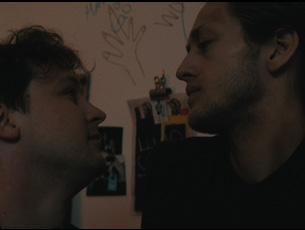 Was it interesting to build off the working relationship you had on “Tight”?
Sarah Whelden: “Tight” was the perfect piece leading up to this because we were shooting on film and we didn’t even have a video tap, so there was this trust that we developed to be able to get through that piece and [“The Plan”] almost became an extension of how do we take the energy we built with “Tight”] and a one-up it almost into a one-take feature. It was interesting because Jess did so much work leading up to this, and we only had two days of rehearsals with the actors before our our first full shoot where we could tweak a few things. It was such a short period of time, but also [we could] lean into these actors because she cast them all of them for a reason, bringing out the other side of them that they haven’t maybe explored as much in other pieces because a lot of it was going against the grain.
Was there anything that you might not have expected from that made it into the film and now you really like it?
Jessica Barr: The take that we chose for the [final] film, we were going pretty fast compared to other nights, so we got to this point where An-Li and Ryan are upstairs having the conversation in the bedroom and they come downstairs and I noticed “Oh no, the lights are not going to turn on when we need them to for Sarah to be able to successfully see the actors when they’re outside. So I just went up to Logan [Miller] and I [said], “Hey, you need to make sure that [An-Li and Ryan] don’t leave [the house]. I don’t know what you’re going to do, but you just cannot let them leave. That’s your goal.” And because his character is an alcoholic and has been drinking up into that point, [Logan] just ramped up him being drunk [to the point of] not even being really coherent but blocking them [from the door]. I loved it because they were so confused but it showed in [the performances] because they were coming down and they’re like, “Where is everyone? So it was great and I’m so happy that he did it. He did a lot of improv every single night, and it was a joy to see him pull something up and it worked.
Sarah Whelden: That brings up an interesting part of how we shot this. There were very few of us in the house that weren’t actors because we it was a really small space, but we all had headsets on, including me, and our first AD was outside, giving us little cues about when to turn certain lights on and and where we were at in the story because we didn’t have a monitor. I was in that bedroom with Ryan and An-Li sitting on the bed and I just heard, “Oh the streetlights aren’t on, and I was sitting there with the camera, holding the shot and thinking, “Oh no, what are we going to do?” And then I heard [over the headset], “Okay, I found a solution. Logan’s going to stop them at the door.” So we’re going down the stairs [when the scene transitions] and I [thought], “I know what’s coming, but they have no idea and I can’t tell them.” So it was this really funny dynamic.
When you can’t cut away, you also transmit so much information through what’s on the walls of this house, so the production design seems even more crucial a part than usual. Kelly, what was it like to put together?
Kelly Wilcox: Yeah, we were thinking of ways to bring tension into the story and I wanted the art on the walls to feel like this is an uncomfortable space to be in and then once you get outside, you’re ready, like, “Gosh, that was a lot. Let’s go outside.” But it was Jess’s apartment and she really liked the idea of having this bunch of 20-year-olds and then Frank [Mosley, being slightly older] playing the roommate, so it’s like a hodgepodge of everyone’s styles. You can tell they probably thrifted a lot of it or found it on the street, which to be honest, I find things on the street all the time, so it was like “Let’s bring this into the mix” [where it felt like] a mishmash of styles.
Jessica Barr: And Kelly painted all of the paintings that we see, which is crazy.
Sarah Whelden: Except for [one] painted by Elizabeth Warren, but not the one you’re thinking of.
As is noted in the very amusing end credits. In general, what was it like to create an atmosphere for this, particularly with the lighting?
Sarah Whelden: It was the best. I’m so grateful that we shot this in Jess’s apartment because Jess and I were practicing all that blocking, but I also brought the actual camera we shot on. I needed something lightweight and it wasn’t that light by the time I put all the stuff on it, but we shot all the tests with it and I was actually sending it to my colorist [Darren Hartman] and we were able to start testing different camera settings, like how best to like lean into the camera’s dynamic range because there’s some moments where I’m in a dark room and then I go look out a window and then I’m back in the dark room and we spoke about, “Do I rack aperture or do we do that in the grade?” We were able to test all these specific things.
Then once Jess and I had spent a week doing that, Grey [Eastland], the gaffer, would come in and we would look at it with him and talk through all the different things and it became this collaboration between me and Grey and also Kelly [because I would tell] Kelly, we need a lamp here or a ceiling lamp because we’d start to lose their faces if we don’t have some [ambient] light. There are maybe five or six movie lights in the film. When we go outside, Grey actually has a light on a stick and is running behind me, just shooting it into the ground just to bring up the ambience a little bit. But we also wanted there to be some interesting thematic choices in the different spaces. We really liked the red light being the tension that An-Li’s character brings to the film, so that light right outside of her bedroom was actually something like Jess was like, “I want this light to be red.” And at the beginning it’s off, and then like the second time we see it, there’s the red, but mixed with this like other warm light we have in there and then the last time we see it, it’s just red [with] An-Li going up the stairs and all the tension and then we get into her bedroom and the daylight’s gone.
We thought the warmth was this interesting tension builder. We had talked about this before we shot, but when we were in the grade, Jess [said], “I want the the saturation to build a little bit in a subtle way that you don’t notice, but by the end, it’s a little bit overwhelming in the living room during that last scene [set in there] when Frank’s character comes down and they all rush over to look at the phone. There was an interesting mix of wanting to make creative choices, but we also have to see everybody, so there’s only so much we can do because it is a practical space and we see all of it, so everything had to be this mix of practical lighting that Kelly was helping with with these small choices and what was already there. In the dining room, that chandelier that casts all the shadows was already there, but I took out the frosted bulb and put a clear bulb in and there’s more interesting shadows. It was this interesting conversation that Jess, Kelly, and Grey and I were all having to try to craft this this world with so many limitations that we were facing.
Jessica Barr: And I had three roommates — An-Li’s room [in the film actually belongs to] my good friend Giovanna, who’s also a filmmaker, and they were so nice because like we were in their space and moved a lot of stuff and brought all of our furniture from Kelly and Sarah’s house and put it in the house, so I just felt very lucky to be able to do that.
Kelly Wilcox: And they were like sleeping [in the other rooms during filming].
Jessica Barr: There were two people in the apartment when we were shooting because upstairs there’s more rooms. So it was really funny. They were texting like, “When is it done?”
Kelly Wilcox: And because we had Jess’s roommates living in the space and we wanted to give space for the actors to rehearse beforehand some different scenes, I wanted them to be able to pick up props and not worry about where the blankets are placed on the couch or any of that, so we came up with a system [where] Sarah, Grey and I would go through each room before the start of each take and we each had a checklist of like, “Okay, the curtain needs to be drawn this amount so that this amount of light comes in, this door needs to be closed. There needs to be vomit in the toilet for when Sasha throws up…” And then it was also really funny because people would forget that it was a hot set and when [for instance] there’s a dirty plate on the coffee table, I remember Sarah’s AC was like I’m just going to set up my camera here and move the plate and I was like, “No, that’s actually set dressing.” [laughs]
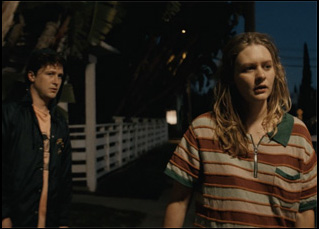 Incredible. What was the feeling like when you pull off a shoot like this?
Jessica Barr: It was very exciting. The first night we actually did successfully get it and it was crazy because we [thought], “Whoa, we did it and we know we can do it” and everyone was so excited, but no one really knew [if we got it] because at the end there’s two cars that separate and no one was really communicating [between each other]. So it was very exciting every night to be like, “Oh, did we get it? What happened?” Everyone was like so pumped in this [unusual] way. Normally, when you wrap, everyone’s so tired, but this was like everyone I think just had a lot of fun on it.
And when we got to show our cast a couple weeks ago, I just really wanted them to love it. That was what I was most nervous about and it seems like everyone really liked it and really proud of it, and especially with what’s happening right now in our country, I just feel very like proud to make something that I feel like matters and creates conversation around all the questions that are raised in the film. That’s like the most exciting thing that I want because I feel like right now, you’re so oversaturated all the time with everything and it’s nice to just get out all of our feelings about it into a fun art piece that everyone put so much into and I’m really excited to see like how people respond to it.
Kelly Wilcox: I’m just so over the moon with how it came out and it’s fun because I was talking to Jess about this protest art that’s in the bedroom [of one of the characters] — it was Jess’s idea to have Toby’s room covered in wall drawings and quotes, and it became one of my absolute favorite things that we did to transform the space. Jess and I took turns drawing and writing on the walls, and then I encouraged the cast & crew to join in as well during rehearsal days. She was inspired by a friend’s house and now we’re thinking about doing some fundraising event and selling [the art] as prints or T-shirts, trying to give money to some local immigration rights nonprofits, so we’re figuring that part out and excited for that.
Sarah Whelden: Yeah, I also am so grateful that this is premiering at Slamdance specifically because I think Slamdance really embodies the spirit of the film, just seeing where it has gone as a festival since departing Park City and reinventing itself outside of Sundance’s shadow. It’s almost like a protest fest and this is a bit of a protest film, made with such an amazing team that really believed in the art we were making. And with an L.A. team, with a couple of exceptions, it’s really exciting that everybody can come and see it and we can all bring our friends and family to see this piece that we’re all so proud of. It’s a dream to be in L.A. with a film that I think we’re all just so excited about and proud of.
“The Plan” will screen at Slamdance in Los Angeles on February 22nd at 8 pm in DGA Theater 2 and February 25th at 2:45 pm at the Landmark Sunset 5.