


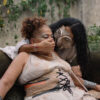


“This country is so full of artists,” Ali (Farzad Karen) says to Hanna (Hana Mana) in “The Friend’s House is Here,” standing on the outer reaches of a town square where a rock band has set up. Hanna’s cautious response — “Let’s see if it stays like this” — is the only real indication that this is happening in Iran where such impromptu concerts would seem like an impossibility under such intense government scrutiny, though they know the arts are alive if not always out in the open when the two participate in an underground theater themselves. Even the two can be persuaded to dance, they are clearly moved by hearing the band playing as loudly as they want, a feeling that’s amplified as much as a sound by co-directors Maryam Ataei and Hossein Keshavarz in their exquisite drama where the country known abroad for repression can’t seem to withhold all the creativity that exists there.
When the film’s title is a clear allusion to “Where is the Friend’s House,” the start of Abbas Kiarostami’s Koker Trilogy, Ataei and Keshavarz take their place in a long line of artists that have gone to great lengths to bring stories of Iran to the outside world, but aren’t beholden to history as they center the film on Hanna (Hana Mana) and Pari (Mahshad Bharam), a pair of friends in their twenties who would fit right into high art scenes in Paris or New York, but have carved out their own little bit of terra firma in Tehran where they regularly produce performance art for small crowds in the know. Pari has access to spaces as an employee for an art gallery and Hana has a following when she runs a successful TikTok as a dancer, but neither can be too open about what they do when it risks bringing the attention of authorities and Pari’s concerns are raised simply by Hana inviting Ali to an afterparty for the show when anyone new is subject to plenty of distrust. Their friendship could also soon be strained by Hanna potentially securing a visa to dance abroad, which Pari recognizes as the incredible opportunity that it is, but nonetheless promises to be painful when not only will it mean losing a friend, but losing part of the creative community that she believes so strongly in and is what sustains her in the face of authoritarianism.
Ali Ehsani’s cinematography would be casually breathtaking under any circumstances, a mix of intriguing framing and bold color that keeps the images continually alive in a place that’s rarely been seen as this vibrant, but often shot at a remove when there surely weren’t only compositional considerations to be mindful of but security ones as well when filming secretly in public, they begin to express more than what can be contained within the mise-en-scene. To find beauty where there are so many forces actively working against it becomes a statement in itself, but also reflects characters who invest themselves in collective progress where even if one part is stopped, another is bound to break through. Pari and Hanna can laugh off an older woman’s suggestion that they be more modest in public by wearing hijabs when all of them find themselves in a garish modern mall and in her position at the gallery, Pari will tell a nascent avant-garde painter that she’s leaving his work up for another week not because she’s personally excited by it or that it’s even drawing a crowd as it is, but the potential is there for it to connect with someone, with Ataei and Keshavarz gently laying in the quiet acts of resistance that the friends invest fully in catching on. Inevitably, the pair does run into trouble – or rather it finds them when one of Pari’s shows draws the wrong kind of audience – and what makes the film so powerful isn’t the punishment awaiting them when that’s never something they can concern themselves with if they are to push ahead, but how intimate the consequences become when they’re put in a position to think they’re holding each other back.
“The Friend’s House is Here” opens with an abstraction that gradually comes into focus as the film wears on, a performance of one of Pari’s experimental plays that could appear silly and pretentious as she puts herself at the center of a scenario in which she seeks out a missing friend and runs around a spare stage, a set-up that isn’t only appropriate for the plot ahead, but the feeling of the film as a whole when it can come across as a bit elusive and stylistically intimidating at the start, only to become gripping by the end when the human stakes couldn’t be more evident. In a time when the arts are being attacked everywhere, it’s refreshing to be reminded of the danger they pose with as fierce as a defense of them as Ataei and Keshavarz’s lovely portrait of the home proves to be.
“The Friend’s House is Here” does not yet have U.S. distribution.