



The sound creeps up on a fencing match that Giovanna (Yile Yara Vianello) is watching for preparation in “Agon,” though her coach sitting beside her doesn’t adjust the volume. The louder the match gets as director Giulio Bertelli is the one cranking things up, the more she is immersed in the experience, picturing herself in the middle of the action once again even as it can appear as if she’s staring off blankly into space, the kind of single-minded focus of an athlete that might be more accurate to their experience than most screen treatments but less dramatically edifying. However, Bertelli locates intrigue in another way as he reorients audiences to placing audiences in the same mindset as the three athletes he follows on their way to the Olympics, going so far as to require patience with no real promise of a reward as the competitors do, yet the pursuit itself is admirably revealing.
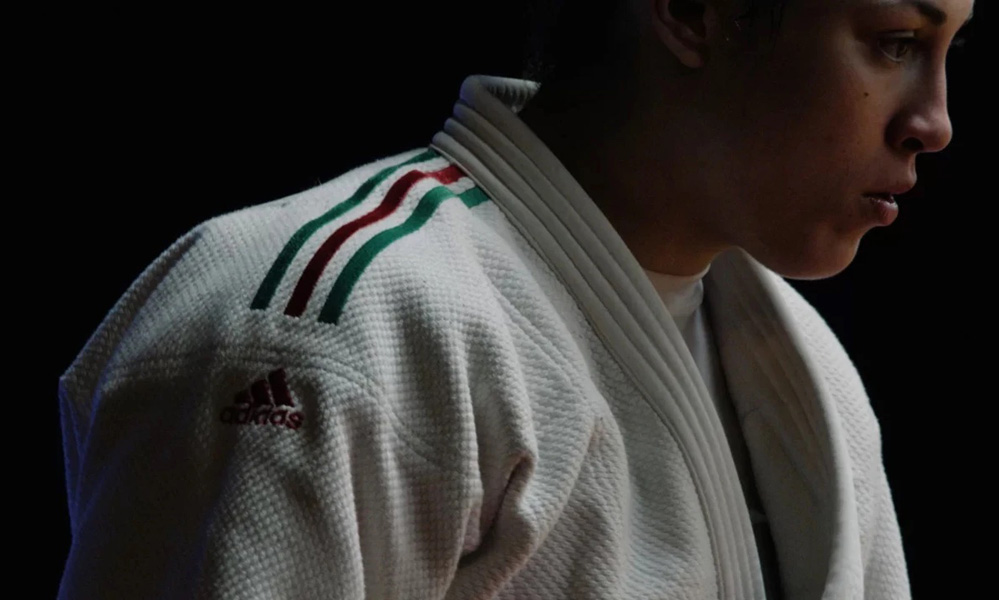
Set in the run-up to the 2024 Games in the fictional locale of Ludoj, “Agon” definitely wouldn’t be sanctioned by the IOC when it eschews the usual glorious presentation of sports and the suggestion that athletes have the strength of gods. In fact, the three athletes Bertelli follows may not even be entirely acknowledged as human at first, introduced with ID cards that suggest they’re part of an indifferent system that looks particularly brutal when the Italian Judo champion Alice (Alice Bellandi, a real life Gold medal winner from the country in 2008) suffers a devastating knee injury within minutes of the film starting where as much physical pain as she’s in, the psychological damage of potentially being sidelined on the cusp of an event that happens only every four years seems it’ll be a whole lot worse. But Bertelli doesn’t wait to revisit Alice in a hospital bed, but rather provides a peephole into the arthroscopic process to accompany the film’s opening titles, part of a variety of unique angles the director takes to fully appreciate every detail that goes into a peak performance where everything has to go right at just the exact moment and any small infraction could lead to disaster.
While the obstacles facing Alice are obvious as she gets back on an antigravity treadmill as works her way towards a comeback under the pressure of a condensed timeframe, they would be less so for Alex (Sofija Zobina), a Russian sharpshooter, if not for Bertelli’s keen visual parlance to express her social media engagement when she needs not worry about a physical setback in training for the rifle competition, but enduring the mental strain of the ongoing fallout from a leaked video of an illicit hunt that threatens her much-needed sponsorship and any popularity she still has left after winning a gold in her first Olympics and falling flat her second time around. Although the pressure mounts psychologically on Alex in the form of any outside noise she lets in away from the shooting range and on Alice physically as she tries to regain strength in her left knee, letting her mind wander when she’s got nothing to do but look up potentially sketchy remedies on YouTube, the film sees Giovanna, the most well-adjusted going into the games, potentially undone by an early competitive match where the end result would leave anyone shaken.
Cinematographer Mauro Chiarello contributes to the arresting feeling throughout the film as it surveys the surreal playing field that all three modern-day gladiators enter, often deprived of an immediate audience as they practice yet always sensing the glare of so many out there. Both the camerawork, which switches modes from the highest end to the most basic consumer-grade equipment, and editing, where the three story strands can feel as if they’re colliding into one another, resists any clean lines, considering time in an immediate sense as Alice, Alex and Giovanna hurdle towards their own individual events without any time to breathe, but also in a more epochal way as sports they compete in may have progressed in the technology used to capture them and prepare for them, yet the fundamental risks remain and a new age only appears to have made things messier when contending with an even greater array of competition for their precious focus. Of course, the fact that all three compete in events that would be considered violent if not under the cloak of civility provided by calling them sports underlines the danger they court – or have thrust upon them, depending on how you look at it – and as the film is filled with documentary-like interstitials of the making of the bullets that will ultimately be fired or the chainmail mask worn by the fencers, they are seen no differently as a product of machinery far bigger than themselves, with “Agon” ultimately reversing the effect of much of its run time in making the psychological feel physical as Bertelli vividly conjures the weight bearing down on them.
“Agon” screens again at New Directors/New Films on April 14th at 8:45 pm at Walter Reade Theater at Lincoln Center. It will be available to stream on MUBI on April 24th.