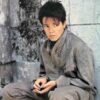


History can be a great education for the future, but in the case of Leonardo Gravina (Manfredi Marini) in “Diciannove,” it can feel as if he’s gone a little too far back, eager to bury his head in classics of pre-20th century Italian literature when others his age are spending their free time at the club. It isn’t that he looks out of place there himself, able to sidle up to anyone he wants on a dance floor when his natural charisma can be seductive and conducting Google searches for the most frivolous factoids as frequently as anyone else at his university to pass time during moments of less excitement, but the sense that there’s something greater out there for him leads to looking for the most arcane books he can find under the misguided impression that the less well-known something is now, the more value it has when it seems like he could be the only one to know it.
There’s plenty of wisdom to be found in Giovanni Tororici’s delightful feature debut, but it largely eludes Leonardo as he starts his first year at college, leaving Palermo where he clearly could use some distance from his overbearing mother to join his sister Arianna (Vittoria Planeta) and her roommate Grazia (Dana Giuliano) in London where the hard partying lifestyle of most other freshman doesn’t appear to amount to anything substantial. A return to his native Italy to study in Siena might appear to be noble at first when he seeks a less complicated life with simple pleasures of reading and cooking, but Tortorici observes that in resorting to the past, Leonardo might be in denial of the present and isolating himself further with interests that no one else can engage with. If he’s become something of a time bomb, Tortorici expresses the teenager’s combustibility in exciting cinematic flourishes, sprinkling in unconventionally spliced scenes and oddball shot compositions, fashioning the best approximation of being in the shoes of the rebellious Holden Caulfield from “The Catcher in the Rye” that’s every been put on screen.
While Leonardo looks around desperately in search of guidance, Tortorici had the benefit of recounting this frustrating and formative time in his life under the watchful eye of Luca Guadagnino, for whom he served as an assistant director on the HBO series “We Are Who We Are,” and after handing the “Challengers” director the script, the encouragement to be bold led to a wildly entertaining first feature where the quirks that come with coming of age are seen as a crucial part of growing up and as beautiful as the scenery can be when “Diciannove” moves from one corner of Italy to another, it can be equally breathtaking to see Leonardo start to evolve. After the film took the fall festival circuit by storm a year ago with premieres in Venice and Toronto, “Diciannove” is arriving stateside this week and Tortorici kindly took the time to talk about how he found a story worth sharing from his own personal experience, the surreal work of casting an actor to play a version of his former self and how even before a conclusion is reached in the film, one knows there’s a happy ending when it appears as the director found a place where he’s comfortable in cinema.
 You probably could’ve gone into writing novels as it appears the lead of this film was thinking, but how did you end up making movies?
It happened at a certain point as you can see in the movie. [Nineteen] wasn’t a super happy year for me], so at a certain point I was starting to think about a different path, and I started to imagine my stories with images. I needed to live [the] literature [I was studying] in Siena, and the cinema became an escape from that year.
[The film] is super-autobiographical and many people ask if [this] was difficult or if I have any resistance [to telling this story], but actually it was very easy because it was like talking about someone else. I was very different when I was 19 years old and it didn’t feel very personal in in a strange way because I’m very much changed, but I’m very glad that I started my cinema career with something autobiographical and to talk about something that I experienced in the first person. This helped me on the writing process and with the specific aspects of the movie.What was it like to find your lead actor Manfredi Marini and then how much did you want to let him know this was your own experience versus him finding a performance on his own?
It was a little bit difficult because, with our casting director, we were casting all around Italy and finally, we met Manfredi Marini, who we loved from first sight. He was from Palermo and I’m from Palermo and it was perfect because I wanted to be [as close] as possible to the reality of my experience and I think we studied each other reciprocally. At a certain point, I think I was acting a little bit like him and he was acting a little bit like me because we spent a lot of time together, so it was natural. And it was strange to many people that know me very well because they would tell me that he was super similar to me when I was that age and in general, so I [thought], “Perfect job!”
 You’ve said you actually shot in the same flat that you stayed in as a student. What was it like filming in those familiar locations with him?
It was super weird. I remember that I was scouting in different locations, looking for the right flat and I [would think], “Yeah, that’s great, but it’s not like it was in my experience.” At a certain point, I thought “Maybe we could try to find my old apartment, and [the production was] always very open to my needs. They took this place where I was a student when I was 19 years old and rented the apartment and I was super duper happy because I wanted to be very literal in the autobiography. But it was a little bit weird to show Manfredi around the places and experiences that I had, but he was super open and generous and engaged with the story and my suggestions, so I was I felt blessed to have found him.
I know it’s usually impossible to shoot in sequence, but when you’re traveling across Italy, were you filming in parallel to the travel in the film?
Not much so because we shot all the apartment [scenes] in one go and it was a little bit weird because there are plenty of scenes in the apartment. So it was a little bit confusing, but it was beautiful in the editing to put all these scenes in order because while I was shooting, I was a little bit confused sometimes and I needed to check the script all the time. It was a little bit like a puzzle, which I loved and I had a precise idea [of the rhythm of the film]. It was a wonderful process with my amazing editor Marco Costa, who helped me a lot.
For example, the Siena part [of the film] was too long — the first cut [of the film in general] was around four hours, so I remember watching that and there were many dream scenes shot and we cut all them. Marco was so helpful in that because I shot too much and he helped me figure out the right composition of the movie.
The editing is quite playful, as is the camerawork. Were you giving yourself a lot to work with from the set? Was it really planned out or spontaneous?
I was totally engaging with what was going on on the set because I felt that if I go in the set super prepared, then it’s boring if what I have to do is all planned. I do rehearsals with the actors and I don’t like to storyboard, but I love to see the the faces of the actors [on the day of filming], to see the light and then decide all the the shots that I have to to do. I love to be inspired and it happened many many times [during filming].
 The literature can become as absorbing to a viewer as it is to the character. Was that difficult to summon that feeling cinematically?
Yeah, it was a challenge because I thought it wouldn’t be very easy to put literature on the screen, but I always chose very fun parts of books. For example, there is the scene of him reading Daniello Bartoli, a Jesuit writer and it was super fun for me [personally] to read that book because it was all about Jesuits dying in crazy ways and the description was so detailed that for me it was a really big pleasure. [laughs] Bartoli is one of the best writers in Italian literature and he was famous for being very, very specific about torture and the very graphic deaths of people because it was all about making these martyrs famous in the 17th century, so it was all about propaganda, so I just chose fun parts of the books and I even tried to find some visual illustrations to not be boring with literature in the movie.
Was making your first feature what you thought it would be or was it different?
It was very different because I remember the first scene that I had to do, I was scared to death. I was shaking and my heart rate was going so fast and I thought [of that first scene], I’m not capable of that. Why did I put myself in this situation? What am I doing? But afterwards, I felt it was very easy, like I was old school. It was weird. I was very sure of myself and it was very different from the experiences that I had while working as an assistant on sets. I know many directors are not very happy on the set, but I loved the experience in general. For me, it was bliss.
“Diciannove” opens on July 25th in New York at the Angelika Film Center and Los Angeles at the Laemmle Glendale and Monica Film Center and August 1st in Atlanta at the Plaza.