
When considering the kind of offbeat attraction that has distinguished the Lower East Side Film Festival among the array of film events in New York at any given time and a cherished cultural part of the firmament each spring, Roxy Hunt thought back to a film installation she saw when attending film school with her future husband and festival co-founder Tony Castle at the Brakhage Center for Media Arts in Colorado, where the legendary experimental filmmaker Stan Brakhage held court. The two had always been interested in creating experiences for audiences, though they could hardly know at the time that might not involve getting behind the camera themselves and Hunt had been particularly taken with a project called “Line Describing the Cone,” a 1973 projection of a 16mm film in a completely black box room [with] one dot of light slowly becoming a circle over the course of 30 minutes. As Hunt remembered, “When you get in this black box space, you fill the room with smoke, so slowly that line, or prism of light, becomes a cone and you are forced to stay in the darkness and interact with the light and it’s less about what’s being projected and more about the feeling it creates in the room.”
“We’ll always have feature premieres, we’ll always have shorts, we’ll always have a retrospective, but we also always want to have a little extra weird thing,” says Hunt, who connected with the Avenue B dispensary Sofaclub as a space for the installation where it might be enjoyed a little extra with a sample from the store on Friday night. “What I maybe took for granted at the time [I was at school] was the experimental filmmakers were creating exactly what we’re trying to create, these unique experiences where you’re immersed in the cinema or in the art.”
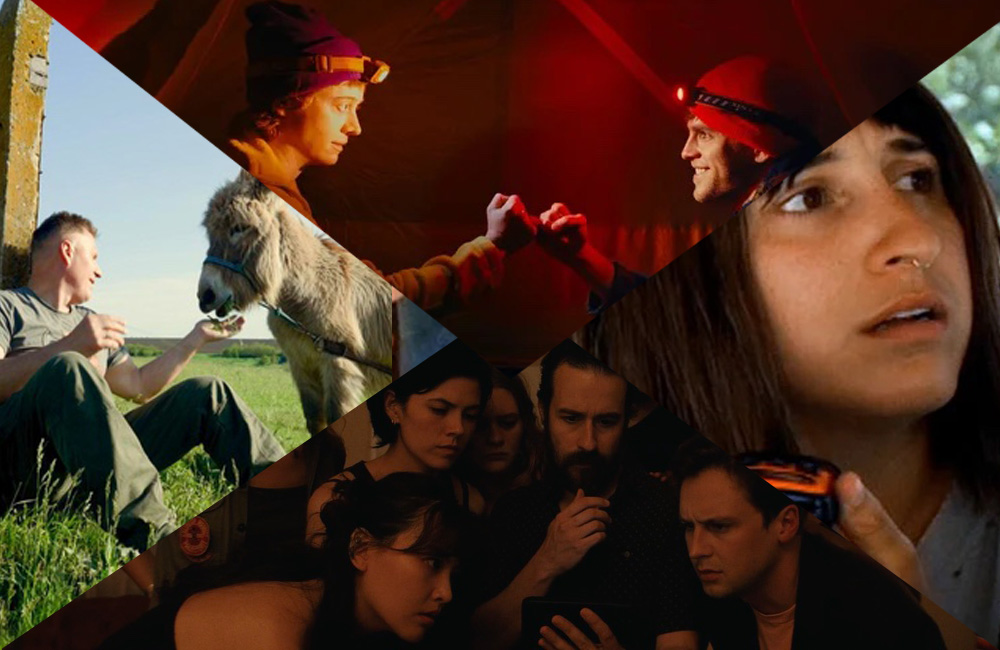
Of course, there’s generally a sense in this part of town that you’re amongst artists, but the Lower East Side Film Festival has long taken full advantage of that fact to provide a showcase for local filmmakers, but also return the favor in cultivating real feeling of community amongst all the creatives looking to be inspired by entering a world outside their own. “The Line Describing the Cone” may be one of the more outré selections of this year’s festival, but merely one of many that invites audiences out on an adventure, whether it’s just beyond the city in Ethan Fuirst’s “Can’t Get Over It” where cast and crew scaled the biggest mountains in New York State for the comedy or “Occupy Cannes,” Lily-Hayes Kaufman’s warmhearted look at her father and Troma founder Lloyd Kaufman trying to grab attention on the Croisette where he’s long caused a scene on behalf of his low-budget shockers, yet finds diminishing results as time goes on. Taking over the Village East, the festival now going into its 16th year definitely has a sense of history about it, yet it continually remains wily, from its usually mischievous selection of a retrospective screening (this year a 25th anniversary of “Ghost World” with Steve Buscemi and Thora Birch in attendance) to a selection of high-energy shorts where a host of fresh voices are introduced as well as giving a New York debut to recent Sundance premieres “Run Amok” and “Public Access” and Slamdance selections “The Plan” and “Danny is My Boyfriend.”
On the eve of this year’s shindig, Hart graciously took the time to talk about plotting a good time for attendees, stretching out the festival’s reach beyond the week it takes place with the Stay Indie Project (a development program that aided in the production of LES Film Fest ’26 selection “The Ark”), and engaging a broader artistic community.
Over the years, I’ve heard many filmmakers talk about having a really positive experience at the Lower East Side Festival. Has that word-of-mouth actually helped broaden the programming?
That’s totally true. Obviously, we’re open to anyone submitting, but I do think we have seen a lot of filmmakers when they are submitting [say] they’ve heard great things or “my friend like told me about this” and a lot of our audience is young filmmakers. That just means a lot that people, without knowing us, came, they liked it, and they thought like this is a good place for my film and they get what we’re trying to do. So that’s definitely been a part of it and we’ve seen filmmakers come through who had a short and then years later they came back and said, “This is where I really want my feature [to play]” and seen that growth or we’ve we’ve also seen filmmakers come through who literally met at the festival and then they came back the next year with a film that they made together, which is amazing. That’s the intersection of all the things that we want.
Has it been exciting to actually see that cycle now that the festival has been around long enough to have people return?
Definitely, especially filmmakers who you see that their voice is really specific and unique and then to see that blossom into a feature is really exciting. Our opening night, “Molly and Max in the Future” with Zosia Mamet starring it, a few years ago was from a filmmaker named Michael Lukk Litwak and he has this really cool lo-fi, DIY, sci-fi vibe to all of his films,, handmaking miniature sets and doing cool stuff with LED screens. He had had a short years before that had that same taste and I knew when this guy makes a feature, it’s going to be even more to work with, so we were thrilled that he had a great premiere at South by Southwest for his feature and he came and said [to us], “Here’s my feature, is there any way [to show it]? And we were like, “Oh my God, let’s do it!” That was a full circle moment for us.
Was there anything that got you particularly jazzed about putting together a lineup this year?
It feels like there’s this interest lately in in nostalgia and lo-fi, analog technology, so our closing night film is called “Public Access, which is an all-archival documentary feature all about the public access television scene in New York City in the ’70s and ’80s. It’s all audio interviews and it’s a really interesting filmmaking approach that forces the viewer to live in this pixelated, lo-fi world and really sets the scene for what was New York like back then, informing the very creator-driven media landscape that we’re in now and exploring freedom of speech and all these interesting conversations that are very relevant to today.
It’s also a New York story, and not that we’re exclusive to New York stories, but there’s something about showing it in New York City, in Village East Cinema, a 100-year old theater, really creating that experience that feels unique. We’re so immersed in our technology and that we’re still always really trying to create face-to-face experiences and give something people to talk about, [where you’re] pouring out of the theater and bumping into each other and talking. All the films aim to do that, but that’s a that’s a one that I’m really excited about, especially because there’s a wild scene of public access TV and [you could think it was] low budget or boring, but there were basically orgies being filmed and bizarre talk shows without any kind of parameters, and at our closing night party, we’re actually going to have some special guests who are in the film and do a live performance similar to the stuff that they did back then, just to give it that extra step of [after] you’ve seen the movie, now you go out into the world and we’re still living in that vibe, which is really fun.
You just mentioned something interesting that really does take a certain type of curation in a different respect than most think – what’s it like to create space as much with time as location within a festival for the kinds of engagement you want to create with the films and other audience members?
Year one was in a tiny storefront on Norfolk Street in the Lower East Side a friend of ours had access to and they [said to us], “Come do something in this pop-up space for a month,” so we had a month-long residency that was the first year. We sold out every single night for a month and it was in this tiny space that held 30 folding chairs. But people were literally forced to talk and be next to each other and we passed around a bottle of whiskey to loosen the vibe. That ethos of creating something weird, unique and possibly influenced by booze was is still alive and what kept the festival going for so long because we never wanted to create a barrier between filmmaker and audience or you could be a huge cinephile or a random person walking on the streets of New York and you’re welcome. We’re all in it together to just to have a singular experience.
We always have this big hub of a lobby space before and after every screening where people are going in and out and there’s an open bar and we’ve brought on other sponsors, like cannabis sponsors in the lobby, just giving people a fun treat to get them excited and then they go in, they come out and it’s always this big hubbub where filmmakers meet and talk and then they go out bar crawling together and they collaborate together. It’s meant to really be a community-oriented experience.
One of the pillars for the festival that’s always pretty unexpected is your retrospective screening. How do you decide what film to honor?
Yes, there are no real parameters. It’s more like it’s got to be something that we’re just excited to watch again, still fitting into the space of something that maybe has big stars in it, but that it started from a place of being really independent and creating a cult following is always really fun. At the end of the day, it’s just things that we want to show and if you’re looking for a 35-millimeter print of something from 1940, that’s not necessarily something you’re going to find with us. There’s great places for that [in New York] — you can go to Film Forum or Museum of the Moving Image, but we’re trying to bring something we all remember that that was really fun or funny, or just got lost in the mix and deserved like a bigger moment.
So we’ve shown everything from “Teenage Mutant Ninja Turtles 2” or “Home Alone 2: Lost in New York” — we were actually like, “Should we always do sequels of weird things from 25 years ago?” [laughs] We showed “Eight Legged Freaks” one year and “Cruel Intentions,” which was my dream honestly because I grew up on that and we brought the director [Roger Kumble] out and it was really interesting to hear about how that film got made because Reese Witherspoon and Ryan Philippe were just emerging. And it was the same with “But I’m a Cheerleader,” [where we] brought Jamie Babbitt, the director, to come speak and that was her first really scrappy film and it was cool to see the legacy that it created. That’s what we’re always really excited about. This year is “Ghost World,” which Thora Birch and Steve Buscemi are coming out for, which again is my dream, especially when Thora Birch shaped my teen years, so [the main criteria is] things that sound fun.
Another special screening this year is “The Ark,” which actually has had the support of the Lower East Side Festival through its Stay Indie Project. What’s it like to see that ultimately show at the festival with the investment you have in it?
The Stay Indie project in general was developed because we at the film festival were always seeing so many filmmakers who are like, “How does this happen? How do I make a feature?” There’s just so many questions about fundraising and nobody wants to share their budgets. It’s a very gatekeepery feeling [where] people have no idea where to start — do they do a GoFundMe? Do they have to attach like a celebrity? All those questions have always been things that filmmakers are curious about and a lot of times we try to demystify the filmmaking process with our programming, whether that’s with our podcast or our panels or Q & As with filmmakers and take people behind the scenes and unlock the doors and go, “This is how it works.” I think the answer is there’s no easy way and no one way, but with with Stay Indie Project, what we aimed to do was try to open it for filmmakers who need fundraising or development or guidance and utilize all the resources that we have with the film festival and with our production company, which is a television and film production company, and say “Can we put this in front of investors or connect with post-production services or do they need to figure out how to do fiscal sponsorship? We can do that, and just try to be that extra step between, “Okay, you have this amazing idea and there’s the end goal of distribution or having it at a film festival, but what happens in the middle?”
[Stay Indie was initiated] to just lift up those projects and help to actually get them made and seen and it’s amazing to be able to have been a part of “The Ark,” [which is] about a family in Ukraine who had no intention of doing what they ended up doing, but basically stayed behind when the war broke out because they had a small farm with a couple animals and people just started showing up and [would say] “Hey, I have to go to the front lines. Can you take my goats? Can you take my chickens?” And eventually it just grew and grew to the point where they were actively rescuing animals.When the war started, we were in touch with a lot of filmmakers who knew filmmakers in Ukraine who were saying, “We’re still here, we have cameras, and we have a film industry. What can we do?” [And at the Lower East Side Festival] we showed a series of shorts and some features that were all Ukrainian and we partnered with Veselka and tried to really raise awareness about what was going on over there and that there’s filmmakers over there too. One of the filmmakers that we had connected with in that time, an amazing cinematographer, [said], I’m seeing this stuff, and [what became “The Ark”] just grew from there and it felt like this was a story that was worthy of trying to figure out how to get it made and get it out there. Now it’s having its festival journey and with any of the Stay Indie projects, those run out of competition and it’s just a way to shed light on this program and give that film a screening in New York if they haven’t had a chance to do that. But we’re really excited to show it at the festival this year.
Is there anything we haven’t covered that you’re particularly excited about this year?
You always see the culture reflected in the films. Every year we see trends through the filmmaking, which are interesting. Right after COVID, there were a lot of films that dealt with isolation and loneliness. And this year, for whatever reason, we have a lot of films that have more of a theater flavor, meaning the cast [is comprised of] people that are traditional theater actors and the filmmaking itself is very theatrical in terms of [unfolding in] one take or filmed in literally a stage environment. I don’t know exactly what that mimics in terms of the culture, but to me it felt like we’re trusting the audiences more with a longer attention span. I think a lot of people think our attention spam is shot and we’re all just watching TikTok all the time. But this proved to me that these filmmakers wanted to ground us and get us to really pay attention and trusted us as audience members and programmers to go on those journeys. They didn’t rely on quick cuts, fancy editing and lots of camera moves. They relied on the performances and the scripts and that was cool to notice because it’s not just one film. We have several that have totally different styles and totally different stories, but they trust with the audience, like, “Hey, I’m going to take you on this journey. You’re going to go at this pace or you’re going to live in this frame for a long time.” I really liked that.
It was interesting to see the jury include Whitney White, one of the rising stars in theater directing and over the years, the festival has taken advantage of having such a strong theatrical community around. Has that overlap been intentional or organic?
It’s a coincidence that we got such films that were theatrically-based and then also folks in the in the Broadway the space to be on the jury, but we always want to try to have a grab bag of different roles on the jury. There’s going to be actors and directors, but [we always think] let’s put some folks on there that maybe have different backgrounds and come from different parts of the industry. Theater is definitely a part of that conversation, and the theater community too is also in a changing landscape and it’s a really important time in in the arts to really reach into those other communities and and try to focus on original storytelling and independent art and and not just [think], “Oh, we’ve got to all go to Marvel movies.”
The Lower East Side Film Festival runs from April 30th through May 4th and more information can be found here.