

Nearly 50 years ago, the American Museum of Natural History honored the anthropologist Margaret Mead with a showcase of documentaries that reflected her unquenchable curiosity about the world around her on the occasion of her 75th birthday, pulling in films from far-flung places that were suddenly put within reach with a camera as she had done with her own studies. It turns out it’s been the gift that has kept giving to audiences in New York who can now count on the Museum to bring some of the year’s most exciting documentaries exploring other cultures to the city at the start of the spring, sparking the imagination with the glimpses of natural wonders from around the globe.
This year is no exception with the Margaret Mead Film Festival kicking off this Friday with a host of great international films spread out over the weekend, kicking off with Sara Dosa’s exquisite “Time and Water” about the Icelandic writer Andri Snær Magnason, who considers the temporality of all things as he finds himself in a race against time to prevent the erosion of local glaciers. It is one recent Sundance sensation of many gracing the screen of the LeFrak Theater during prime time as Saturday night brings the New York premiere of Sam Green’s playful and profound “The Oldest Person in the World,” about the “32 Sounds” director’s desire to keep tabs on the current Guinness World Record holder for age, and audiences will be taken to the Great White North on Sunday night for “Nuisance Bear,” Gabriela Osio Vanden and Jack Weisman’s Grand Jury Prize winner about a polar bear left adrift during migration.
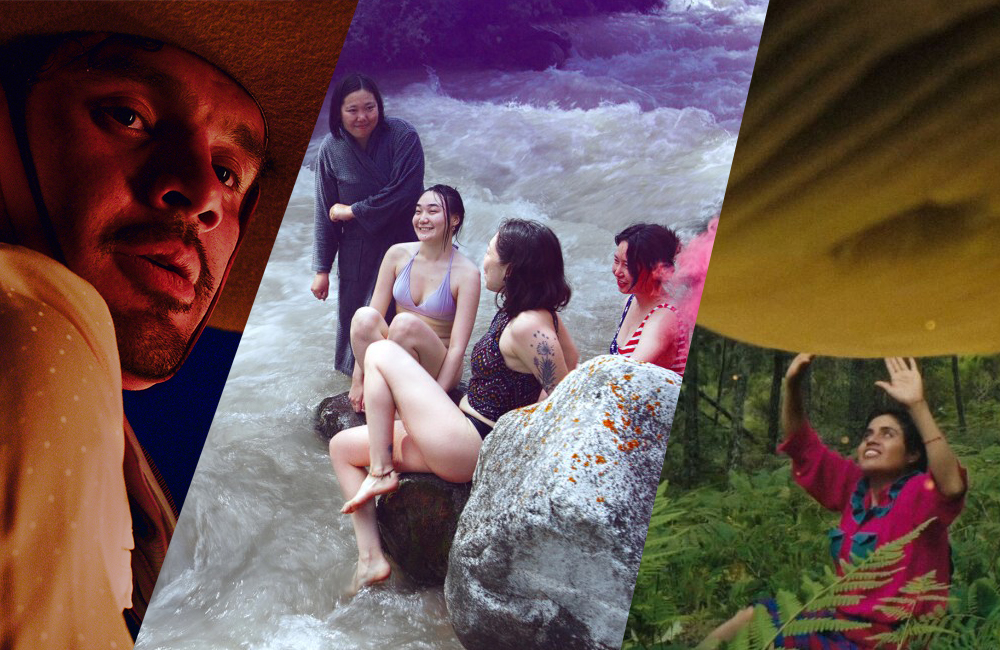
The festival also plays host to the North American premieres of Rithy Panh’s “We Are the Fruits of the Forest,” about the hard-won survival of the Indigenous Bunong people of the director’s native Cambodia, Dongnan Chen’s “Whispers in May,” which recently took home the top prize at CPH:DOX as it follows a young Chinese woman whose first period precipitates a road trip with friends from their rural village home, and this year’s Berlinale Ecumenical Jury Prize winner “River Dreams” from director Kristina Mikhailova who allows women to speak freely about their experiences in a patriarchal society in Kazakhstan. (Recent True/False premiere “Bucks Harbor” and SXSW fave “Black Zombie” also shouldn’t be missed.)
The impressive slate seems all the more so due to the fact that like so many other festivals, the Margaret Mead Film Festival put itself on pause during the pandemic and regain its bearings. It’s a break that the Museum appears to have taken full advantage of with the appointment of Jacqueline Handy, the American Museum of Natural History’s director of Public Programs, to oversee the Mead Film Fest in collaboration with the locally based social impact organization THE OFFICE performing arts + film, rethinking how to make the most of the three-day event. Preparing for the busy weekend ahead, Handy graciously took the time to talk about creating a festival very much engaged with the present moment in a setting steeped in history, thinking about future generations and some things she’s especially excited for audiences to see.
From what I understand, your start at the American Museum of Natural History actually coincided with the reignition of the Margaret Mead Film Festival, which had to take some time off during the pandemic. What was it like to come in at that specific time?
My first week of work was jumping in to the Mead Festival in 2021 and we were trying to figure ourselves out in the pandemic as many cultural institutions and festivals [were], but we had a small Mead activation, as we called it, when I first started and we’ve been trying to build a cadence. Moving from the November range into the springtime has been a really big but beautiful shift for us and it feels like we’ve emerged with what New York City does in the spring, so that’s built a lot of positive momentum over the last several years. And it’s really felt like we’ve been building back and trying to build back really intentionally through really strong collaborations. We’ve been able to recenter with a new team with a myriad of backgrounds around what the Mead is, what it has been, what it should be, and how we keep evolving it to stay a contemporary film festival.
We’ve been really grateful to have strong advisors this year, working with Natasha Raheja, a visual anthropologist who was an advisor for us last year and the museum itself collaborates with consulting programmers and THE OFFICE performing arts + film. I identify as a cultural programmer, but I don’t have a film background [specifically], but it has really started to develop through the Mead Festival and this work and kind of exploring the city in this way with folks who are really steeped in film programming like THE OFFICE and folks like Natasha who come on board to make sure that there’s depth and richness in the programming that we do.
What is the criteria for films you’d want at the Mead?
I can’t say that there is one definition one set of criteria, but we’re looking for folks telling their own stories. Are we bringing in new perspectives into an idea, a theme, or a question? Does it feel fresh? Are we opening our own eyes before we’re even trying to do more with the audiences that have come to trust the Mead Festival? What I have loved is that our guiding idea is we are the story, so how we put that lens into the works that we review, and when you have a consulting group of folks who are coming together in this way that have myriad backgrounds, whether it’s city-focused, film-focused, anthropology-focused, we’re all bringing pieces of ourselves into this work, so it has allowed us to expand what it means to be a film featured in the Mead Film Festival. But I love that it helps us take labels off of the work and expand the boundaries of what it means to be in a documentary and ethnographic film festival. I love when we get together as a the group of programmers and investigate and interrogate really what it what is drawing us to a certain film, how we’re receiving it, and what feels necessary in this current moment.
I hope I’m not asking to pick amongst your children, but was there anything that got you really excited about this year’s selection?
As a programmer, it’s incredibly hard for us to choose in that way, but what I love is that I find a piece of me in each of the films that we’re showcasing. One of the first films that I saw where I [thought], “Yes, this is what the Mead should be and feels like it’s speaking to the tenure of the Mead Festival across the decades was “Nuisance Bear,” [which] felt like we were really centering storytelling that was new and fresh. I’m someone who has consumed the headlines on the endangerment of the polar bear, particularly through the lens of climate change, which is huge in the work that we do across the museum, but this film really brought more complexity to that notion through Indigenous English storytelling, so the blend of these beautifully shot scenes through Manitoba with the complexity of the pain and the struggle [for these polar bears] to live fully, that feels like what the Mead should be doing. It felt like a really beautiful anchor for the festival
I can add that I’m reminded of subway riding with friends as a teenager when I watch “Whispers in May,” [about] a group of girls who are just exploring together the thrill and the fears that came from interactions with other teenagers and even other adults in those unsupervised moments. It was really a callback to me to my own coming of age. And I’m bringing my 11-year-old niece who is obsessed with horror to “Black Zombie.” Don’t get me started on why this is her favorite genre. This is something I’m unpacking with her mother, but she rarely sees a perspective that t goes to the origins of some of her favorite [horror] tropes, so learning the Haitian roots of zombies and how colonialism has twisted it feels like necessary learning for her as she continues to not only explore horror but also the world.
It’s a great film and it’s interesting to hear you connect “Nuisance Bear” within to the work that’s happening across the Museum of Natural History. How is the Mead part of the more general mission?
Something that came up naturally — almost pun intended — through this year’s festival was the relationship between humans and our natural environment. We often try to bring in our scientists and try to engage [with audiences], whether it be in introductions or talkbacks or in other tertiary programming to the films that we bring in that have the science lens. But communicating about climate change and biodiversity loss is a huge driver of the Museum’s work, and it is really wonderful that we’re able to do that in a myriad of ways, including through the Mead Film Festival in the spirit of the work that Margaret Mead has done as an anthropologist. It feels like we are using these films to bring people closer to cultures around the world and making the planet feel less [intimidating] or making cultures feel like they are more personable. We’re finding ways to build empathy through the storytelling that comes through the Mead Festival and with that empathy, I feel like we can also build change.
What’s it like to provide a platform for these kinds of films, especially in New York?
It’s wonderful. Speaking with two hats, as both the director of public programs for the museum, as well as the film festival director, making sure that the museum is creating a platform for folks to share their own stories is huge throughout all of the work that we do. We know that coming from such a storied institution made up of 25 different buildings and has a strong fan base of folks who come to the museum and see it as a trusted space, it is both integral to our mission to create more accessibility into the museum and the work that we’re doing, but also create a really beautiful moment for filmmakers and for the collaborators that we’ve been working with to say that you are valued here and your stories are valued here, and creating the platform for folks to share those in really beautiful and innovative ways is joyful for us.
And as we continue to build the festival, we’ve been thinking a lot about how we’re supporting young people and young filmmakers, so we are happy and glad to be jumping in with Downtown Community Television Center, DCTV, with a youth media program [where] they’ll present original shorts and then talk about the creative process. This is a little bit of a pilot for us to see what it looks like for us to do workshops for young filmmakers, but to show we’re not just a film festival that’s for folks who are already in the industry. but also creating pathways for younger generations to see themselves as the folks who are creating and telling their own stories in this way.
The Margaret Mead Film Festival runs from May 1-3 at the American Museum of Natural History in New York. A full schedule of films can be found here.