

With its floor-to-ceiling glass windows allowing the warmth pouring out of its long lobby to emanate from inside out, anyone headed to the Billy Wilder Theater at the Hammer Museum in Westwood later this week would be forgiven for thinking that they’ve cut across space and time to reenter the Sing Lee Theater, the cherished Spring Street cinema for Chinese-language films that kept their doors open from 1962 through 2001 on the other side of town.
“People can really feel what it might’ve been like coming to the theater as much as possible,” said Beandrea July, who has been diligently working to confuse the issue with the walls lined with posters of films that showed at the theater and eight resplendent 35mm prints that will be screened from a collection rescued from the shuttered Sing Lee Theatre by the UCLA Film & Television Archive. “For me, film is really a tool for community building. That’s what really excites me about the work I do and I feel like this program really is an ideal example of how we can bridge the Archive with the community…I think people will be transported back to the heyday of this really important cultural center in L.A. history.”
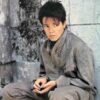
Already, “Echoes from Spring Street: The World of Sing Lee and Chinese-Language Cinema in L.A.” reflects the strength of a communal effort. The screening series launches on January 16th with the 1979 Taiwanese drama “The Story of a Small Town” and run through March, offering plenty of scarcely-seen treasures, thanks to Margaret Lew and her husband Tony Quon Lew’s commitment to not only exhibiting Sinophone films but tucking prints away as well. The theater may have left the family’s stewardship in 1988, but the act of stashing away prints ensured that the films themselves could continue to have a life when they fell out of circulation elsewhere between distributors going out of business and any other remaining prints disappearing due to people losing track of them or the natural depreciation of celluloid. (A February 1st screening of the Li Han-hsiang drama “Rear Entrance,” showcasing the early work of the director who would find fame as a Shaw Brothers associate and local teen sensation Li Hsiang-chun, boasts audio that other known remaining copies of the film do not.)
A majority of the 300 films that the Lew family entrusted the UCLA Film & Television Archive with in 2016 could still use restoration, something that July hopes the series will spark interest in financing, but the seeds for this splendid sampling which has the Archive working alongside the UCLA Center for Chinese Studies began when Janet Louie, a Harvard Ph.D candidate was interning in the collection services department of the Archive and began inspecting the prints, cataloging the films and determining which were of projection quality. This was no mere Excel spreadsheet when Archive Research and Study Center head Maya Montañez Smukler could appreciate the context that Louie could add from her studies of East Asian Arts to listings for each film and as a professor at the university in addition to her position at the Archive, she slyly began to see about the viability of a proper retrospective at the Wilder with her students as a first audience.
“I took advantage of the fact that I could screen prints in my class and I had Janet come in and give a talk, which was wonderful, after a screening of Sylvia Chang’s ‘Passion,’ and another year I screened Ann Hui’s ‘Starry is the Night’ and I asked Beandrea to come because I wanted to start pitching this idea of Janet’s scholarship and the collection to Beandrea,” said Montañez Smukler, who will ultimately introduce a double bill of both films from the trailblazing Hong Kong female filmmakers on February 14th. “That was really fun, and that year [with ‘Starry is the Night’], I actually had a couple of international students from China, so they were able to fill in some gaps with the subtitles and give some context. To have a class as a little bit of an incubator was really special.”
At Louie’s recommendation, the series will feature at least one film from every decade the Sing Lee Theater was in business, taking into consideration what was popular at the time. The general assumption may be a lineup stuffed with loads of action, which indeed the Archive will pay tribute to with a double bill of “Shogun Assassin” and “Miss Magic” (that July promises is “so crazy, like a melodrama’s melodrama”) on January 18th, being true to audiences’ tastes also led to more intriguing avenues like the double feature of 1986 romantic dramas “Devoted to You” and “Love Unto Waste,” featuring the impossibly young Chow Yun Fat and Tony Leung in the second film from “Rouge” director Stanley Kwan. The idea that an audience completes the experience of any film is at the heart of “Echoes from Spring Street” where Louie’s work on the series extended well beyond the films themselves.
“I managed to get in touch with people who had gone to the theater in the past, and they had mentioned that they’re really interested in coming in,” says Louie. “A lot of these communities are really tight knit and still in contact with one another – the Lew family is in touch with a lot of other former Chinatown families, so we’re hoping that they can make their voices heard at one of the screenings.”
Certainly, the Lews’ presence will be felt on opening night where Kurt Wong, the grandson of Tony Quon and Margaret Lew and a UCLA alum, will be on hand to discuss the family business and Louie plans to revive memories of what Los Angeles Chinatown was like in the 1960s where the Sing Lee Theater was a true community hub. Originally founded by Tony as a stage venue for touring productions from the mainland, it became no less lively when Margaret converted it into a cinema following her husband’s passing in 1968 when families could grab lunch a block away from Mon Kee or ABC Seafood and catch a mid-afternoon matinee. The movies might’ve offered a welcome diversion from daily life for patrons, but as Louie notes, what was going on at Sing Lee off-screen as a gathering place was no less interesting.
“The fact that theaters were what brought people together in the 1960s up to the 1990s is pretty astounding, especially when you think about histories of non-white people in Los Angeles. That’s not how we often understand the history of people in Chinatown,” says Louie. “I’ve never seen a screening series that focuses not only on Sinophone films, but on the history of a film theater, so I’m just really excited to also talk about Chinese-language theaters, especially because for the most part, Chinese-language theaters are gone in North America, so the fact that there’s even evidence that they existed in the form of film prints is pretty amazing.”
The aim of “Echoes from Spring Street” is not only to remember those days but reclaim the same spirit of inclusion that attendees felt there and while celebrating one cultural institution in Los Angeles that pulled together so many, the series will also reaffirm the importance of another when it takes full advantage of the collective work going on at UCLA where preservation and exhibition of films is keeping entire cultural experiences alive in a variety of ways. July and Montañez Smukler both praise Louie as someone outside the Archive who could recognize this extraordinary collection of films within its holdings — as July says of her, “It’s really exciting for me to be able to support what I feel like in 20 years we’ll be looking back at being like, “Oh wow, she really broke ground in this area” — and note how it takes a village to do justice to the rich heritage of the city they live in.
“[When] we have an enormous archive over approximately 600,000 items, we really rely as a university-based archive on scholars who can come and tell us what is the historical significance of our collections, so this series is based on Janet’s original research and we’re just so excited to be able to support and showcase her work and her work then helps us showcase what we have in our collection,” says Montañez Smukler. “That’s what the Film and Television Archive at UCLA does all the time, certainly through our public programming and our research and study center, so this series is really nice in how it touches on everything — the classroom, a visiting scholar, our collection services and our preservation team [at the Archive] and public programming — putting all those pieces together to put the series in front of an audience and hopefully we’re going to get a really special audience since this is L.A. history.”
“Echoes from Spring Street: The World of Sing Lee and Chinese-Language Cinema in L.A.” kicks off at the Billy Wilder Theater at the Hammer Museum in Los Angeles on January 16th with “The Story of a Small Town” at 7:30 pm and continues with screenings of “Miss Magic” and “Shogun Assassin” on January 18th at 7 pm, “Rear Entrance” on February 1st at 7 pm, “Passion” and “Starry is the Night” on February 14th at 7:30 pm and “Devoted to You” and “Love Unto Waste” on March 22nd at 7 pm. Admission is free.