




“Thank God, you’re here,” Vince (Brodie Townsend) tells Sayo (Jeff Wahlberg) in “Corpus,” less it seems for the company of an old friend as the two are staying at a creepy old mansion in upstate New York during a weekend excursion from the city than for the fact that he’s grateful to have another witness for what he’s seeing. Vince is getting used to places like this with his star on the rise as an actor, removed from any routine of an average life and accepting of unfamiliar people milling about to tend to his whims and hardly questioning his surroundings as strange as they may seem when he knows he’ll be somewhere else soon, but even with that in mind, the home of Cata (Ching Valdes-Aran) and Billie (Lily Cowles), a photographer he wants Sayo to meet is a doozy, greeted in the driveway by Wren (Nuha Jes Izman), a young woman clutching a dead chicken in her fist and having a bloodied white T-shirt to show she was the one to take its life and hardly getting a hearty hello.
Any reasonable person would turn back immediately — or frankly, well before when even the sound of what Vince pitches Sayo and their friend Ross (Michael Vlamis) on in Manhattan doesn’t sound all that appealing — so a healthy suspension of disbelief is required throughout Corrin Evans’ unnerving feature debut, but whereas the trio doesn’t know what they’ve walked into, the director has a good sense of where they are, setting the film in the late ‘90s when a secluded hideaway such as this wouldn’t have been outed on a Reddit board and a score of aching Catherine Wheel songs captures all the screaming inside of men that would like to be a bit more forward with their emotions accentuates more pressing fears than stumbling into what’s perhaps a mythical killer’s lair. Sayo, a budding photographer who has made ends meet by dealing eight-balls at the clubs where he’d rather earn money from capturing the scene, is lured there by the promise of advancing his career by making a connection with Billie, but more importantly, spending time with Vince, for whom he appears to have carried a torch for some time and as frustrating as the nine months they spent apart were as the actor’s career took off, he can’t help but be curious where things might lead should he accept the weekend invite.
What makes people stay in questionable situations — or at least, enter them against their better judgment – is slyly established as the central question of “Corpus” from the start when Wren is actually introduced in the film’s opening scene, remained seated during a mundane modeling session for Billie even after a nude man shows up in something akin to a reindeer mask that’s pointed nose appears as if it could be lethal under the guise of “avant garde” art. So much time passes by the time you see her again, it doesn’t exactly click that Sayo is being led to the same place, for better or worse — some of the film’s surprises can seem less unexpected than unsubstantiated — but it’s chilling that both can be seen at least somewhat responsible for their fate when they’re incapable of deciding to leave before it’s too late, with “Corpus” honing in on the glint in their eye that suggests however uncomfortable they are in the present, the risk is worth staking their future on.
Corrin and co-writer Cowles wisely see the personal stakes as being big enough when the ultimate goal of anyone in the film isn’t professional superstardom, but a sustainable career or life in general and they have a real handle on how frightening it can be to step into the underworld of the arts scene where the lines are blurred in every direction with predators lurking around newcomers, having Bohemian abodes that can appear to be a rejection of society but actually reflect the opposite being true and it’s difficult to tell the difference between creative work and something more sinister when pushing the envelope. That Vince can be seen spending the night sleeping in Sayo’s bathtub meant for developing photos early on becomes a potent single frame for how confusing it all has become for Sayo, who besides attempting to navigate the murky waters of establishing himself in his career has trouble finding his footing with Vince when he doesn’t know whether their playful flirting is friendly or romantic and even though Vince doesn’t overtly hold his success over him, the power dynamic has obviously shifted.
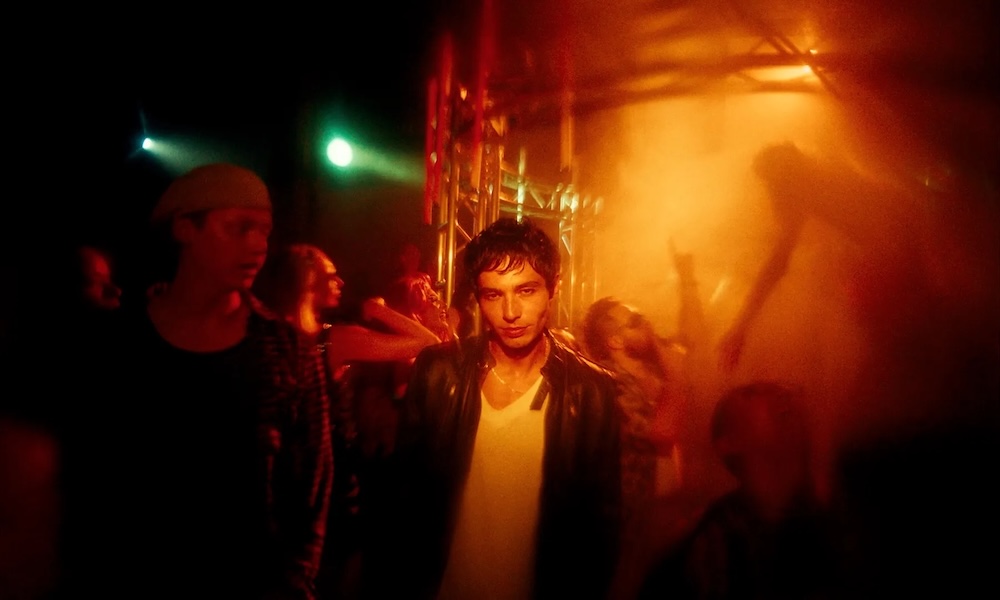
The disturbing mask from Billie’s photo shoot comes back into play as the film wears on, but as visually striking as the piece of costuming is, it’s how the temptation for Sayo to lose all sense of himself as he gets closer to his goals rears its ugly head that becomes the most affecting villain. Visually, Corrin impressively seizes on the way Sayo can see things through the lens of his camera as a measure of what going on internally, capturing the exhilaration of an underground scene in New York where streaks of light reflect excitement that are replicated as he snaps photos being chased away from the mansion that express something far different. For some, “Corpus” surely won’t always be able to avoid the trap of feeling stuck with a group of pretentious artistes who take themselves too seriously, but both the humor and horror in that frightening prospect isn’t lost on Evans, who uses it to make a striking first feature.
“Corpus” will screen again at Fantasia Fest on July 27th at 4:20 pm at the Salle J.A. De Sève.