




When it came time to celebrate the 25th anniversary of Cinema Tropical, co-founder Carlos A. Gutiérrez didn’t have to deviate much from what the organization does on a regular basis.
“We’re very busy supporting filmmakers, so I think the best way to celebrate is continuing to continue doing the work that we’ve been doing for these 25 years,” says Gutiérrez. “Of course, having said that, it’s really important to celebrate [since] celebration is an important form of persistence, so we’re doing some special events throughout the year.”
Gutiérrez has a way of making big things sound simple, having devoted himself to learning every aspect of the film business to ease the path for Latin American films to be enjoyed abroad. With “The Secret Agent” poised to become Brazil’s second straight Oscar winner for Best International Feature (and nominated for Best Picture to boot while recently crossing $4 million in American box office), the impact the organization that Gutiérrez and Monika Wagenberg founded in 2001 to introduce new work from Argentina to Mexico is plain to see, being able to claim that before director Kleber Mendonça Filho had a viable path to picking up an Academy Award, he received a Cinema Tropical prize in 2012 for this debut feature “Neighboring Sounds” and was treated as a major talent before even those back at home thought of him in such terms when a program of his shorts was presented at the Museum of the Moving Image and cultivating an audience with each subsequent feature, giving him international appeal and in turn the local credibility to get the green light for more and more ambitious productions.
The investment of time and energy was never seen as benefiting only one individual filmmaker when the nonprofit has long seen a rising tide as capable of lifting all boats and Gutiérrez has always taken the broad view, even when Cinema Tropical first carved out a place in New York’s highly competitive theatrical market by starting out with screenings at the humble 99-seat Pioneer Theater on Avenue A. As audiences could come to rely on a steady stream of films they were unlikely to see anywhere else but far-flung locales on the festival circuit, such as the innovative early work of Mexican documentarian Natalia Almada and future “El Flor” mastermind Mariano Llinás alongside retrospective screenings of Lourdes Portillo and Raul Ruiz to assert their place in the canon, they built reputations beyond their own. The organization’s newsletter, highlighting releases around the U.S. where other screenings of Latin American films were taking place, gradually led to booking films in some of those theaters directly or partnering on series to broaden their reach even further.
Just like the filmmakers they champion, Cinema Tropical has long had an expansive idea of what cinema can be and how it can be presented, taking an agnostic approach to exhibition that has forged ongoing collaborations with all of the best venues in its central hub of New York, from Film at Lincoln Center to the Museum of Modern Art to the Anthology Film Archives, and elsewhere such as its screening series at the Fox Tucson Theatre in Arizona that often brings in guest artists from across the border. With a small but mighty staff, the organization will also be active at festivals, raising awareness amongst international press about Latin American films making their world premieres as publicists, an all-encompassing operation that can nurture films and filmmakers you rarely see outside of a major studio.
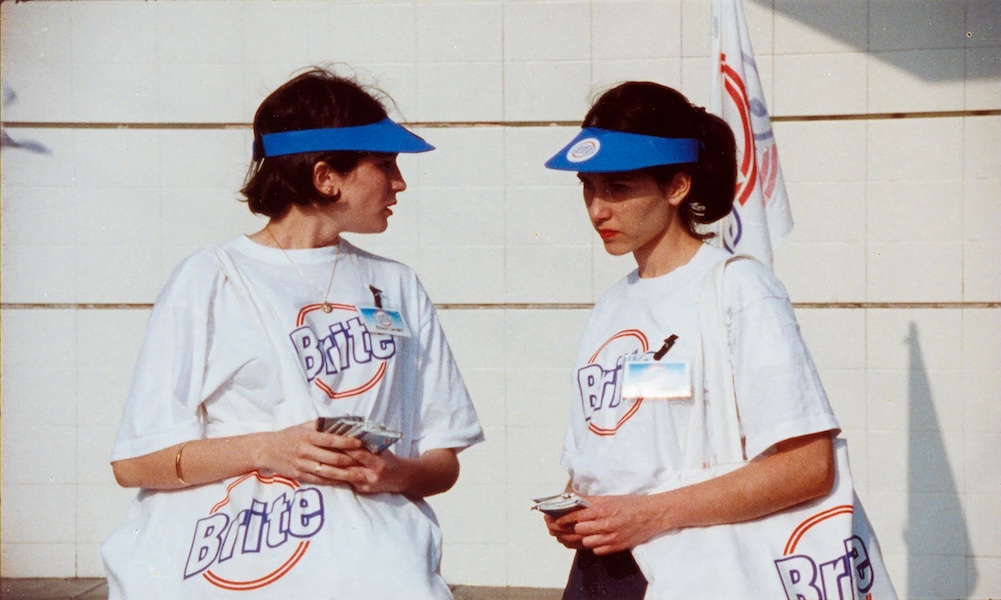
After tracking cinematic movements across Latin America and giving a platform to so many daring filmmakers from the region, Cinema Tropical is getting their own moment in the sun throughout this year with anniversary events that officially kick off this week with a screening of Martín Rejtman’s “Silvia Prieto,” the Argentine comedy that Gutiérrez and Wagenberg first programmed at the Pioneer Theater in 2001 (pictured above), at the Brooklyn Academy of Music, followed by a can’t miss tribute to both Cinema Tropical and the revered nonfiction Flaherty Seminar, which is turning 70, at the Anthology Film Archives on March 18th, appropriately titled “Defiant and Playful.” Ahead of what will be an even more exciting year than usual for Gutiérrez with more special events planned for 2026, the director of Cinema Tropical graciously took the time to talk about the organization’s past, present and future and the challenging and rewarding work of lifting up an entire culture on screens and off.
How did the whole project of Cinema Tropical come about?
The origin of the project started at New York University [where] I did a master’s in cinema studies. That’s where I met Monika Wagenberg. We met in a Brazilian cinema class and from there, we started thinking about ways that we could bring more Latin American films to U.S. and particularly New York because at the time very few filmmakers from the region really traveled to the [festival] circuits. We knew back then that the system was not really open to Latin American and and Latinx cinema in general, and the system is still very Eurocentric. But when we graduated, Monika got experience working in film festivals and distribution and I got experience working in nonprofits, [always] working around film and with both our experience, we had heard in 2001 that there was a new theater in the East Village and we very naively knocked on the door and said, “We love to screen films from Latin America.”
It grew very organically in the sense that we started as a Cine Club at the Pioneer Theater, but then we’d do special one-offs. The second event that we did as Cinema Tropical was a special screening of “Amores Perros” with the actor and director and shortly after, we knew that we could expand to doing other type of services and from a Cine Club, we became de facto distributors because most of the films that we were showing didn’t have that distribution in this country. From that Cine Club, we created a theatrical circuit in 13 cities around the country and that gave us the opportunity to become distributors. Since we had a limited budget, we always did the publicity in-house, so we also became de facto publicists and I do feel really proud that we created this fluid structure because I think that’s a big problem of the film world. It’s so fragmented by different interests — by the programmers, by the distributors, by sales agents, you name it — and a lot of times those agendas contradict each other or are not in the benefit of the audiences or the filmmakers. So in that sense, we’re basically looking for opportunities for more films to get seen by more people.
One of the things I’ve admired so much is how decentralized your work is – you aren’t attached to a specific theater to show movies, although obviously you’ve cultivated so many ongoing relationships with venues, and you aren’t beholden to the calendar as far as when to present movies at a certain time. Was it much of a decision to keep loose like that?
Very few people know this, but actually the idea behind Cinema Tropical originally was to have a theater of our own. We started with that idea but then I’m really happy that that we didn’t go that route. It’s very complicated to have a theater. But on the contrary, it gave us opportunity to to work with numerous organizations, with numerous venues. Latin American and LatinX Cinema so diverse and vast that it’s always been important to that we can reach different audiences. Something that informs a lot our work is that we don’t really believe in those categorizations between the art house and the commercial cinema that are still very hegemonic because most of cinema falls in between. So we’re very interested in bringing different types of audiences to different films. We don’t feel that because this film goes to certain film festivals, it can only attract an art house audience, so we’re working with different venues, but also in different capacities. We just worked with “A Poet” with 1-2 Special and with Neon on “The Secret Agent” [where] we were in charge of bringing the Colombian and Brazilian communities to support those films and they responded so well. So it’s about building bridges or going beyond those traditional dichotomies.
The event with the Flaherty would be exciting on its own, but reflects just how broad your programming is – you don’t limit yourself to either narrative or nonfiction films. Was it obvious from the start that you shouldn’t place limits on what Cinema Tropical presented?
Personally and professionally, the Flaherty is very special for me. It’s such an influential and important organization because it’s pretty much the only film organization that really puts creation at the center of the experience. I’ve been arguing for many years now that there’s a there’s a lack of curatorial practices. We select films, there’s a lot of programming, but we choose films based on what we think are the best or [to] our taste and having been a programmer, I think the Flaherty is where many of us If not most who have experience to have programmed the seminar one week really have a master’s degree on curatorial practices because on one hand, you have a dedicated audience and they don’t know what they’re going to see and it’s one of the few places where you can really mix different modes of production and different nationalities. You can mix whatever you want and and that happens very rarely in other venues or in other festivals.
It’s so hard to break from from the traditional boundaries of what we understand in cinema and the Flaherty allows for that. So in this particular case, this program that we’re presenting was presented last year as part of the anniversary seminar, uh, but it was only presented to the Flaherty fellows, so it was not public, and it was great mixing filmmakers from Latin America with the Arab world. It’s very rare that we can have that possibility, [with] contemporary and older filmmakers and creating those dialogues for me is really important. I’m really particularly excited about this program because also it speaks energetically about this political moment and working with Zaina Bseiso, a wonderful programmer who worked for Camden and now she’s with Sundance, we were able to create a larger dialogue, so I’m really excited about this program.
You’ve also been quite successful for creating your own context for the films you present rather than adhering to how others position them. What’s it like to differentiate yourself and these films in that way?
That’s also been such an important element for us. We always knew it’s not only about being validated by the industry or by the film world, it’s how you get validated and particularly working with Latin America, there’s some tropes of what Latin America is, either magic realism or post-apocalyptic societies that [tilt between] good or bad, so we always want to avoid those contexts and offer different ways to enter the works. Probably even more importantly, Latin America became a powerhouse this century. It’s such a vast body of work, but also how Latin American filmmakers have been pushing the envelope from Kleber Mendoza Filho to really unknown filmmakers and if you see the whole scope of it, which is almost impossible because there’s so much production, you know Latin America is really one of the most important places in in the world for film and it’s been that for at least two decades. The problem is the validation because these ideas of what Latin American cinema is sometimes gets very limited, particularly with the European Film Festivals. It’s a very single type of cinema that they validate. So for us it’s opening the scope to what Latin American cinema and Latin America is. It’s such a diverse region and we just get pigeonholed in certain tropes and topics.
I feel like I know what a Martin Rejtman film is because of you and your efforts. What’s it like to build a relationship between a filmmaker and an audience over the course of years in the U.S.?
On one hand, it’s been amazing. We work very closely with the New Argentine cinema when we were starting [with] Martin Rejtman, Lisandro Alonso, Lucrecia Martel, Pablo Trapero, and then seeing how that exploded all over the region — the Uruguayans, the Chileans, the Mexicans — how these different filmmakers emerge and being part of that generation, I feel very proud. But more interestingly now those are big, big names and I’m really proud to have seen the trajectory. Recently, Maite Alberti, the Oscar nominated Chilean documentarian [of “The Mole Agent”], was saying that Cinema Tropical gave her her first award ever. She was the winner of best documentary at the Cinema Tropical Awards 15 years ago and we really feel proud to work with so many filmmakers that are now major stars internationally.
But not only that, we’re working with filmmakers now like Michelle Garza Cervera, [who directed “Huesera” or Gala del Sol, who did “Rains Over Babel,” which was at Sundance. So it’s been amazing how there’s still a lot of new talent emerging in terms of the filmmakers and in terms of the audiences, it’s been amazing for us seeing how the appetite for Latin American cinema has opened up and changed a lot um in 25 years. It used to be much more limited. Now we have such a diversity and audiences react really well. In that sense, it’s very similar to cuisine, particularly Mexican cuisine [where] 25 years ago, it was only enchiladas and burritos. Now you have all types of different Mexican restaurants from really expensive Michelin star [places] to a lot of taquerias. The appetite — no pun intended — has really opened up for Latin American cinema as well.
It’s a year-long celebration. Is there anything you’re particularly excited about on the horizon?
Yeah, part of a 25th anniversary is going to be looking back, so we’re going to be doing interviews, documenting the basic journey of Cinema Tropical, numerous filmmakers and not only filmmakers, but also people behind the scenes, programmers, and institutions that have made all this possible. Particularly right now in 2026, we’re going through a major global change and it’s important to document what has happened within Latin American cinema and leave that as a gift for the next generations, regardless of what happens in terms of funding for production, distribution or exhibition, that they know that we leave them all this wealth of films and community that we’re currently part of. I’m part of a generation that didn’t experience what was known the Third Cinema, the new Latin American cinema for the late ’60s and ’70s. We basically got what was left of it and it was a very important moment in history, but I don’t think it was really fully documented. That’s my concern that our generation is that we leave maps of what we did here for future generations, particularly [with] a lot of films haven’t been fully validated. If we as a generation can’t validate our work right now, we leave enough that future generations in time can validate it at a distance.
I’m experiencing it myself with the breakdown of all this traditional infrastructure in terms of how audiences receive films – it’s a painful time, but also one that brings unexpected opportunities. Do you see it as an exciting time or are you feeling a certain crunch with all these films that can’t no longer rely on conventional channels to see a release?
No, it is a very exciting time. We started Cinema Tropical because there were no spaces for Latin American cinema and the system didn’t really care about our cinema. It was still a very Eurocentric endeavor and the current crisis that we live in in the film industry world is basically because there was no major change of course. The system that we detected 25 years ago that was completely outdated and collapsing, but for us, we have 25 years of experience understanding cinema and understanding audiences and I’ve been arguing that cinema is thriving. I think cinema is our form of our times. There are audiences, but the trick is how to go directly to them. The film world in general is we’ve so absorbed among ourselves in terms of festivals and awards and the audiences don’t care about that. They want to connect with stories, so it’s about taking the time and the energy to really make those direct connections. I’m hopeful in the sense that we have great, amazing work and we have a very dedicated audience. As long as we have those, I can be optimistic.
To keep up with Cinema Tropical’s year-long celebration and their work in general, visit their events page here.