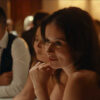
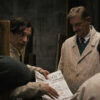
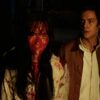



It becomes a strength for Ava (Daisy Ridley) to stop worrying about what’s around the corner in “We Bury the Dead,” with fear driving her to fly to Tasmania when few others dare to enter after a quarantine has set in following a devastating bomb blast. The country needs volunteers for their body retrieval unit and Ava arrives from America, though it isn’t exactly an act of charity when she’s hoping to personally confirm the whereabouts of her husband who left for a business trip in the area and never returned home. She can safely assume he’s dead from the mass casualty event, but without closure, there will always be the nagging sense he’s still out there and out of tears by the end of a lengthy plane ride, there’s nothing that could really faze her once she’s asked to do the dirty work of pulling corpses out of their final residence for identification.
Excavation is what ultimately gave Zak Hilditch the courage to make his grand fourth feature, which doesn’t shy away from an association with the zombie apocalypse genre as Ava starts to find the dead she’s charged with tagging and bagging with her far more cavalier partner Clay (Brenton Thwaites) springing back to life, but stands out when bravery is found as many times in Ava’s quiet moments of reaffirming her personal resolve as it is when she’s beheading one of the walking dead. Hilditch has been delivering unusually thoughtful psychological thrillers with panache since staring out with a bang in the end of days race against the clock “These Final Hours” in 2013 and subsequently dipping his toe into the supernatural with an adaptation of Stephen King’s novella “1922” and the 2019 deal-with-the-devil potboiler “Rattlesnake” (both lurking in the shadows on Netflix), and his latest was rooted in coming to terms with a personal loss of his own and while taking inventory of his late mother’s belongings, the emotions he experienced were unexpected and from unlikely places.
A trip across the outback holds plenty of surprises for Ava and Clay, who sneak off the government mandated path to attempt to track down her husband’s remains at a luxury resort facing the unknown by themselves – or at least until a deputy (Mark Coles Smith) seemingly willing to bend the rules shows up, but it is in private where they’re liable to confront their greatest demons and “We Bury the Dead” finds a unique way to envision Ava feeling the weight of the world on her shoulders when in fact so much of it around her has been rendered foreign to her yet starts to find the strength it takes to put one foot in front of the other that gradually can lead her out of the wilderness. Anchored by a magnetic turn from Ridley and an enjoyably slippery one from Thwaites as her onscreen partner-in-crime, the film was a natural fit at SXSW where it first premiered this past spring and could play to everyone from those in Austin for the dramas that play the festival in the afternoon or their savvy selection of midnight movies and following a year that most would like to put behind them, its nationwide release to start 2026 this week is an aptly hopeful way to start to new year. Recently, Hilditch spoke about giving the intimate tale an epic scope and imagining his home country as ground zero for what can happened after the unimaginable has occurred.
 How did this come about?
Just after my mother passed away, [I had] the idea of grief and how there’s no one there to really tell you how to navigate something like that, so you’ve got to find your own way forward. I wanted to explore that after having to pack her house — my childhood home — and going room to room, just making discoveries. The whole thing just seems so weirdly surreal and intimate and I thought there was a movie there about a character going through these different rooms on some quest for catharsis. And [it was] just the snowball effect [from there], [thinking of] this zombie movie and Ava Newman, played by Daisy [Ridley], it all started manifesting itself into being.
It does seem to hearken back to “These Final Hours” as far as thinking about the scale of a catastrophe like this and putting that on film in an intriguing way. Did that inform how you developed this?
The DNA from that film runs very strong through this one and I very much see this as a spiritual successor [since] “These Final Hours,” I was exploring, the every Australian everyman on the last day on earth and with this, I wanted to look through the female gaze at the idea of motherhood and a future cut short and all those really important themes through grief. What was the last day on earth [in “These Final Hours”] is now a zombie apocalypse. I love movies about the ordinary person dealing with the extraordinary and those are the movies I love trying to create.
What was it like to find the right cast? For Daisy, it seems like a real opportunity to show how expressive she can be without a lot of dialogue and Brenton Thwaites is quite unexpected, often playing an innocent, but this character is anything but.
Never in a million years did I think I’d have someone as just amazing as Daisy come on board something that I’d written, and she absolutely just knocked it out of the park. She made my words on the page just a living, breathing human entity that was so far beyond my wildest dreams of who Ava Newman might even be. She just took it and made it her own and if you can find someone to do that with your script, it’s one of the most amazing things in the world.
And Brenton had never really been offered something like this from what I could tell from his career up until that point. He’d played the very young man, like Johnny Depp’s son in “Pirates [of the Caribbean],” but this is definitely a different muscle is flexing, just [showing] how funny he is and that Aussie larrikin [spirit] that just runs so strong through him. He’s just such a good dude and all those moments of levity in “We Bury the Dead” are because of Brenton. He’s just a great yin to Daisy’s yang, given how extreme and full on and sad her journey is. I just love road movies as well, [and I thought] who is the worst possible person that could be paired with this character right now to just watch the fireworks happen? And it was someone like Clay and Brenton, like Daisy, just absolutely tore the role that I’d written and took it in a place I just did not see coming.
 It surprised me to learn early on you actually envisioned this taking place in America when both culturally and geographically, the Australian setting adds so much to it. What was it like to make that decision?
When I first started writing the first draft, I was living in Los Angeles at the time, so I thought “This is a big American story, I’m going to set it across the whole country. Millions of people have died” and it was almost just too big for its own good. After COVID, I moved back home to Australia and then I toyed with maybe just a bigger island, but not a continent and then it just made sense to make it a truly Australian movie and have an American — Ava Newman — as a stranger in a strange land, somewhere like Tasmania, where it’s only half-a-million people, but what if they’re all wiped out in an instant and it’s just so rugged and hard to get to that place? I’m so glad that location started getting more and more intimate until it was just an island of half a million people. It just made the movie feel a bit more realistic as well.
And as hard as it is for Daisy’s character to traverse Tasmania, it was equally hard for us to shoot there, so we didn’t. We actually doubled Tasmania here in Western Australia in a town called Albany, which is at the very south of the continent, but it was a match and I love a good road movie and whenever you can just milk those drone shots and show a landscape for what it is, I’m all about it.
The other thing that I’d read about earlier iterations of the script was that it didn’t involve zombies, but it seems like you’ve been inching closer to such a film since “These Final Hours.” What was it like to finally do one?
Yeah, like bit by bit, they started creeping their way in, but those initial drafts, it was the same kind of movie, but I imagined [the dead] don’t come back at all. It was only when I decided, “dare I do this? Do I have anything new and interesting to say in the zombie canon?” that the idea of unfinished business clicked and how that overlaps with Daisy’s character. That’s when people really started giving a shit about the script because it was a unique in to the zombie world that we thought we knew so well. But yeah, if you look at the back catalog, it was inevitable, even touching on it a little bit with Molly Parker’s character in “1922,” I got to play a little bit in the zombie/ghost wheelhouse. I truly never thought I had a zombie movie in me, especially when I started writing this script, but boy, am I glad that I decided to just go for it. It really just adds an extra element that the movie really needed.
One of the great wrinkles you add is how you’ll let the audience imagine what happened at the time of death for a lot of these people since their surroundings say so much about them. What was it like to think about?
I love all that stuff. These little intimate moments going into someone’s house who’s died in there, like what did they leave behind? Were they having sex with their partner in the shower? Or were they just simply sitting down on their favorite chair with a cup of tea? I love the minutiae of all of that and the surreal mundanity of all of that, and how horrifying you can make that. From a script level, there were so many other examples of that, but we couldn’t have it all in there. We only had 25 days to shoot, but I love all that stuff in the first act when we just are making those discoveries with through Ava’s point of view. I wish I could have had more of that. I love the world building, but we had to just get on with things.
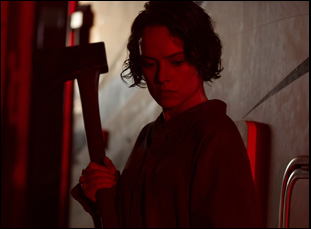 Was there something you were particularly proud to have pulled off on a tight schedule?
I don’t want to pull one out over the other, but getting the bus and figuring out how we were going to turn the bus on its side, we were so behind that day and it was massive stunt work. There was a lot that went wrong, but then you just adapt on the day and as you’re losing light, you just got to go for it. If we didn’t have such a great team, we wouldn’t have been able to finally get the take that’s in the film and of course, Daisy was absolutely crushing it. But when you’re already behind on a day and you’ve got to flip a bus, it’s never a fun thing to experience.
The sound design, particularly the clicking sound of the zombies, was really effective. What was it like to experiment with things back in the edit?
It was so fun. I had such a great sound team and from day one reading the script, they were most excited about what they were going to do with that teeth grinding sound. The results speak for themselves now. I’ve been able to travel the world and see different audiences all have the same reaction to that teeth sound when it lands. There’s certain people that really can’t even handle it. And I feel like it’s a job well done, just pushing the envelope as far as we could.
“We Bury the Dead” opens in theaters nationwide on January 2nd.