

If you didn’t know better, it could seem like the dial tone that can be overheard in the first few seconds of “Still Standing” might last forever as people from Altadena await the results of testing done for toxicity in the area after the devastating brushfires that overtook Southern California in January 2025. The homeowners in Victor Tadashi Suarez and Livia Alback Lipka’s moving short doc find themselves in limbo, mostly grateful to still have homes to return to when so many lost everything in the blaze, yet exactly when they can go back is up for debate when the air quality could be too dangerous and beyond a smell test, chemicals such as cyanide and lithium can only be detected through proper inspection, so residents must wait on their insurers or the state to give the all clear, requiring unfathomable patience given the number of claims that came pouring in.
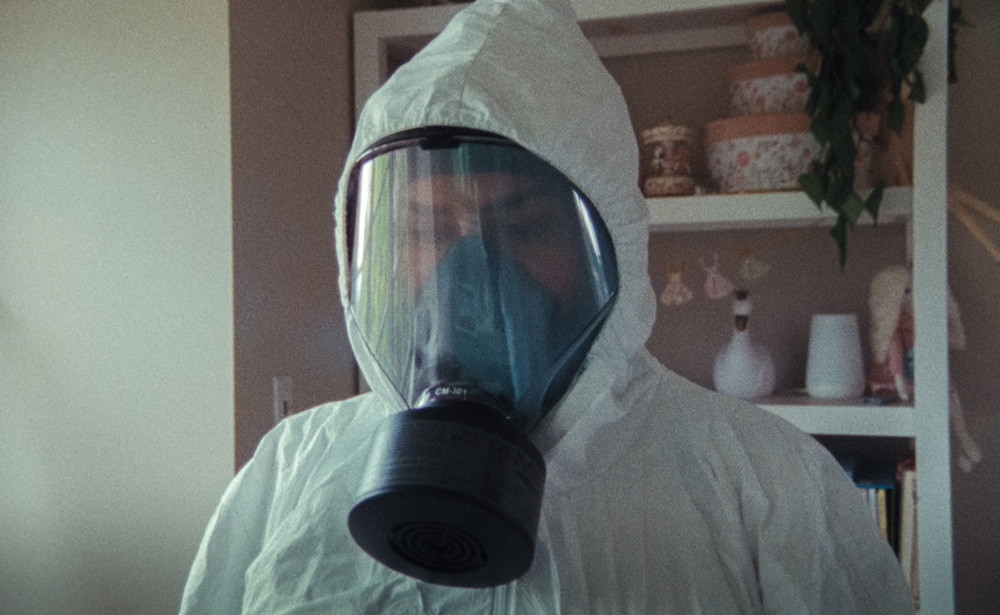
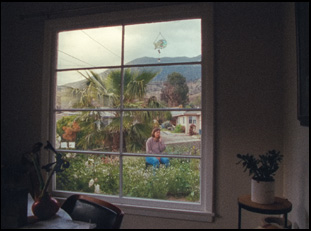
The stasis is brilliantly captured by Suarez and Lipka, who collect images on appropriately weathered 16mm from inside the empty houses drained of life while passionate phone calls play over it from those eager to get back in, evincing a dire situation in which the lack of a response only deepens the anxieties that grow as toxic in the air as any of the chemicals. It’s hard for anyone to know what to think when — as one resident relays the word he hears back – they are “the lucky unlucky ones” when there’s no moving forward when there’s no moving in immediately, and everyone begins to make their own personal assessments of whether it’s safe to return, based less in any scientific evaluation than simply how they feel, perhaps throwing a gas mask on as a measure of protection or not. When the situation is surreal, it’s only fitting that the film is introduced with a peacock spreading its wings as an exotic creature that isn’t frightened of resettling and with an ethereal score from Roy Werner weaving in and out, competing with organic sounds as if residents are still locked in an ongoing battle with nature, the unnerving short is likely to rattle around in your head as the dilemma does for its subjects.
With “Still Standing” recently culminating a celebrated festival run with an online premiere via POV Shorts – it can be seen directly below – after traveling from Sundance to Poland’s Cameraimage this past week, Suarez and Lipka graciously took the time to talk about how they were drawn into looking at a side of the wildfire destruction that was less documented, having to determine their own comfort with going into homes of varying levels of contamination and telling a story as much through sound as through cinematography.
 How did this all come about?
Livia Alback Lipka: We live in Los Angeles, about 10 miles away from the burn zone in Altadena and in the immediate aftermath of the fire, everyone was talking about the homes that had burned down. There was a lot of global attention on that tragedy, and at the same time, there was this separate, quiet horror unfolding, which is that thousands of other homes that were standing but contaminated. We first learned about this through our very close friend Roy Werner, who also composed the score — he’s a musician, and he and his wife and their infant were displaced. It was a very DIY project where [we thought] no one’s telling this story, so [we said] “Let’s go to Maggie and Roy’s house and film and see what we think.”
Their home was the first we filmed in and from the minute we walked in, there was a surreal, frozen-in-time landscape that felt like Chernobyl. Something very shocking and psychologically psychologically horrifying for the residents going through it was unfolding right in our backyard, so we just really felt strongly there was an important story to tell. We wanted to tell it on film and to be short and experiential so that somebody watching it, finally as they can at home, can for ten minutes feel the terrifying suffocation and horror of being inside one of these contaminated homes.
It’s interesting you mention Roy up front as being part of the inspiration because the approach seems rooted stylistically as much sonically as it is visually in evoking the atmosphere. What was it like figuring out how to capture what’s in the air?
Victor Tadashi Suarez: We wanted to use all the tools possible to communicate the sense that we felt standing in those homes. Like it was an untouched domestic scene, but we’re all in masks and everything is untouchable, and we wanted for the audience to feel like they’re transported to this alien landscape, so nothing is as it seems. On the one hand, we were shooting on 16mm film and embracing the grain and dust and debris that are transferred onto the negative so that we get this like sense of thick atmosphere that you’re looking at. But then the same time sonically, we created this soundscape where also nothing is as it seems. We populated the soundscape with the hums and whirrs of the electronic things that were responsible for creating the contaminated air, like Teslas and microwaves and fridges, so when you see a car passing, it’s not actually the sound of a car, and i’s our sound designer, Bijan Sharifi, who’s amazing, who put in the sounds so you hear the things that are contaminating.
Livia Alback Lipka: I think anyone who lives in California is probably familiar with those sounds, but the irony is these electronic cars which are a good thing for for the environment, when there’s a wildfire, they burn and they release a bunch of lithium and other stuff that’s actually one of the most contaminating things in the environment, and [because] film is a physical medium, we wanted to bring it into the space, as Vic said, to actually contaminate the film itself.
Victor Tadashi Suarez: We also, just for fun, printed all those dialogue stems, the sound effect stems, and the music stems to cassette tape before we put them into the final mix, just so there’s that contaminated [feeling].
Livia Alback Lipka: And all of the interviews are either conducted by phone or they’re the actual calls um between residents and their insurance companies or adjusters because we wanted to replicate that disembodied experience of feeling dehumanized and passed along. And while the common sense in storytelling is to choose one character and focus on that person, we decided to do something more experimental here because thousands of people are in this situation. It’s dehumanizing and we wanted to replicate that experience in the way that you hear intimate stories, but it’s a collage of voices rather than kind of one very focused, traditionally structured narrative.
 Because this is such a sensitive situation you’re entering, what was it like approaching people beyond Roy to participate in this?
Victor Tadashi Suarez: It was very delicate. Through our friend Roy, we were able to connect to some other people in Altadena, but a lot of it was cold e-mails and calls to the system they had of block captains. So we’d call block by block in Altadena to see if they were interested in participating, and I think a lot of people at that time, because when we started, there really wasn’t much coverage at all about the people with standing homes, so even though they were going through this really terrible, tumultuous time, they wanted their stories to be told. They were just happy to be seen, so a lot of people were very keen to let us in and let us film their their homes and their routines.
Livia Alback Lipka: I think as with any public service journalism, you have to approach it with sensitivity. There will always be some people who are not in the space to share and others that understand the value of communicating their own experience for both a healing process for themselves and for a greater good of informing people about what is happening. For all of our participants, I think that was the case. They were fully willing and shared with us what being part of the storytelling process gave to them as well, as we were trying to communicate an almost invisible danger that to the untrained eye just looks like a dusty house, which was the attitude these residents were getting from their insurance companies, like, “Oh, it’s not a big deal, it’s just a bit of dust, just vacuum it up.” But it’s actually very, very dangerous and our job was to make that invisible danger visible and threatening through the experience of film and then in doing so to make the invisible struggle of the residents visible.
 Did anything change your ideas about what story you were telling as you were working through it?
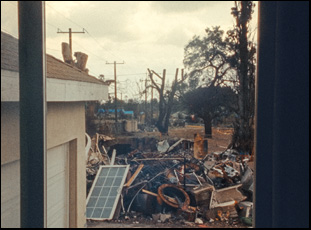
Victor Tadashi Suarez: The biggest surprise, which continues to this day, is that this story went on for so long — it’s still ongoing. When we first started, we thought we’ll go film for a couple of weeks in these homes before they’re cleaned up and It’ll be a short little story. But these homes were stuck in time and out the window, you see the homes that burned down and the progress being made through the months, like okay, then the plot is cleared and now there’s new buildings coming up, but all the while, months and months later, these homes [that didn’t burn down] are still exactly the same as they were, frozen in time.
Livia Alback Lipka: Yeah, people fled [during the fires], so there were dishes in the sink, covered in mold that had literally been there for months. As filmmakers, we had an anxiety, like “We’ve got to move fast and tell this story,” but that wasn’t the case at all.
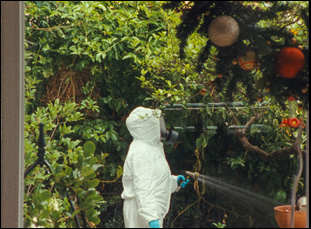
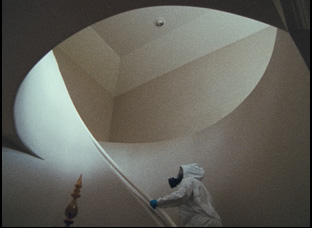
Victor Tadashi Suarez: The other surprising – and challenging — thing, and it’s what the whole film’s about too, is that there’s no guidelines for how safe or not safe these toxic homes are. Being there to film it was tough because everyone we filmed with basically had a different safety and risk tolerance. They made decisions for themselves about [whether] I’m going to wear a 100 percent hazmat suit and or a full face shield respirator like you see in some of the film. And then some people would wear just like a cloth mask or nothing at all. So it was tough for us to know as we were filming what the line was for our own safety and if we were being crazy or if they were not being safe enough.
Livia Alback Lipka: And our experience of trying to determine our own risk threshold as people who were only in these spaces temporarily was like a tiny window into the experience of our participants who were going through this crazy-making decision tree about what risks they felt comfortable taking. Like how do you make a decision between your health and going home? It’s an impossible decision and one that an individual person shouldn’t have to make. Because I think that we all imagine when we’re there’s a terrible disaster like this, there will be some help, some guidelines, some information that give us a safeguard around that kind of decision making and when there isn’t that, it can be really devastating and terrifying for people.
Victor Tadashi Suarez: It made us insance. We’re like coming back, wiping down our equipment.
Livia Alback Lipka: It was just a tiny little piece of the experience of being in these places for a short time, but it’s really unimaginable what the residents of these homes are going through because it’s not simple. They can’t just sell their homes. And so many of them are still displaced and still unsure of what will be next for them.
 The strange, surreal experience is set up perfectly by the opening image of a peacock that’s walking around the ruins. How did that shot come about?
Victor Tadashi Suarez: That was the very last thing I think that we shot.
Livia Alback Lipka: There are a lot of peacocks in Altadena. It’s known that this community of peacocks roams around there, and we were like pretty much done with the edit and Vic went back to just do some sound pickups. But he came home and told me…
Victor Tadashi Suarez: I was wandering around, just recording sound and then suddenly I’m like, “Oh my god…” I came upon a completely surreal scene of these peacocks doing a mating dance inside of the cavities of these former homes. Their feathers are out and they’re slowly spinning in circle, ruffling their feathers and making these crazy noises. I sent a video to Liv…
Livia Alback Lipka: He didn’t have his [camera] gear. He just had the sound stuff, so he came back and told me and we were just like, “We need to go back and shoot that right now.”
Victor Tadashi Suarez: But it’s such a pain shooting stuff on film. It’s a whole thing.
Livia Alback Lipka: But we had already had a little bit of a bird motif because we were inside one of the homes where someone’s walking around with a gas mask and we could just hear this tweeting and all three of us were trying to figure out what is that? Where is that coming from? Is there a bird in the house? We were looking around and couldn’t find anything. And then the woman we were filming with walked up to her door and [said], “Oh my God,” so much time had passed, but it was springtime and there were little baby birds. The mother bird had built a nest inside the Christmas wreath on the door and the eggs had hatched and they’re all living in this nest in the wreath, which was a very moving moment and also signified the passing of time and life moving forward as these homes remained stuck. So that was one of those last minute decisions where we were almost packed up, but [thought] “Nah, we’ve got to shoot this.”
It came out well. What’s it been like to share with audiences?
Livia Alback Lipka: It’s been so wonderful. We made this film thinking it would maybe something we’d put online, hopefully we’d get a Vimeo staff pick and we made it 10 minutes because we just wanted to get the story out. We didn’t expect any of this, so when we got into Sundance, that was truly shocking and an amazing experience. Since that moment, it’s been a really incredible ride where we’ve gotten to travel and experience the artistry of all of these other filmmakers from all over the world, especially shorts filmmakers. And we often watch shorts online, so to sit in cinemas around the U.S. and also the world and watch these short films — and the documentaries this year have just been outstanding and impactful and meaningful about so many varied topics — we’ve made wonderful friends this year and it’s just been a really great and unexpected ride.
“Still Standing” is now streaming here.