


Most filmmakers are wise to cut their darlings in trying to shave down their films to their fighting form, but over the years, Todd Stephens knew he had trimmed a little too close to the bone on his second feature “Gypsy 83.”
“I remember we had deleted scenes on the DVD and for years and years, people would see it [on there] and would always be like, “Why did you cut the scene out?” Stephens recalls of a moment between friends Clive (Birkett Turton) and Gypsy (Sara Rue) that deepened some previous bit of exposition as they hit the road from Sandusky, Ohio to head to New York for a Stevie Nicks karaoke contest but seemed unnecessary to moving the story forward. “So I always knew that I had unfinished business. It’s the only one of my films that I didn’t like how the edit turned out, so I always had made it my mission to think someday I’m going to recut ‘Gypsy.’ I didn’t think I ever really would, but then somehow I was stupid enough to do it.”
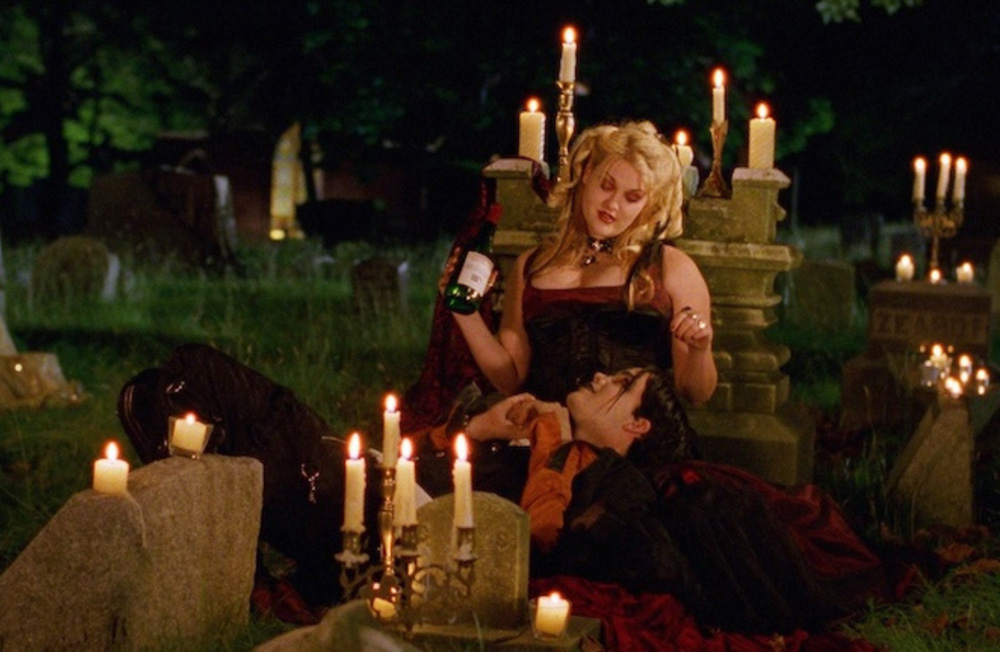
Perhaps Stephens’ wallet wouldn’t thank him when the cost of restoring “Gypsy 83” to his original vision would be costly in any number of ways, especially when it involved tracking down the original film elements to unexpected ends and he wasn’t going to cheap out on adding to an already impressive soundtrack to keep the tunes going in a longer version of the film, yet audiences surely will as a new generation have a chance to fall in love with its central misfits and original fans of the film will see them in a whole new light. In spite of Stephens’ reservations about the final product, “Gypsy 83” gained a cult following as it took three years from its festival premiere in 2001 to get a more general release, caught up in the malaise of a post 9/11 landscape. Yet the road movie was ahead of its time as it spoke to a close friendship between the goth hetero Gypsy and the openly queer Clive, both of whom don’t fit in their industrial town that’s seen better days, and when the two already dress as if they were members of Fleetwood Mac and Gypsy really has the pipes to potentially win a contest, getting up and singing “Nightbird” seems like a much-needed ticket to freedom, as long as Clive’s beat-up Trans-Am will hold out.
Stephens took inspiration from the real “Night of a Thousand Stevies” he experienced for himself as a young man being introduced to the city and after growing up around what felt like the inescapable cul-de-sacs of suburbia, he captures the energy of driving through the Holland Tunnel for the first time and feeling the sense of possibilities, particularly when boosted by the confidence a close friend that might be elusive otherwise. As the film returns to theaters via national rerelease from Altered Innocence, Stephens spoke of how the films he made after “Gypsy 83” emboldened him to return to what he always felt was his most personal film, the wild goose hunt of retrieving materials for the original film that scattered to the winds after it was initially completed and seeing the film resonate now with those around the same age now as Clive and Gypsy.
What made you want to revisit this now?
When the movie came out many years ago, it had trouble getting the proper distribution because distributors didn’t know how to sell a story that had queer content but wasn’t really a gay film. They kept saying, “I don’t know what the movie poster is, I don’t know how to market it,” and it just wasn’t the right time for a movie about an intimate but non-sexual relationship between a queer man and his female best friend. So times have changed in that sense, but the fact that it was not super well-received commercially and it also got some terrible reviews of people not understanding it, I kind of got my feelings hurt, so I went and made these crazy comedies, “Another Gay Movie” and “Another Gay Sequel,” that I love and adore, but they’re from another part of me and they’re from my heart too, but it wasn’t as personal.
It was after I made “Swan Song” and that went so well that I thought, I think I finally have the guts to heal this old wound and really re-edit Gypsy in the way that I always wanted it to be. I knew the 25-year anniversary was coming up and we were originally trying to get it done for the 20th, but because of a lot of technical problems, it took over five years to get the whole thing done, which is crazy.
From what I understand, the negative had to be retrieved from a vault in the desert…
The lab that [we used] went out of business in New York City and we just didn’t think to be on top of it. I couldn’t find what happened to the original cut negative of the original film for a long time and somehow I almost had to become like a private detective and tracked it down. It wound up in California, out in the desert in a vault, and they didn’t want to give it back to me because they said I couldn’t prove that I owned it. I made friends with the manager who basically one day said, “I’m just going to put it outside, if somebody wants to drive up and take it,” so Frank [Jaffe], the distributor at Altered Innocence went and picked it up.
That was the original film and then the rest of all the outtakes were in my attic for many, many years, and they weren’t stored properly and weird things can happen to film. The worst is when you open up up a film can and it smells like vinegar. That’s when it’s completely deteriorating. Luckily it wasn’t that, but there had been some mold that grew on some of the footage that we had to scientifically remove and it was a long process. But the fact that it was shot on film, nothing looks like film. It’s just timeless. So finally getting to really dig everything out that was in the footage was so gratifying to me because I had never seen the film that way. There’s so many details and stuff that I never even knew were there.
Was the music difficult to clear? It’s got an incredible soundtrack and I know a lot of things haven’t made it to streaming because of the rights issues.
The past songs that are licensed were licensed forever, so those didn’t have to be relicensed, but there are more new songs that I always wanted in the film and was not able to get the rights to back at the time. A lot of the songs like the Echo and the Bunnyman’s “The Killing Moon” and Cocteau Twins I had originally written into the script when I first wrote it, so It’s just another aspect of turning it into the film that as I had dreamt it initially and it was a big job that took over the course of a year or two to get all those songs cleared, but we were persistent.
When “Gypsy 83” wasn’t just a key part of your career, but part of this Sandusky trilogy connected to your upbringing there, what’s it like to revisit in that way?
Yeah, I’m very inspired by my hometown. I always say I love it and I hate it. My family still lives there. My mom still lives in the house I grew up and my husband Tim and I are going to go drive back to Sandusky to visit in a week or two. We’ll drive the same route that Gypsy and Clive drove to get to New York, Route 80 and we’ll pass the rest stop where they hung out. We always stop there and it always looks exactly the same as it used to. I’ve just found there’s nothing like home, whether love it or hate it, it’s part of your DNA, and it just always has been inspiring. “Gypsy 83” is about trying to escape home and find your place outside of home in the world. I find as I get older I’m drawn back more — maybe that’s what “Swan Song” was about a bit — and my hometown has changed a lot for the good. It’s gotten a lot better there, in terms of being queer or different. It’s not perfect, but that’s really inspiring to see a place that you tried to run away from that it can heal itself to a certain extent.
Was there a moment when you were putting this together where it clicked into place that it really did feel like the version that you had always had in your mind?
Yeah, I’m a film professor at the School of Visual Arts in New York City and I did a test screening for my students and I don’t think any of them had seen the film before. The film is two hours and 18 minutes long now, and one thing I was concerned about was is it too long? And everybody just loved it. It really went over really, really well and you have them fill out forms anonymously to give critiques and nobody thought it was too long. The film really touched them and I found that the film is still relatable to young people now, as it hopefully was back then. That made me realize that I was on to something and it was all worth it.
“Gypsy 83” will open on August 14th in New York at the Quad Cinema, August 21st in Los Angeles at the NuArt Theatre, August 26th and 27th in Seattle at the SIFF Film Center, and special one-night screenings at August 27th in San Francisco at the Roxie Theater, August 29th in Houston at the River Oaks Theatre, August 31st in Nashville at the Belcourt Theatre, September 3rd in Philadelphia at PhilaMOCA and September 11th in Denver at the Sie FilmCenter.