



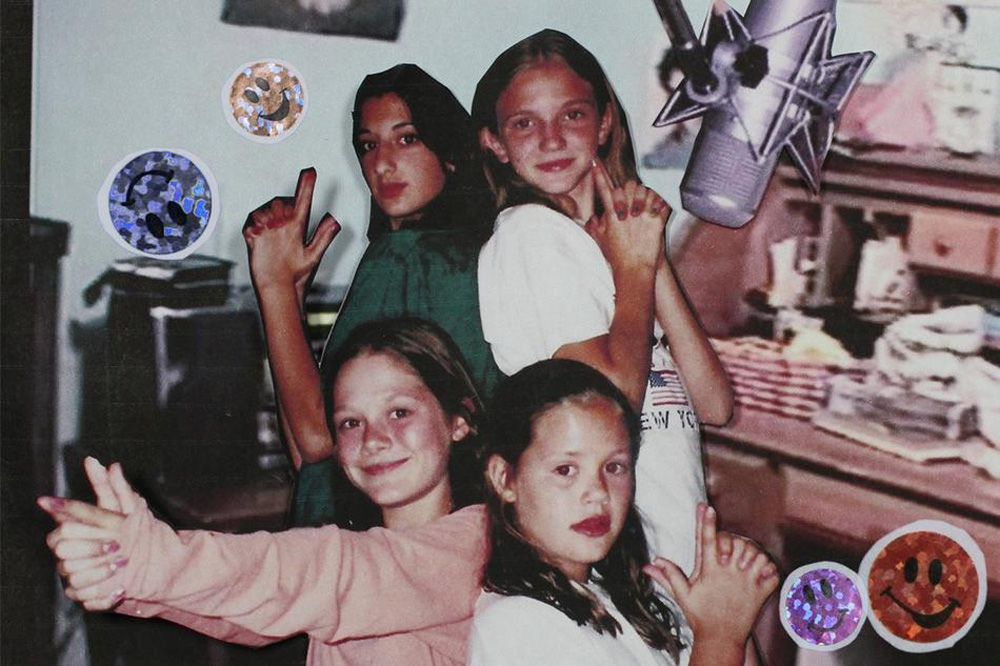

At a certain point in “Summer 2000: The X-Cetera Story,” Ayden Mayeri admits she wasn’t thinking about turning the story of the band that she and friends Jessica Hall and sisters Janet and Mary Washburn started as a lark as girls growing up in Santa Rosa, California Into a documentary. What’s left unsaid is that the temptation was surely there for the filmmaker, building on a successful career as an actress in such films as the late Jeff Baena’s “Spin Me Round” and Lilian T. Mehrel’s “Honeyjoon,” to adapt her memories into a fictional film with its irresistible premise of amateurs whose lighthearted recording sessions were discovered decades later by major music critics no doubt attracting a starry cast and crew. That still might be in the cards when the enormously entertaining doc is about as successful a proof-of-concept as you could have, but when “Summer 2000” is about how rewarding it can be to strip away any artifice that starts to become impenetrable over time, Mayeri’s decision to make a film and with her childhood friends first is both entirely appropriate and a pure unfiltered blast of joy.
“There’s something special about the people you went through puberty with — they saw you at your absolute weirdest,” Mayeri says upfront, opening up a treasure trove of DV footage that she shot with the other kids on her block of skits they’d perform together. Even though it was clearly playful, there was always a certain professionalism attached when scripts were actually written by herself and Jessica for all four to act out. When the quartet turned their attention to music, it was the same mix of fooling around with some serious production value when Janet and Mary’s mother Robin had a recording studio inside her humble home and was excited to supply beats to back up the girls’ vocals with lyrics they wrote. The songs didn’t exactly come out like either the Fiona Apple or Spice Girls they were listening to at the time, but had the appealing influences of both as well as inscrutable, enigmatic verses from the mind of 11 and 12-year-olds that were intriguing enough to find sporadic airplay on the local public radio station where Robin’s husband Don was a deejay. Somehow what was recorded on a single CD-R found its way into internet forums and Soundcloud (where at least one present-day listener describes the band that named themselves X-Cetera as “chopped and screwed ‘80s Joni Mitchell”) and the boutique label Numero Group sees fit to put out a proper album on vinyl 25 years later.
It would’ve been enough for Mayeri to simply let the camera roll as she and her three friends reunite to spruce up the recording for mass consumption from a project they never thought anyone else would ever know about, but the improbable story sits more in the background than you’d expect when the filmmaker sees the opportunity to tell an even more worthwhile one given the years that have passed. When “Summer 2000” finds Mary at a content marketing company in Boston, Janet in Denver with two kids and the Bay Area-based Jessica in tech, all too busy to think about anything but work, and even Mayeri, the only one of the four to professionally pursue the arts, longs for again being part of a time of such unbridled creativity, the gathering organically sees the quartet reconnecting with a part of themselves that they might’ve thought over the years was lost. But the director also drives a conversation about how they lost a connection with each other, despite very much staying in touch, as time moved on, as their attention drifted towards romantic partners who offered less in return than their friendship did and the few years age gap between Janet and Mary became an insurmountable impasse when it meant the difference between junior high and elementary school.
A quarter century later, Jessica, Janet, Mary and Mayeri all process things that they obviously neither had the language or the confidence in general to properly articulate at the time, but the filmmaker is able to draw out an interesting parallel by bringing art into the mix in a variety of ways, moving between preparations for the album where they shed any embarrassment about reciting gibberish in the prompts for vocal exercises that Robin gives them and gradually losing inhibitions they have in talking now about what they felt compelled to go through alone, enduring divorces, suicide attempts, emotional abuse and prescription pill addiction that they didn’t seem to know they could share with anyone else. Mayeri wisely doesn’t put too fine a point on it herself and leaves a lot to the imagination when there’s not a lot of X-Cetera’s actual music in the film, but when descriptions of the songs being dark and poppy at the same time accompany recollections that share that dichotomy, there’s no wonder why this album ended up resonating with so many when it seems to unconsciously tap into something true about childhood, particularly for girls, and the triumphant finale is not only earned by the women themselves who can now recognize how strong they were together and less self-aware, but the film itself for leaving no stone unturned. The fact Mayeri didn’t know initially what form “Summer 2000” would take is only further proof that some of the best things start without any idea of what they could become.
“Summer 2000: The X-Cetera Story” will screen again at SXSW on March 16th at noon at the Alamo Lamar 3 and March 18th at 3 pm at Violet Crown 2 and 4.