



Haifaa Al-Mansour has made a name for herself by giving one to all the other women in her native Saudi Arabia where they long sought recognition, first breaking out on the world stage by covertly filming her debut feature “Wadjda” from the safety of a van tucked far away from outdoor scenes were being filmed out of concern she could be arrested simply for being in public and although international attention followed, leading to films such as the Elle Fanning-starring “Mary Shelley” and the Sanna Lathan-led “Nappily Ever After,” her return to her home country has paralleled a cultural shift in the country as a whole (and more than likely contributing to it) as thinking around women’s equality has started to catch up with all the advancements made elsewhere due to the wealth derived from its natural resources.
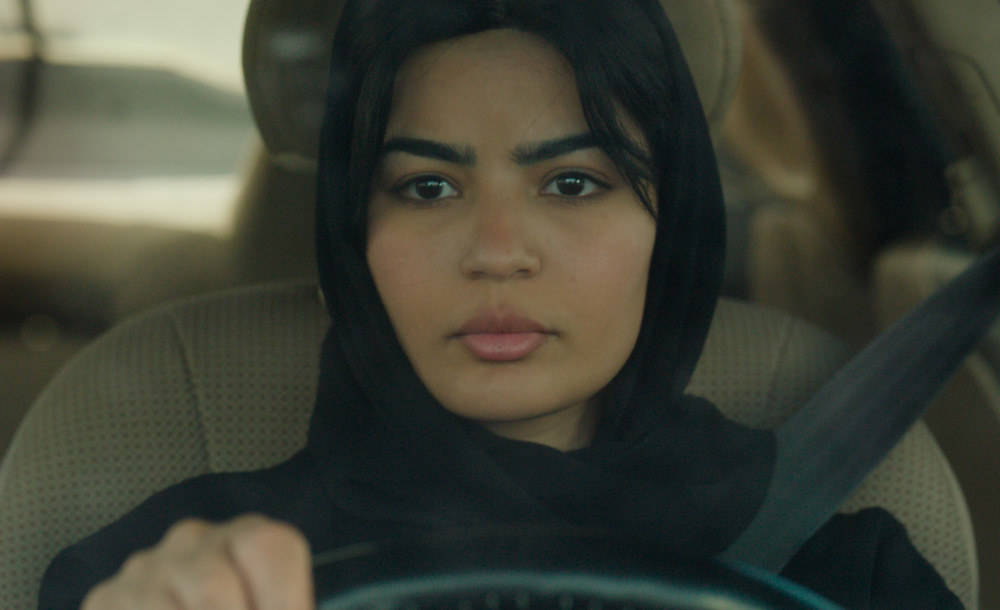
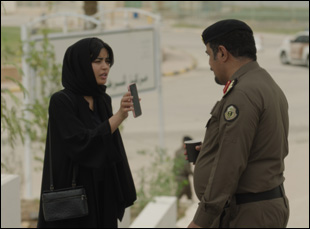
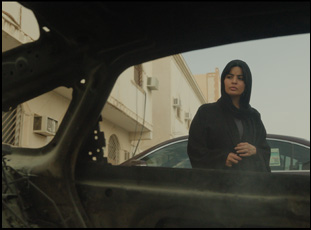
Her latest, “Unidentified,” ingeniously doesn’t put any limits on ideas of what women are capable of, insisting that only positive depictions burnish an unsophisticated view of the fairer sex as a number of women become entangled in a murder investigation that’s difficulty to solve becomes a reflection of the wide variety of issues that still exist in the region. It takes the insistence of a young woman named Nawal (Mila Al Zahrani), who’s largely assigned clerical duties at the local police station, to push the case of an unidentified female murder victim towards a proper probe when it is quickly dismissed by most of the male-dominated department, but Nawal has the encouragement of her superior Colonel Najib (Shafi Al Harthi), who makes her tag along to the crime scene when he wants a female present and when no one else is too interested in following up on the case, she begins to turn up clues of her own.
As Nawal gets closer and closer to finding out what happened, having little guidance on how to properly handle such an investigation besides what she can gather from true crime podcasts when her colleagues won’t offer much help, “Unidentified” reveals how a society that has long pushed women towards hiding their true feelings has prevented so many from reaching their true potential, a glass ceiling that Nawal aims to break as much as cracking the case and her quest to coax women to speak up has implications beyond this one. With the poised Al Zahrani in the lead, the film builds on the success Al-Mansour had on their last collaboration “The Perfect Candidate” in every way when the story told of a novice who gained confidence running for office was in fact the actor’s first time in front of camera and provides a powerful bridge from “Wadjda” to “Unidentified” where Al-Mansour presents what a truly liberated Saudi woman looks like by the end, keeping with the genre expectations of the latter when it comes with a killer twist. After premiering last fall at the Toronto Film Festival, “Unidentified” is now making its way to theaters and Al-Mansour graciously took the time to talk about changes in making films in the Middle East over the course of the last decade, getting addicted to true crime stories herself and leaving audiences all over the world with a lot to think about.
 I know you’re calling this a Saudi trilogy now, but were you always conscious of telling a story like this about young women over time or did making one lead to another?
I always wanted to tell stories about strong women who have agency coming from Saudi Arabia. And I don’t know if you’ve noticed “Wadjda” and “The Perfect Candidate” and “Unidentified,” they all have women with the same last name Alsafan because I wanted to tell the stories of women who are rebellious and who will not take no for an answer and who claim their agency. I think it is important to bring stories like this to women in Saudi that they can watch and see themselves in and by no means am I saying the situation is perfect for women in Saudi Arabia because it is hard and the Middle East is a very sexist place when it comes to women, but I feel it starts with women to change and to give women examples of rebellion like this is very important. So it is exciting to tell a story about a hustler — you don’t want [every character] to be nice all the time.
Did the idea of a thriller come immediately for this? It’s quite different in that regard than your other two Saudi-set films.
No, it didn’t. It took a while to get something after “The Perfect Candidate,” [which] came right at the pandemic and after the film was released, we went on lockdown and I binged “The Forensic Files.” I watched it religiously for hours at home and it was just fascinating for me and how much it culturally enlightened me. I went to places I’ve never been to, like Oklahoma or Ohio or Tennessee, and know what small towns [there] are like and see how people eat and what the furniture is. In that way for me, it was fascinating and nothing like I thought. Then the crimes are very simple. It’s always money and love and [I’m thinking] “Just be creative, guys.” [laughs] But those are always the motivations. Aside from the cultural insight, I loved it and it excited me to tell a crime story because I thought it is an amazing vehicle to open my culture and people to come and see everyday life and get into someone’s psychology and understand how women could operate in a place like Saudi Arabia.
 Years ago, I remember you telling me how modern Saudi Arabia is when it comes to technology because of the wealth there with super-fast internet and the like. Here, you’ve got TikTok and true crime podcasts all streaming. What was it like to reflect the culture in that sense?
The Middle East is now the biggest consumer for social media. Social media is huge. And it is everywhere and it is similar [to America]. People telling crime stories in America [on podcasts] the same way they do in the Middle East. It is just who we are as human beings. We’re having this common virtual culture and [on TikTok and Instagram] people dress somehow the same, they do the same poses with their phone and selfies. I find that fascinating and it also shows how Saudi Arabia is [moving away] from isolation [where it’s] not part of the bigger world, and I loved that part. And I see Adwa Alasiri, who played that role [of the true crime podcaster], she’s an actual influencer and I loved her energy. So I just [would ask her], “Adwa, would you do that [on your own show]?” And she was amazing. And she did it and it was really fun.
Also over the course of these films, Saudi Arabia seems to have opened up to film production after being quite closed to it. Has it gotten easier to mount something like this?
And “Wadjda,” as you remember, it was very segregated, so I couldn’t go on the streets and I had to have a van and a walkie-talkie [to communicate with the cast and crew]. With “The Perfect Candidate,” it changed so much. I was able to go on the streets and we had permits and it was a lot easier for me to do. “Unidentified” was completely financed in Saudi Arabia, which empowers me not as only as a filmmaker, but also as a producer, which is it is important. I feel it like Saudi Arabia is such an important country in the Middle East and sets the tone for the rest of the Muslim world. We are moving away from radical ideas and embracing more art and film and hopefully that makes the region a little bit more tolerant and calm. It is hard to say that now with all what is happening in that part of the world, but at least in Saudi Arabia we are moving towards modernity and tolerance.
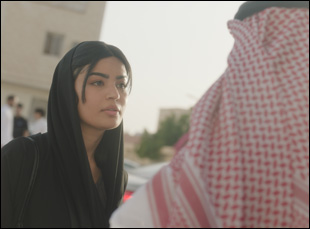 I was so excited to see both Mila and Shafi, who were my favorite parts of “The Perfect Candidate,” come back for this film. Were they in mind as the story started to develop?
Yes, especially Shafi because Shafi is like a big teddy bear. I love Shafi and he is so likable in Saudi Arabia. People love him because he has this kind demeanor about him and it was important to humanize the police, not feeling like the police is only enforcement. It is more getting into the heart of that person and having more of the human part of it and Shafi also comes from a long line of police — all his brothers are, he’s the only one who’s an actor who always claims “I am the failure in the family,” which all artists, we understand. [laughs] But he came with a lot of knowledge of that world and helped us a lot in how police officers move around the place. And because he and Mila worked together before, the three of us worked [well] together and Mila understood the character very well, so she gave me so much beyond what is on the page. You expect from a professional actor to take the role and make it theirs and she did a great job.
And she had no acting experience when you cast her in “The Perfect Candidate,” but now I understand she’s quite in demand.
It’s amazing to see her grow. She’s becoming one of the most important actors in Saudi Arabia and it is really heartwarming to see women claiming the big screen because it’s a lot of male stars and they are always paid more and given the better roles. And I always want to empower female actors from Saudi and give them the biggest role. A lot of male actors will say, “Oh hi, when are you going to make a role for us?” And I’ll say, “I don’t know, maybe never.” I think it’s just important for me as a female filmmaker to empower and write roles for women actors.
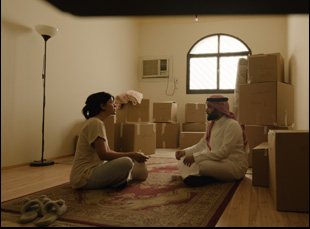 As you mentioned earlier, a police investigation is such a savvy way to show all these different aspects of society simply by following the police around. Did that help you find a structure for this?
It’s a lot of procedure, so I had to learn a lot of procedure, but a lot of the procedure is very international, like this is what you do when the body gets there, etc. But we had to learn it because we wanted to be accurate and the police wanted us to be accurate. We had a consultant from the police and that helped us a lot in [the details of] the investigation, like the the prayer for the woman. I didn’t know that when women die, they don’t say their names in the prayer. It is not because of religion and it’s not forbidden, but that’s just the culture. So I wanted to do the prayer [scene in the film for the deceased] and the mosque and all the people who are doing it, [would say] “No, no, she’s a woman. We will not say the name.” I told them, “No, in this film, you will say the name.” It is important to say the name and even if it is not culturally [acceptable] now, it needs to change. There is nothing against the religion when you go and pray for a deceased person if they are a woman and you don’t say their name because you don’t want it to publicly announced because it is private and it’s shameful. No, not anymore. Now when you pray for the deceased, you need to say their names, whether they’re men or women.
It leads to something quite powerful in the film. And when this packs such a punch with how it ends, what’s it like to see with an audience?
It is really exciting. Editing this film was very important and with the ending, we went through a lot because you want it to land and you don’t want to give a lot. Just the third act was very tricky during the ending, so we had multiple endings until we reached this one. But people enjoy the movie. They just love seeing a woman like that. That speaks to them and makes them feel a little bit like “I’m [intimidated] of you now.”
“Unidentified” opens in theaters on June 19th.