

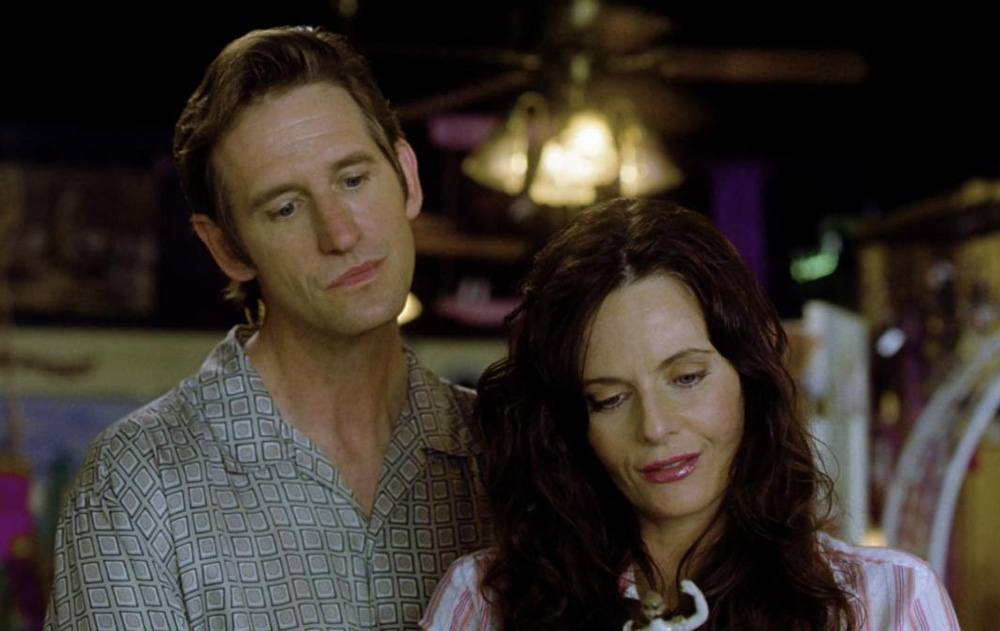

It likely wasn’t too difficult for Ray McKinnon to get into character in “Randy and the Mob” — at least one of them — playing a man well in over his head on the set of his second feature. As a writer/director, he was far more scrupulous than the the entrepreneur he invented who gets in trouble by robbing Peter to pay Paul, ostensibly the owner of a truck stop who can’t stop starting new businesses or investing in them in his cozy corner of Arkansas and eventually needs a loan from some low-level hoods from up north. (He also played Randy’s twin Cecil, Yet over a sweltering summer shoot, McKinnon had just 22 days and a budget of less than $2 million to complete the comedy which had a host of speaking parts for all the friends that the director and co-star Walton Goggins had met along the way at the start of their careers, all of whom just happened to be some of the best character actors in the business such as Bill Nunn, Brent Briscoe, Tim DeKay and Paul Ben-Victor.
You would not know that McKinnon broke a sweat from the final product, a breezy Southern satire in which the filmmaker was surely more successful at pulling everything together than Randy, who had to learn the hard way that he needed to be a little more focused in his life. But it was a heavy lift, carrying more than the demands of simply telling a good story when McKinnon had been at the vanguard of a group of filmmakers from the South in the early 2000s that threatened to shake up cinema as Carson McCullers and Flannery O’Connor had the literary world a half-century earlier. Ironically, work on “Randy and the Mob” commenced to give McKinnon a breather after his debut feature, the harrowing drama “Chrystal” which starred Billy Bob Thornton as a recent parolee who struggles to reintegrate into society when the memory of his crimes still haunts the small town he returns to — the collaboration of the two seemed inevitable when the tandem of Robert Duvall’s “The Apostle” and Thornton’s “Sling Blade” kickstarted a new interest in cinematic stories from the South that led McKinnon and his wife Blount, who hailed from Arkansas and sought to resettle there after an itinerant life as an actor, to launch a production company with their friend Goggins called Ginny Mule Pictures.
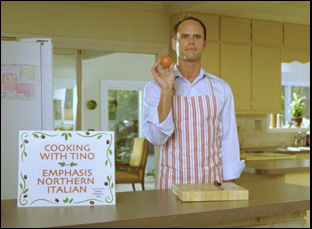
Their first production “The Accountant” would exceed everyone’s wildest expectations, not only charming audiences as McKinnon played an actuary of questionable ability attempting to settle a squabble between two neighboring farmers, but Academy members as well, picking up the Oscar for Best Live Action Short in 2002. But each film under the Ginny Mule banner would involve a long haul as McKinnon and company would bootstrap the films well after the hard work of production on them had ended to protect their independence – and by extension, the singular qualities of Southern storytelling where tortured history is often relayed with a keen sense of humor – and with Blount’s untimely passing in 2010, the effort came to a premature end. “Randy and the Mob” would be her final film, playing McKinnon’s put-upon wife when the reality was the opposite, encouraging him at every turn, and the film itself is rich with other ironies that McKinnon wrings laughs from as his Randy comes into contact with Tino (Goggins), a seemingly alien presence that can help him wriggle out of his debt to the mafia when he has a focus that his human counterpart does not. (As he informs upon their first meeting, “I only listen to the song of the human heart.”)
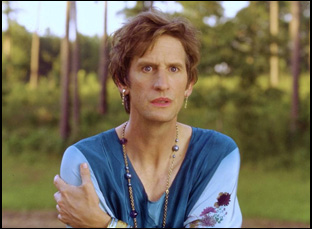
The comedy is ultimately strange but surprisingly profound as Randy starts to see in others how distracted he’s been by trivial endeavors, perhaps alerted to it by his bottom line, but only starting to feel it now in his heart, and for as silly as it gets, particularly when McKinnon is playing scenes against himself in drag, “Randy and the Mob” shows some serious chops. What became cinema’s loss was television’s gain when McKinnon would go on to create the series “Rectify” in addition to his ongoing career as an actor, but a new Blu-ray with both “Randy and the Mob” and “The Accountant” reminds of McKinnon’s gifts as a filmmaker and he graciously took the time recently to talk about how he wore many hats, owing as much to the way Ginny Mule made films as playing multiple characters, luring Burt Reynolds to make a cameo and getting the itch to get behind the camera again.
 How did this revival come about?
I’ve had Lightyear Entertainment rep the two films, and and thankfully they keep them out there and they [asked] “Do you mind if we turn these into 4K and and Blu-ray?” and I’m like, “well, hell, why would I say no?” He ended up getting a print of “The Accountant” from the Academy. because I didn’t have any and then he got “Randy and the Mob” from a vault we still had somewhere and those guys did all the work, so here we are. I can go to the nursing home and and watch a really pristine copy when that time comes. And I tell people, sometimes when you’re directing, you do the nursing room thing, like, “I’m the only one that’s going to be watching this in the nursing home going, I wish I’d done that differently,” so I try to remember to do it the way I want to do it. But that’s how it happened.
A perfect correlation with the opening shot of the movie set outside a nursing home. This one came after “Chrystal,” which was such a heavy drama. Is it something you immediately knew you wanted to do after?
I don’t know. I call “Chrystal” my Hillbilly art film. There’s not a huge genre in that world. It’s supposed an art film, but it’s a lot of grief and I think I did want to to write something that was lighter and more joyful. Ultimately, I wanted the tone of “Randy the Mob” to be like you’re watching an indie Doris Day movie. People are in peril, but it’s not the kind of peril that you think is going to end in sad tragedy. You feel like it ultimately is all going to work out and it’s like a comic fable. It was a blast to me because we’re being foolish day in and day out. What’s not to like?
 Was the idea of playing two characters there from the start?
Oh my god. I think what a megalomaniac. I’d heard some real-life stories about identical twins who had the egg split and they’d both been born, and one was straight, one was gay. “60 Minutes” had done a whole story on it and I thought, “hmm.” Of course I wanted to explore what the culture in in any small town, but in this case, the South can, can do to a person? How do they deal with that [as brothers]? And I thought about this other side of Cecil, which is Randy, and it’s these two sides of the same egg. I jokingly say — but not so jokingly — that I’m a redneck metrosexual. I have these these sides, so it was fun to maybe split them and explore them more extremely.
What was that actually like to pull off on set when you had to act opposite yourself? Obviously it’s a feat of editing.
The first few days of filming I was playing Randy and that was something I was more maybe more comfortable playing and I felt like I could pull off Cecil too, but I just hadn’t really done it, so when I first came on screen as Cecil, it was totally different. But fortunately Walt Goggins, who played Tino, would do the off-camera [dialogue] for the other guy that wasn’t on. So he would play Cecil when Randy was talking to Cecil and played the reverse. He knew the character so well and my way of playing. He really deserves a lot of credit if I pulled that off for helping make that happen.
You couldn’t ask for a better scene partner in general. And you’ve got a solo writing credit for this, but when Walton was producing these films with you, was he actively involved in creating the character or do you get to surprise him?
He definitely heard me writing stuff and then I’d read it to him and Lisa, but I’m always reading all the characters to people, like if somebody is crazy enough to sit down with me, I’ll start doing the whole play. And Walt finally said, “You can’t do Tino anymore. I’ve got to do him,” so then I just gave it over to him and he made it his.
When you had this production company with Walton and Lisa from “The Accountant” on, did it make the process any easier as far as having the foundation?
Hell no. [laughs] At least the first one we were so naive, we didn’t know what was in front of us. It’s always hard, but it’s not a bad hard. It’s a good hard because ultimately you’re you’re going for a goal and and and you’re able to see the fruits of your labors and hopefully those fruits a couple other people will see them. So we knew how to build a movie from the ground up after “The Accountant.” We just had to build one that was a few more days longer, but it’s a reminder [that] I don’t think I’ll ever make another movie in the summer in the South. Because I’m too old, man. That was pretty grueling to play two characters direct and deal with the heat. It’s really hard to run on hills in heels. I didn’t think about that as Cecil. But Walt and Lisa both had my back and they were definitely a creative help in in everything about the film.
 It was interesting to discover that the budget for this largely had been put up by Phil Walden, a record exec whose ambitions were said to make Southern films popular like Southern rock, but he passed away before production of this film was complete. Was this supposed to be the start of something bigger than just this one film?
In Phil Walden’s mind it was. For those of your readers that might not know who that is, he managed Otis Redding and then the Allman Brothers and all these southern bands and became the second largest indie record company in the world behind Geffen Records in Macon, Georgia. By putting on rock concerts, he was able to help finance Jimmy Carter’s presidential campaign and Jimmy Carter said he never would have had a chance without that infusion of money But by then Phil was a lot older, but he still had those grand ambitions. And who knows? Maybe he could have pulled that off. But we loved being with him and his dream and his vision and his energy. We didn’t always love riding with him when he was driving, but that’s another story. [laughs]
You end up with such a great cast of actors. Were a lot of these people in your orbit from other work? Like how does Burt Reynolds end up making a cameo?
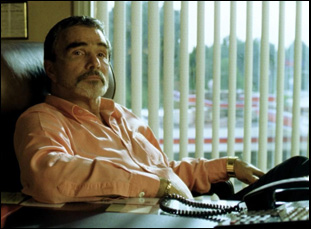
Well, Walton helped. He knew Tim DeKay and then as far as Bill Nunn, I’d worked with him. We did the theater in Atlanta and I love Bill. And then of course, I grew up watching Burt Reynolds. He was the first Southern guy in a movie that was the smartest guy in the room — and he might have been the most crooked guy too, but he was the smartest. And we loved Burt. I did an episode of “X-Files” where Burt played the God character, and I played the representation of the devil and that’s how I got to know him. I showed him “The Accountant” and he really liked it. And then I later I wrote him a letter and asked if he would agree to play this role for one day And he did. What an honor and how excited we all were to have Burt come down and do it. He was awesome.
I’m guessing that might’ve been one of the best days of the shoot, so I had to ask about what might’ve been one of the worst — the day you end up rolling around a landfill, was that great production design or a real dump?
Oh my god. We also had a a stunt guy and we filmed him running down into the dock and he didn’t look like me and you couldn’t get the shot wide enough for him to look like me, so a decision was made, and Lisa was not allowed on set that day, because she probably wouldn’t have let me do it. But I just [thought I’ve] got to do all the stunts. And yes, that was a real landfill, but our lovely production designer Chris Shelton did put all the all the stuff that I fell in – that was designed. But that was a real dump. Yeah, that was that was a great day and a great day to get over.
 I imagine that scene, among others, went over like gangbusters with a crowd and I heard that you had bootstrapped it, going from theater to theater with the theatrical run. What was that experience like?
It won Best Audience Award at the Nashville Film Festival and it was a great movie to see with a with a large audience, particularly with a southern audience because I think they recognize so many of these characters and and not that those characters aren’t really archetypes of the world. They’re just within a southern culture. It’s a definitely a movie to be seen with some people and maybe if you partake in marijuana, you might want to have a hit. So that could enhance the experience.
I suspect that’s true, but I was struck by how philosophical it was.
It’s pretty dry. You have to get used to some of the dryness of it. But dry is good. Dry is our friend. But that [philosophical angle] was a part of the fabric of the story, for sure. Tino, the spectrum savant philosopher.
Do you ever get the itch to direct again?
Oh yeah. I’ve written a television show that I think would really could be in its own way similar to “Rectify,” and this indie film keeps popping up in my head that I want to make called “Self-Immolation,” a comedy. The characters keep popping in my head and I’m like, “I may have to make this.” It just takes a lot of things going right. I think “Rectify” got made partly out of the timing that it existed in and I’m not sure people would make “Rectify” now because they they want something to pop and you have the hit the right algorithm. So we’ll see if I can thread that BB through all those those rings that are going like this, but I still have the desire for sure.
“Randy and the Mob” is now available on Blu-ray.