



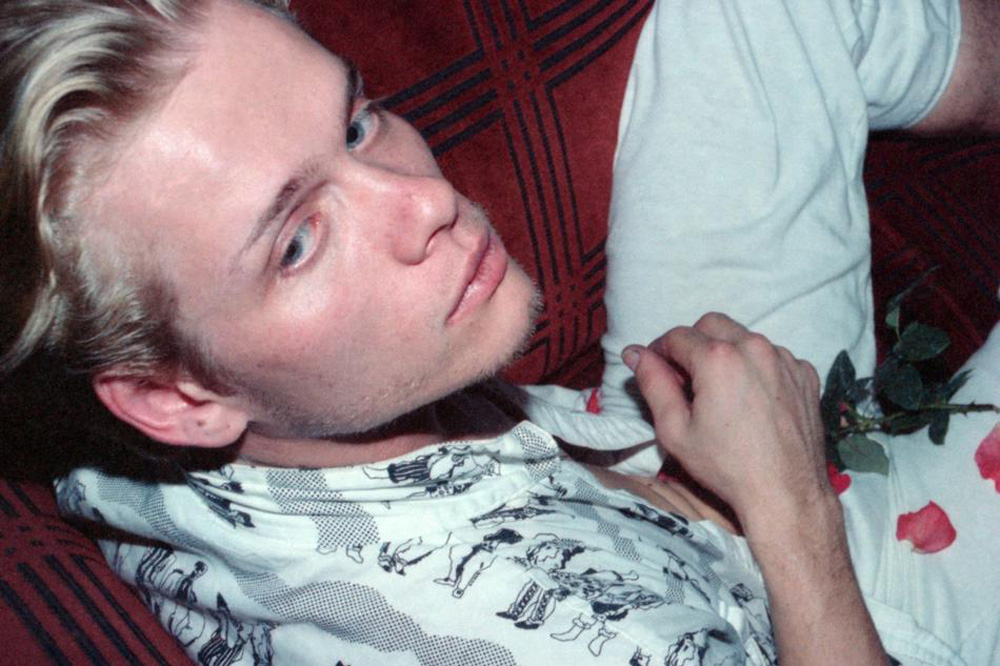

When “My Brother’s Killer” arrived to its premiere at SXSW, it could already be seen as a success when director Rachel Mason’s diligence resurfaced clues that led to solving the three-decade old cold case of Billy London, a 25-year-old West Hollywood man whose death shocked the local gay community when at least some parts of his body were found in a dumpster. The killer’s name can now be readily found online, but fortunately the film transcends its initial form of a whodunit as Mason uses the template of a true crime documentary to shrewd effect, ultimately as interested in what made the case so complicated to solve when it involved a gay man on the fringes of the adult film industry as locating the culprit.
Mason is a fascinating choice to take on the subject, having previously made “Circus of Books,” her warm, lighthearted look at her parents’ longtime stewardship of the West Hollywood adult bookstore where the sale of sex toys could easily overshadow what was special about it as a rare welcoming place for the gay community in times when the lifestyle was far less acceptable to society at large. When the filmmaker knows that she could be helping to reinforce an image that she offered such a strong corrective to previously, there’s something a little heartbreaking about her having to ask her mother in the opening moments of “My Brother’s Killer” whether she knew one of the prime suspects in Billy’s murder actually worked for Circus of Books for a short period of time. That’s about as overtly personal as “My Brother’s Killer” gets, particularly when it adopts a generally slick, dramatic style akin to your usual episode of “48 Hours,” and Mason goes about the grim work of recounting the facts of the case with LAPD detectives Wendi Berndt, who worked on it when it happened, and John Lamberti, who pulls it from the files now for reinvestigation, as well as friends and relatives of Billy’s.
However, the director’s perspective crucially gives a slight but significant distinction when it has such a firm grasp of the scene that Billy entered in West Hollywood and why he gravitated towards it in the first place after moving to Los Angeles from Eau Claire, Wisconsin. The expectation may be for fame, but instead the film makes clear it was to stand out less when he would be among others open about their sexuality in a big city rather than a small town and yet aliases were common particularly when many gravitated towards sex work to keep a roof over their heads. Billy appeared in enough adult films for Mason to have footage of him alive (notably appearing like a drifter, as called for by the narrative), but he was said to have retreated into working behind the scenes as a makeup artist fairly quickly and anonymity that wasn’t necessarily a choice for a marginalized community ends up resulting in another kind of injustice when Billy’s murder investigation is filled with people whose names changed and his death at the height of the AIDS crisis led to an obit that sat besides those of plenty of other men who died far too young and likely didn’t get the attention needed for the case to gain traction to be solved any earlier.
As grim as “My Brother’s Killer” gets going over the lurid details of the case itself and the dark side of the adult film industry as well as describing how lonely it could feel for any gay man in that era of paranoia, the film gracefully offers a counterpoint when it seems as if a community comes together with time that won’t let Billy go forgotten. Mason gives credit where it’s due throughout when noting her own interest in the case was sparked by learning of the murder in The Advocate (noting it wasn’t covered by more mainstream outlets such as the L.A. Times) and a groundswell of people with no official standing or connection to the case prodded a proper investigation, from the true crime podcast hosted by novelists Christopher Rice and Eric Quinn Shaw that gave Lamberti the confidence to dig back into the vault at the police station to Clark Williams, a retired social worker who wanted to busy himself after his daughter left the nest after learning of the case through a Facebook group, and proves to have great insight despite never crossing paths with Billy when they grew up in the same town. It is difficult to find a silver lining on a story as dark as Billy’s, especially to do so organically, but beyond identifying a killer, Mason’s discovery of a conscience in a society that can feel at times may have lost it becomes as satisfying as solving the mystery at hand.
“My Brother’s Killer” will screen again at SXSW on March 16th at 5:30 pm at Alamo Lamar 8 and March 18th at 11:30 am at Alamo Lamar 9.