



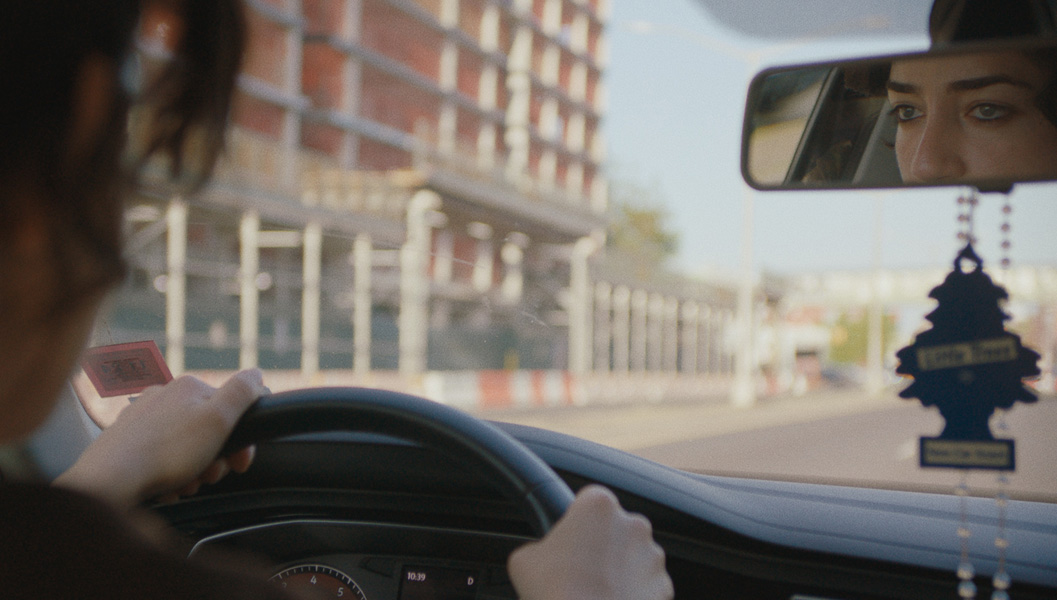

“There’s no time to think about time,” someone can be heard saying in “The Scout,” a truth of contemporary life which makes Paula González-Nasser’s resplendent debut feature feel like even more of a gift than it already is when it seems like a temporary exit from the rat race. Following Sofia (Mimi Davila), a location scout who is invited into various homes with the potential to turn them into sets for television shows for which the owners will be decently compensated, only to start creating fiction in her own head for the lives she could be leading as inspections of apartments inevitably tell the stories of how other people have spent their days. It’s a job that leaves her no time to herself as she constantly chasing after potential leads on places and walks around various neighborhoods in New York, posting flyers and answering her phone for those that decide to take her up on the offer to look at their place.
It may be a wearying state of stasis for Sofia, who can feel as if she’s moving all the time yet going nowhere in her late twenties, but the inspired approach to telling the story of someone evaluating all the possibilities of what she could do for the rest of her days proves to be invigorating from the first-time director, who drew from her experiences of finding the right locales for such shows as “High Maintenance” and “Younger” before realizing her talents might be more suited to different role on a production. It may be a TV pilot that Sofia is working towards when making the rounds in Brooklyn, but González-Nasser makes a real film out of it with enchanting cinematography from Nicola Newton that brings as careful an eye to various spaces as the film’s main character has and a magnetic lead performance from Davila, who absorbs every experience she has with the strangers she meets as Sofia and gradually reflects the changes that they stir within her.
After premiering last summer at Tribeca, “The Scout” is all set to open doors not only for its talented cast and crew but in theaters across the country starting this week and González-Nasser and Davila generously took the time to talk about collaborating on a character separate from the real-life role the director once inhabited, the way they got the remarkable sense of spontaneity that enlivens the character study and how a mix of planning and improvisation yielded such a special film.
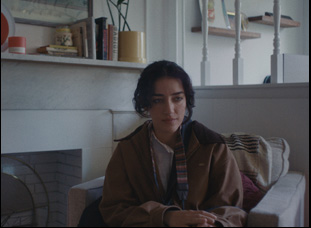 Paula, I know work can never seem all that interesting to the person doing it. At what point did you think this would be a good movie?
Paula González-Nasser: That’s a great question because if you had asked me when I was a location scout, “Do you want to make a movie about what you’re doing?” I would’ve have looked at you and [thought], “That’s so cringe. Why would anyone make a movie about this?” Movies about movies, which I love I [thought], I can’t do that. That’s so self-serving. But years went by after I stopped doing the job and then you’re like, “Oh, it’s not really about movies or so much about the industry, but it’s about labor and losing yourself in your job. Then [I thought] “Oh yeah, I could make a movie about that. That’s interesting and relevant to me, entering my thirties and [thinking] everyone around me is starting a family or moving up in their careers and I’m trying to figure out who I even am. This character felt like such a great vessel for exploring the connections that are so interesting to me in movies. I’m a big fan of Chantal Akerman and that’s what her movies are all about — relating to another person — so I [thought], “This is a great set-up for a 24-hour movie.”
Mimi, what got you excited about this?
Mimi Davila: It was the first time someone wrote a role for me and it’s such a quiet character study, I was so honored that she believed that I could do that. This is the kind of movie that is a dream for me to do, so all around it was just a dream come true.
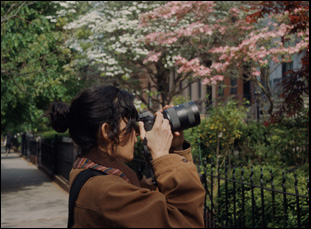 When there’s a biographical element to the character, at least as far as this is the work Paula used to do, how much did you actually want to share that with Mimi versus building the character herself?
Paula González-Nasser: The autobiographical element I wanted to use was that I knew this job so well inside and out that if technical questions [about] what would this character do in this situation came up, I felt very confident about knowing how to answer that. In that way, it gave me a lot of confidence to just know and trust that if we had to pivot on the day or if Mimi wanted to try something and improvise that I could [say], “That’s fine. This is what a scout would or wouldn’t do.” And there were technical questions that would come up, such as when Mimi would [ask], “Would you take photos of a room going this way? What angles would you do?” And I would intervene or give her notes on that regard, but we totally crafted a separate character from me and able to let that character be its own thing.
Mimi Davila: One is the technical aspect of being a scout and [Paula] was able to walk me through that and then the emotional life of Sofia was definitely just us working together and and everything that I could bring. [Paula] directed me in a way that it felt free and creative and not like we were trying to be autobiographical because in in many ways when you’re being so autobiographical, it’s not as personal or as intimate as when you’re working with someone else to create something new, that becomes even more intimate.
Paula González-Nasser: That was really fun to not have to pull from those personal experiences, but really the Rolodex of information about scouting. It was very freeing to to let that all go and just make each moment be its own reality and each appointment almost felt real, like if Mimi was meeting these people for the first time. Because in many ways she did meet the cast for the first time on set. It was fun to work that way too.
From what I understand, that was actually Mimi’s idea not to meet the other actors until going in front of the cameras. Why was it important?
Mimi Davila: Because one of the things Paula told me she noticed she noticed about me was that she loves my observations about people and she and I have a really fun time just analyzing and noticing things about people, so being able to meet people on the day, I could genuinely have my genuine reactions and judgments and opinions about them and have try to have that shine through.
Paula González-Nasser: Yeah, I think it allowed for that awkwardness and tension to naturally exist because you were just meeting someone for the first time, obviously in character, but still feeling each other out and that comes out in the performances. I really liked that from a creative standpoint and from a logistical standpoint, I highly underestimated how helpful blocking rehearsals would have been, especially in the way that we shot this movie so observational and and in wide shots. On a future project, I would maybe try and find a way to preserve that creative element of meeting [someone] for the first time and then also figure out the logistics of of shooting in this way ahead of time.
Mimi Davila: It would have been okay if I had meant them before. [laughs]
Paula González-Nasser: No, but I liked it. It was a great idea, and I wanted to do it.
It must have contributed to whatever special energy this movie has. Those wide shots also get to show off some great production design that gives so much history about the spaces and the characters that inhabit them. What was it like figuring out that aspect of the film?
Paula González-Nasser: Yeah, Ale [Anez, our production designer] is amazing. She’s Miami-based and doesn’t even do it full time because she has so many other endeavors, but we had worked with her on the project that I produced called “Free Time,” so this was our second collaboration and I just love working with her because she knows how to make so much with so little. I was very upfront with her and told her, “Listen, this movie is really art directing and set dressing more than production designing because we don’t have prep or wrap days. You are just going to bring what’s possible in a bag or two and decorate the space in for the 20 minutes that we have to set up.” And she [said], “I love it.” That’s really rare. You don’t want to put a production designer in that position.
But what was great about the way that we set this up was that the the locations themselves we chose based on how production designed they already were, so there was very little change needing to occur on the day. It was more little touches that [Ale] made. She had the idea of putting that to go bagel and coffee cup in that fancy house kitchen. And at first I [thought], “It just looks like garbage in a corner,” but actually when you watch the frame, it like tells you so much about this character that he has this McMansion kitchen with brand new stainless steel appliances. He never cooks — he just gets to go bagels from the corner — and that just says so much without you needing to say it. And that’s her idea. I loved having her make those decisions and me noticing them way past the time that we shot because it helped add so much to the story without me even realizing it.
 On the condensed schedule you were on, was there anything unexpected that happened that you could embrace?
Paula González-Nasser: Yeah, the film was scheduled with almost a backwards logic [where we] said, “Here’s the amount of time that we probably have with this budget. Can you craft the script so that it it hits that time realistically for each of these vignettes?” I wanted to do one [take] that was like slightly longer, maybe like 20 pages. And then [I realized], “No, because we’re only going to get one day at each of these locations, like the ones where the meetings happen. So it became fun to use those constraints and [think], what’s something that could happen, like a conversation, within 10 pages that moves the story forward, at least in the slightest, and provokes the character in some way. On the day sometimes, we had to throw away the script and just like try different things.
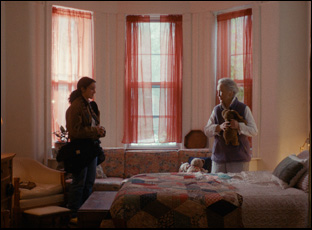
One of the first vignettes with Anna, who’s the elderly woman, the script was maybe not as flexible as it needed to be and wasn’t feeling as alive as I wanted it to, so Mimi, Rutanya Alda], the actress, and I just came up with some stuff on our own and and knew that we had the whole day in that house, so we thought as long as we get through the day here and get these conversations, that’s all we need. It was a little scary to do that, but it was also so fun to just trust that we could get through it.
Mimi Davila: I thought about the same day. I don’t know if it was the house, which was very damp and cold, and it was raining — but there was something happening and it lent itself well to the subject [of the scene] because I do think that’s one of the heavier scenes in the movie. It’s short, but that conversation where we’re talking about time and our generations and she’s on the bed hugging the stuffed animal, even though it’s so short, the heaviness of the day you could really feel in that moment, so I think it ended up working out for the best.
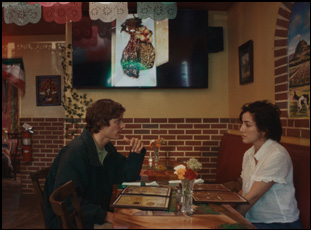 As it all appeared to have. What’s it been like sharing with audiences so far?
Paula González-Nasser: We’re so grateful that it is even screening in a theater. It’s so rewarding to be able to share it, especially at somewhere like Film Forum where I’ve watched the most amazing movies and I’ve had a formal film education. But it’s an interesting, almost bittersweet thing where now that we’ve made the movie, and we made it with such freedom and naiveté of being like, “We don’t know if this will work, let’s just try it,” now that we know what works and what doesn’t, there’s almost this loss of innocence, like If we were to do another one, what can we take from this and what shouldn’t we? It feels almost scarier than trying to do the first one because you’re you’re just so blindly excited and you don’t know how hard it’s going to be.
Mimi Davila: It’s hard not to have any expectations, but I for one really didn’t because I’m just so proud and happy that I I got to approach the film the way I did. Very purely, I [thought] “Wow, I don’t have a huge name and I don’t get to lead films and also there’s no huge murder or a huge explosion. It’s truly a character study. I’m so proud of the work that I got to do and I’m so happy that people are going to see it and no matter what happens with the film, I just feel like, “Wow, we really did that” and we did something with so much integrity.
Paula González-Nasser: I couldn’t have said it better. I’m now thinking, “How do we preserve that feeling?”
“The Scout” opens on September 25th in New York at Film Forum and October 2nd at the Alamo Drafthouse DTLA before expanding across the country. A full list of theaters and dates is here.