



As a producer, Melody C. Roscher helped to bring some of the daring filmmaking voices to the screen over the 2010s in assorted roles on Borderline productions such as “Simon Killer” and “Christine” and shorts such as “Great Choice” and “The Apocalypse,” so when it came time to make her feature directorial debut, it might sound counterintuitive that she immediately wanted to relinquish the title when most insist on it as an extra measure to protect the work, yet that’s exactly why she had no problem doing so.
“Partly because I have so much respect for producers of independent films and how hard and thankless the job can feel at times. I [thought], there will be things along the way that I’m doing to help produce this film, but the people who are stepping up to own that job, I do not even want to touch that credit,” says Roscher, who had longtime producing partner Craig Shilowich, among others, handling those duties as she could focus on being creative. “It should be all for the people who are assuming all of those asks and liabilities.”
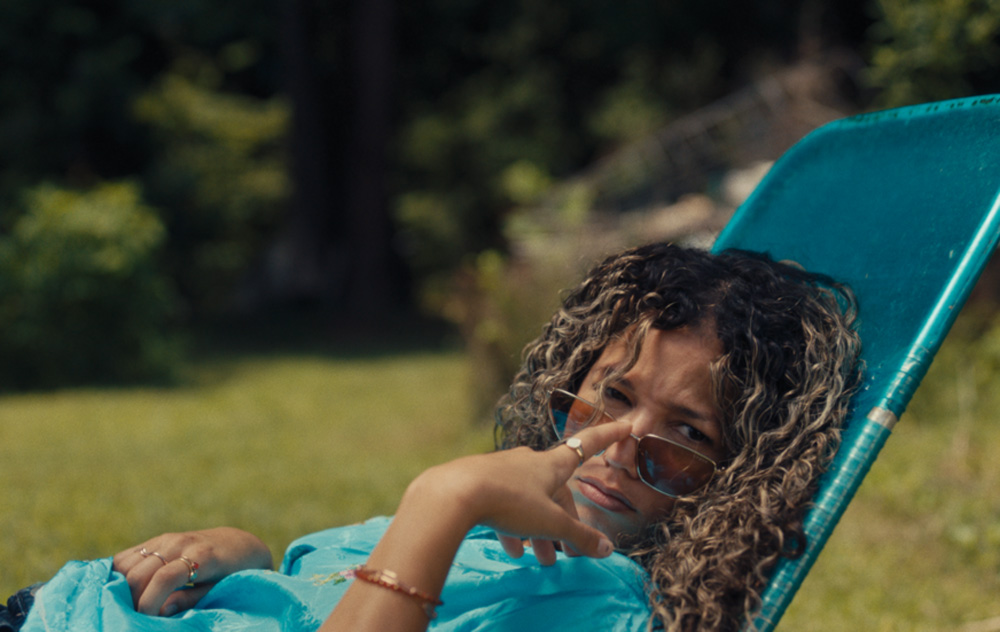
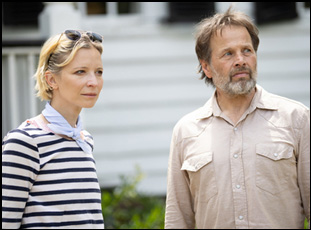
Which isn’t to say that Roscher wasn’t assuming plenty of risk with “Bird in Hand,” a tonally tricky and inherently personal tale that pays off handsomely as it follows Bird (Alisha Wainwright), a New York transplant from Richmond, Virginia who returns home ostensibly to scout places where she could get married to her boyfriend (Paul Reynolds) and pay a visit to her mother Carlotta (Christine Lahti) and her beau Dale (Jeffrey Nordling). However, she rarely visits for a reason – Carlotta, for instance, isn’t around to welcome her daughter upon her arrival – and she’s got an ulterior motive for planning a wedding when she’s come to believe her biological father plays in a local wedding band, having to suss out his identity herself when her mother has never talked about him, other than to say he fled when she was giving birth.
When Bird is introduced back in the big city with blood all over a wedding dress as her Halloween costume, Roscher calls her shot early as things only get messier from there as the mixed-race heroine has to reckon with visits to plantations as potential venues for her nuptials and any time spent in Richmond starts to look like avoiding making an actual commitment to her new fiancee, who has to wonder hundreds of miles away why he isn’t involved in any decisions about the big day and Bird makes few calls home. The lack of a father figure may be disorienting, but Roscher shrewdly doesn’t ascribe all of Bird’s issues to that alone when she can often get in her own way and finds little help from the people around her, whether it’s Carlotta, who appears to have retired from all aspects of her life that caused her any stress, or Dennis (James LeGros), the kindly owner of a potential wedding spot whose entreaties may not be entirely pure of heart, and with a wicked guitar riff that helps open the film as Bird starts watching videos of wedding bands to set up the unique flavor, “Bird in Hand” is as saucy as it is solid as a drama.
After premiering last year at Tribeca, the film is beginning a national theatrical tour around the U.S. thanks to the good folks at the Future of Film is Female and following its opening in New York en route to Los Angeles this week, Roscher generously took the time out from her travels to talk about how heading home opened up a world of possibilities for her as a filmmaker, getting the feeling of actually being there unmediated upon reaching the screen and the haunting experience she had on set.
 From what I understand, you were writing things that weren’t as connected to you personally as this. What made you look inside yourself for a story?
It really was I was hunting for this story in myself and a way to get it out, but I don’t think I had the courage yet to go there. In the writing and directing arena of my life, I was writing pretty out there, absurd things, tangentially dealing with the subject matter, like people feeling outcast or or a real need for parents, but they were always in a context that was wildly invented or just very, very different from my reality. So it took a lot of time and a lot of other scripts for me to be like let me just put this in a time and place that I’m also in and just go for it.
Is it true you’ve actually moved back to Richmond from New York since making this?
Yeah, I went down to Richmond to shoot “White Wedding,” the short that I made before “Bird in Hand,” and I shot it in 2020 and I never left. It’s been almost close to a decade from going down there and scouting for the short and having the script already done to making it and then going into “Bird in Hand,” and making it in Virginia, so maybe after this theatrical run, I’ll wake up one morning and [think], “What happened? Where am I?” But I live full time in Richmond now after 18 years in in New York.
After “White Wedding,” did the response to that make you think any differently about what a feature might look like?
Yeah, just at a craft at a pure craft level making this short helped me learn more about myself as a director and writer. I went back to the feature definitely with those things in mind of how can I strengthen scene work, how can I strengthen characters and intentions and conflicts. But also because the short came from precisely the feelings I had that I was processing at the time, growing up without a dad that I really wanted to know. That’s where my headspace was when I made that film, and it has a lot to do with marriage as well, which was something I was thinking a lot about at the time. A lot of my friends were married and starting like the kid journey and I wasn’t married yet and I [thought], is that something I want? Who am I in the context of my parents and my identity? Marriage, womanhood, [I wondered] what does it all mean to me?
When I got out of making this short, I felt like I’d really expressed that and it changed my point of view. I didn’t want to go back and tell the same story again longer. I wanted to find a new story within myself and a new curiosity within the characters too. I [thought], can I grow these ideas? Can I grow these people? So when I went back to the feature and looked at it, I [thought] “This isn’t the best work I can do. I can learn from what I know about people, myself, development crafts, and make it stronger. So I rewrote the entire thing.
What sold you on Alisha Wainwright to carry this?
I saw her audition video. I had seen dozens by the time I saw hers and she’s doing this scene where she has to get quite upset and how an actor chooses to portray that, that’s up to them, but the character is very, very upset and she was so ferocious and truly fearless in what she was doing on camera. I saw no boundary of what she was able to give to that character in the moment and it was what I was looking for the entire time. I just wanted someone who’s not afraid of this character because this character is not always acting like a hero. She’s complicated. And if you’re afraid of her, you can’t play her. So I saw that and I was just moved to tears. I still can’t watch it without crying. It’s such a beautiful, raw, giving piece of acting that I just instantly wanted to work with her. And then I found out that our stories have like crazy parallels and overlaps. We bonded even more while making the movie together.
When the character does have a foundation for you in reality, how much do you want to share about yourself versus letting the actor figure out for themselves what they want the character to be?
As much as they need. A lot of my conversations with the actors were actually, “Do you already have this in your life? Is this character already represented to you in a way that is super strong and resonates?” Because if they already have something at their fingertips that makes this person truthful and makes their performance feel like it’s coming from a very authentic place, I don’t want to then go “Well no, understand my thing and my thing takes over your thing.” So [I would just ask] what do you need to understand this character better? What do you need to to hook into them and to anchor to them?
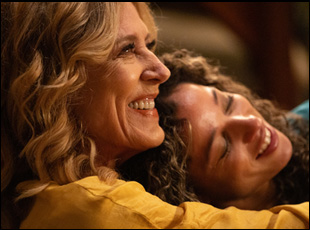
From what I understand, there were rehearsals and you’ve got the great Christine Lahti and James LeGros on hand with Alisha. Did anything change about how you thought about the relationships as you saw the actors working it through?
I wonder if it changed it anything. Once I saw Alisha and Christine together just over a Zoom with a script read through, and we weren’t working on performance, we were just talking high level scene work at this point, building, building, building. Once I saw the two of them together, I could feel how they had chemistry as a mother and daughter who had this push-pull with them really early on, so it didn’t change anything, but I got excited. I I probably got even a little nervous and scared because I [thought], this is real and it’s going to be my job to make sure it comes through in the movie.
 What also comes across as undeniably authentic are the places where these characters reside. What was it like to figure out the production design?
Very fun. Almitra Corey, who’s the production designer, is from Richmond even though she’s been living and working in New York and L.A. for a long time. I’ve known her since I was ten and she knows my family very well, so there was a baseline that we were able to get to without conversation, growing up in the same place and her seeing things through my eyes very easy when it came to the production design. Almitra was going around with me looking for locations a year before we were shooting, so we did have a lot of time to put those ideas together. Every step of it was so fun. There’s a really funny shot to me where we see James’ character in his man cave and there’s a sign that just says “Y’All” on the wall and when I came to set and saw that, I was like, “Bless you. You’re great.”
It took me a second viewing to really hone in on one of the special elements of the film which is how visually alive it is while feeling quite casual. I ended up being really impressed by the costumes, which are both quite vivid colors, but usually in opposition with one another as the characters are. What was it like to work with that as an element?
That was what definitely one of the the entry points into this with both the cinematography and the production design. I really wanted vibrancy. I wanted sweat. I wanted to feel like it was hot and bright and not garish, but I didn’t want anything to feel muted, but soft and tender. Really I wanted texture, like you could almost smell the inside of Carlotta’s house. And I never shy away from things that are bright, especially with the wardrobe when it came to color. We were very specific and Natasha [Simchowitz], the costume designer that I worked with who I really love, she and Almitra and I were just looking at racks of clothes and [saying] these colors work in this story, these colors don’t. And then Natasha would continue shopping and we would look at racks. Long before picking the outfits, we were picking the exact tones and palettes that we wanted to work with. I felt so lucky to have that time to do that because we were a small movie, so time is not always a luxury that you have.
It really paid off. And what I also couldn’t get out of my head from seeing this a while back is that opening wedding party with a great guitar riff.
That was a really weird day. We were shooting in this airport motel, but it started with this fun crazy party. We had this live band who knew the music and they played that song. It was a bunch of family and friends — my mom’s in it and my sister, just dancing around and having a good time with this bride who was supposed to be wasted in her own wedding video. And then the day actually ended with us shooting some night interiors and exteriors at the same motel, but [separately] the police had to be called because there was this whole thing going down in another room. It was a weird thing.
Usually I ask about the craziest day of shooting. Was that it? Or was there another that you were happy to pull through?
There were two days. That day was was nuts because we were all uncomfortable in this place, but then [we had to think] do we stop shooting to deal with what we think might be violence? Where do we draw the line between we’re at work and we have to be safe, but also we need to help people? It all worked out. Everyone was fine, but it was a weird day at work. The other day was when we had a lightning storm come in and we had to turn off all the lights and we were shooting in the man cave, which was on a real plantation, and we had a little bit of a haunting situation. I am not a ghost person. I’m just like, “Yeah, vibes are weird,” but we had something that we caught on camera that we were very not happy to see while we were sitting in the dark in this location and we had a whole bunch of shooting left to do there.
Did you think about turning this whole thing into a found footage horror film?
I know! It’s only one take where this thing happened. I should probably put it on the DVD extras actually because we’re going to have some DVDs available of this.
I’m excited to hear it.
The film in general has a really great tone, in part because of such great musical choices as far as the score and the needle drops. What was it like to play with that part?
That was a wild and wonderful part of this. I worked with Morgan [Thomas Henderson] and Calvin [Hagenson] — Morgan’s an instrumentalist who’s worked with Fleet Foxes and many other music projects. And then Calvin is more the producer who brings beats, rhythms, textures, tones in on the software side of things. We had quite a while to come up with the sounds of the movie as far as the score goes, and they sent a a huge abundance of things to help us get pointed in the right direction Morgan is an insane instrumentalist, so he could come up with an idea, go sit at a piano and actually get it out and send it over, and then I could just put it in the movie, which it’s not always that simple. A lot of times composers have ideas for strings and they have to go hire four string musicians and they have to get it arranged. [Morgan] could just do all of that, so that was amazing,
Then the hunt for the needle drops was challenging because I wanted these characters to be romanticizing the past, so a lot of the music is actually throwback music until you get to the very end when the character is accepting her present and maybe going to engage better with her future. So I really wanted Dennis to love Zamrock from the ‘60s and ‘70s. I really wanted this sound here and this sound here. I was heavily leaning towards the prog rock element. That was just the the world that I heard for this.
You had a wealth of experience going in to this obviously, but when it is your first feature and you’re privy to all the parts of the process, was it what you thought it would be? What’s it like to come out on the other side of it?
It was absolutely different because I’m such a process person. I want the whole process of something to have meaning and I want to enjoy it all. I want to have a good time on set. I want to have a friendly work environment. I want everyone to feel like they’re collaborating together. So having all the intentions and then going to set and feeling what it’s like, it was totally different. I always felt a huge responsibility towards my films as a producer. It truly was as important to me to make those as it was to make “Bird,” but it was different because the buck never stops with you creatively as a producer. Even if you care that much, you are not ultimately always in charge of how creatively it comes out, so to have that feeling of “No, this is yours and you have to own every decision” was new and it was exciting. I enjoyed it so much that I just want to be shooting movies all the time. I really loved it quite a lot.
“Bird in Hand” will screen in Catskill, New York on October 7th at the Community Theater, in Los Angeles from October 9th through 11th at Vidiots and October 14th at the Los Feliz 3, October 23rd in Chicago at the Music Box Theater, October 24th in Philadelphia at the Bryn Mawr Film Institute, October 25th in Minneapolis at the Heights Cinema, November 1st in Tulsa at Circle Cinema, November 2nd in Charlottesville at the Alamo Drafthouse and November 5th in Richmond, Virginia at Studio Two Three with Film Society.