




When the undead are known for creeping up on their prey from the movies, it seems appropriate that Maya Annik Bedward’s true intent only gradually sneaks up on you in “Black Zombie,” promising a film from its title that would seem to be about the ties between Black history and the enduring horror genre that have been intertwined ever since the publication of William Seabrook’s “Magic Island,” about his time in Haiti gave rise to the fictional creatures from a description of an indigenous tribe that was known to eat human flesh. Even as the author’s claims were scrutinized over the years when he said he was coerced into eating flesh himself, the popularity of the reporting led to the screen adaptation “White Zombie,” the 1932 horror film that lingered in pop culture for decades to come and while filmmakers have found great utility for the zombie as a potent metaphor for all matter of social ills, there’s long been an issue at the heart of the character’s popularity when it’s been built on a misrepresentation in the first place.
As Bedward clarifies in her fascinating debut feature, it wasn’t just Seabrook’s problematic representation of the tribe he came into contact with in promoting a general colonialist narrative of white civility being potentially corrupted by savage natives with “Magic Island” abroad but a more direct mischaracterization when zombies were inspired by the practice of voudou, a beautiful ancestral tradition in Haitian culture predicated on the belief that we live amongst the spirits of generations past. Now the zombie stalks voudou in the same way it would in any of the horror films that have been built around it as an idea that refuses to die as voudou deserves respect that has been difficult to attain. “Black Zombie” should change that when the film offers a compelling corrective in the form of a more traditional documentary in which Bedward untangles a complex subject by speaking to modern day voudou priests such as Francois Yves Gregory, those involved in popularizing the zombie genre such as Tom Savini and cultural critics such as Tananarive Due (as well as a surprisingly on point appearance from Slash, ruminating on his own vodou roots).
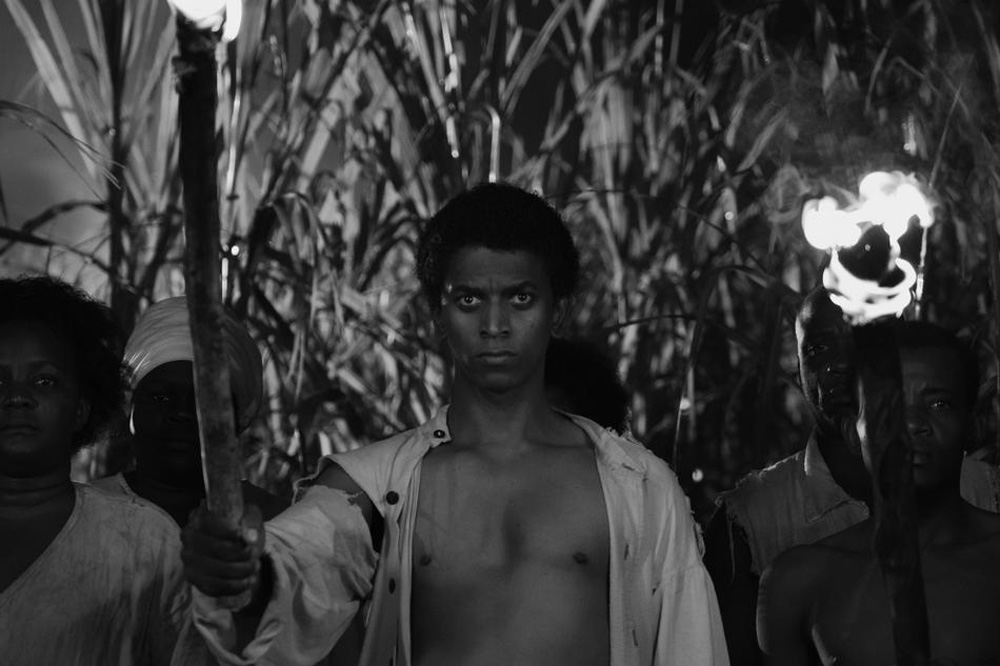
Yet “Black Zombie” also offers a reimagination of what could’ve been when Bedward puts together scenes from real vodou history in the style of “White Zombie,” resplendent monochrome recreations of such events as the slave rebellion in 1790 in Saint Domingue where a shared belief would ultimately lead to unity and freedom. Not only do the dramatizations illustrate history from a native perspective, but consider how strong an influence over culture the medium can be deployed in the right hands – or wrong ones, as it vividly argues – and as much as voudou has been obscured by the rise of the zombie in popular consciousness, “Black Zombie” is powerful in its clarity. On the eve of its recent premiere at SXSW, Bedward graciously took the time to talk about the years she put into the ambitious and comprehensive film, going about making the same type of the genre effort that she had been rigorously analyzing and what she hopes will continue to stick in audiences’ minds long after it ends.
How did this come about?
I’m Afro-Caribbean. My father was born in Jamaica, and I’ve always been interested in stories and history and culture in the African diaspora. Often the cultural traditions that connect us to West Africa or history are often seen through a Western lens and we’re told this history doesn’t exist anymore. There’s no accounts of these traditions and practices, but that’s just not true.The more I learned, the more I realized a lot of elements of these traditions and our histories are in music and our food and most powerfully in our spiritual practices, so I was very interested in Vodou, Candomblé and Santería and looking at these cultural practices as places that preserve these stories and this history. When I found out the zombie is actually connected to Haitian Vodu and that it’s a metaphor for slavery, that blew my mind. I couldn’t believe I didn’t know that. The more I learned about the history and the connections to it, the more I was fascinated with the original Haitian story of this return to West Africa and what that means and I thought I have to make a film about it. I came at it from that angle and then of course I had to watch a million zombie films and tell the story of how it was appropriated and brought to Hollywood and turned into what we know today.
As someone actually says in the film, voudou and zombies are adjacent, but shouldn’t be mistaken for the same thing and that distinction is clear in the film, but when they’re intertwined, was that difficult to untangle to tell this story?
Yeah, it was a huge challenge. I wanted to tell so much – the story of how Hollywood had taken the zombie and how it became the fleshy monster we know today, but I also the historical story about imperialism and colonialism and the effects that has had on the Caribbean and specifically on Haiti and the story of the Haitian Revolution. Everyone told me, “Maya, you’re trying to do too much with this film,” and I’d say, “I know, but I need to tell it all.” So it was a challenge to pick and choose what was going to go into a 90-minute film, but fundamentally I really wanted to center the voices of Haitian voudou practitioners and to tell the story of what happened to Haiti, the incredible revolution and how it’s been punished ever since. The poverty and corruption that is in Haiti today is a result of this continual oppression and exploitation that has happened because of Western forces. It took years and it was definitely a huge undertaking, but here we are today.
It seems like Yves Gregory might’ve been a pillar for the story. What was it like to meet him?
Yeah, when I first started working on the film, I was in Haiti and the crew who I actually continued to work with throughout the film was based in Jacmel and they were friends with Yves Gregory Francois, because we were all young at the time and he was young and could show me how voudou was incorporated in everyday activities as a voudou priest. He introduced me to his community and I went to the Rara, a huge Vodou event that happens around Easter. Unfortunately after the pandemic and with the assassination of the president, things got really dire in Haiti – they were always tough, but this was like a new level – and these are people who love their country and do not want to leave, but everyone who could leave did. So the idea of going back and filming – just taking a camera out on the street – would put all of our contributors and crew at risk, so we decided we couldn’t go back. But we brought our Haitian crew and contributors to the Dominican Republic and we finished the film there maybe six years later and Yves Gregory was a big part of that. He was even behind the scenes, helping me do a lot of those recreations and figure out different decisions around that, which was really cool.
Now it seems even if they were shot abroad, you’re preserving a cultural history of Haiti in those recreations along with all the other weight they carry in the film. Did they evolve much from your initial ideas for the film?
The idea to do the recreations came later and having access to sugarcane mills and shoot that in the Dominican Republic was a huge opportunity. I [thought] “Let’s use this” and “Let’s use a lot of the black-and-white imagery from these early zombie films and spin it on its head and tell the real Haitian story,” or what I was inspired by [from Haitian tradition] and then created these recreations. That evolved throughout the process of filming the project, but parts of the film like that were always my initial vision.
Was there anything that took this in a direction you really didn’t expect or changed your ideas as you were filming?
I always wanted to make sure I centered Haitian voudou practitioners, but how I was going to bring in the story of how [that] was appropriated and brought to Hollywood and turned into the flesh-eating monster it is today was a journey. William Seabrook, who wrote the book “The Magic Island” that the first zombie film was based on, I didn’t know how to tell that story [initially]. That guy’s not alive anymore and no one really talks about him anymore. But it just happened that my partner was at a bookstore looking for books about zombies as you do when you’re making a zombie film and he asked the guy who worked at the bookstore if he had any books on zombies. And he said, “I don’t, but I do have this book about William Seabrook, who coined the term “zombie” in literature. And my partner looked at the book and [looked at the person behind the counter] and realized, “Wait a minute, this is you. You wrote this book. And he was like, “Yeah, this is my book. I was kind of obsessed with William Seabrook for a few years.” So that’s Joe in the film, and it was totally serendipitous that we met him at our local bookstore.
That’s unbelievable. What may come as a surprise to audiences is to see Slash as one of the interviewees and he proves to be quite insightful on this particular subject. How did he enter the mix?
Some of our executive producers work with him, but I always wanted someone who everyone knew who could really show how the proliferation of our understanding of voudou has happened in pop culture that in ways we don’t even know – how much we see influences of voudou that we just don’t even understand – and Slash was such a great example of that with his like iconic hat [which] is very much a nod to Baron Samedi, this Haitian voudou spirit. We’ve seen that imagery of the spirit over and over again and we associate it with rock and roll and the guardian of the crossroads, but we don’t really know where it comes from and how it’s celebrated today. His mother is also African American and has these connections to his Buddhist spiritual practices, so I thought he was such an interesting full circle [interview subject].
What’s it like getting to this point with the film and getting ready to share it with the world?
I’m super excited. Premiering at South by Southwest was always the dream because it’s a festival that celebrates and centers pop culture, but it also gives space for films with very important messages and social relevance, so what a great venue to get this story out to a wide audience because I just want as many people as possible to see this film. I want everyone to know that the zombie comes from Haiti and it’s the reason we like misunderstand voudou and all these racist tropes came out of it, so when people watch zombie films, they have this in the back of their head and can look at the stories that are being presented from a more critical lens.
“Black Zombie” will next screen at Milwaukee Film Festival at the Downer Theatre on April 18th at 8:45 pm, April 22nd at 6:30 pm and April 24th at 9:45 pm and at Hot Docs in Toronto on April 24th at 9:15 pm at the Hot Docs Ted Rogers Cinema and April 25th at 11 am at the TIFF Lightbox 1.